The Tenth Hour
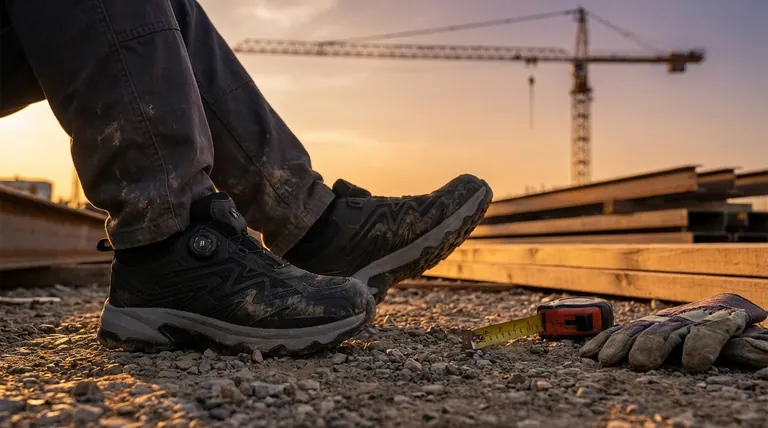
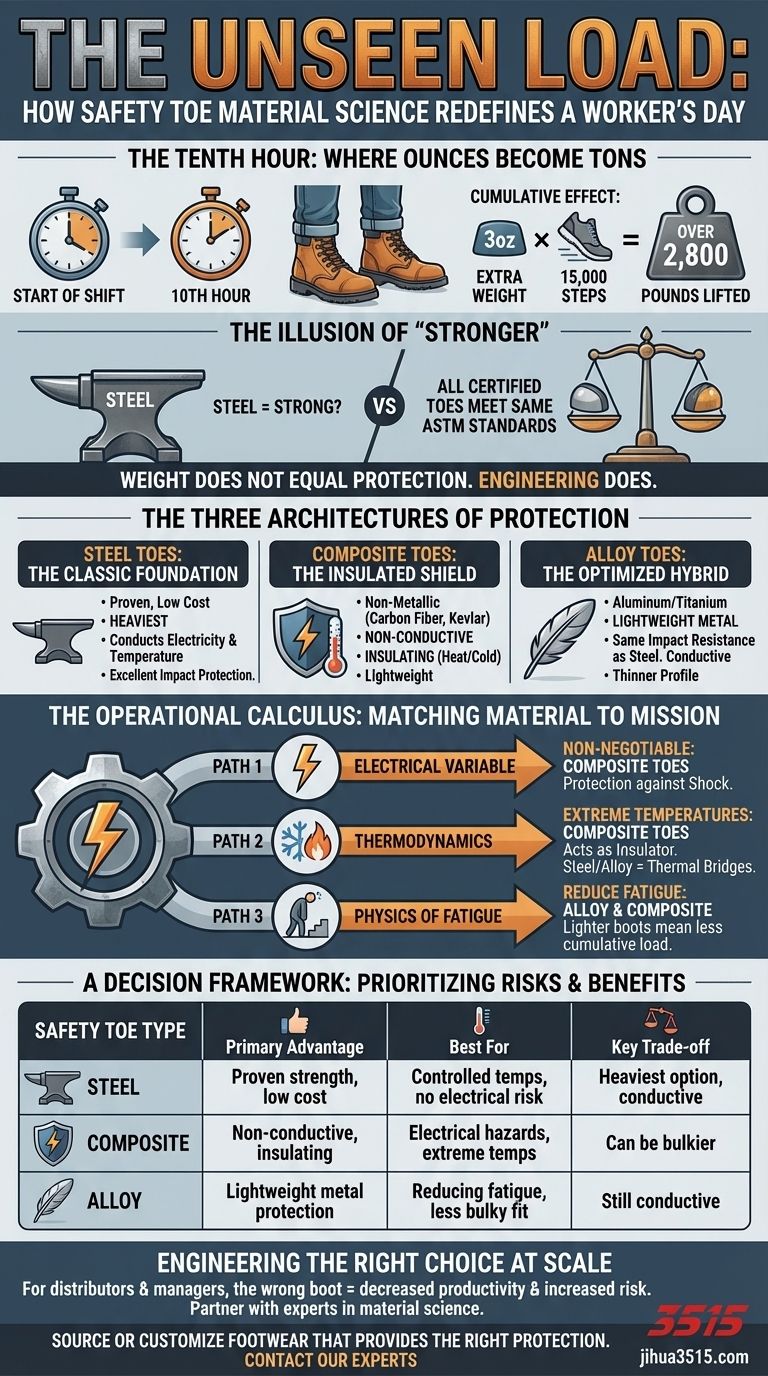
At the end of a ten-hour shift, the weight of a tool feels different. A hammer that was an extension of the arm in the morning becomes a burden. The same is true for the boots on your feet. The small, almost imperceptible difference in weight between two pairs of safety boots is magnified over the course of 15,000 steps.
This cumulative effect is where the conversation about safety toe caps should begin. It’s not a simple debate over which material is "strongest." It's a systemic question of physics, psychology, and the specific environment a worker inhabits every single day.
The Illusion of "Stronger"
There's a deep-seated psychological bias that equates weight with strength. For decades, steel toes have been the industry standard, and their heft created a powerful perception of superior protection.
This is a misconception.
Any safety toe—whether made of steel, composite materials, or lightweight alloy—that is sold in a certified safety boot must meet the exact same ASTM International standards for impact and compression. A composite toe is not less safe than a steel toe; it simply achieves the same level of safety through different engineering. The real decision lies in the properties beyond simple impact resistance.
The Three Architectures of Protection
Understanding the material science is key to making a rational, rather than a purely emotional, choice. Each type of toe cap is an engineered solution with a distinct set of trade-offs.
H3: Steel Toes: The Classic Foundation
Steel is the bedrock of safety footwear. It’s a simple, cost-effective, and proven technology that provides exceptional protection. Its density, however, is its defining characteristic. It is the heaviest option and an excellent conductor of both electricity and temperature.
H3: Composite Toes: The Insulated Shield
Crafted from non-metallic materials like carbon fiber, Kevlar, or specialized plastics, composite toes are the modern answer to specific environmental threats. Their primary advantage is what they don't do: they don't conduct electricity, and they don't transfer heat or cold. They are also significantly lighter than steel.
H3: Alloy Toes: The Optimized Hybrid
Alloy toes, typically made from aluminum or titanium, strike a balance. They offer the same certified impact resistance as steel but at a fraction of the weight. They are often engineered to be thinner than composite toes, allowing for a less bulky boot design, but they remain conductive like any other metal.
The Operational Calculus: Matching Material to Mission
The right choice is not found in a spec sheet, but in the context of the job itself. The daily environment dictates the ideal material.
H3: The Electrical Variable
This is the most critical, non-negotiable factor. For any role with exposure to live electrical currents, the choice is binary. Only a non-metallic composite toe provides the necessary protection against electrical shock. In this scenario, steel and alloy are not viable options.
H3: The Thermodynamics of a Workday
Metal is a thermal bridge. In a cold-storage warehouse or a frigid mine, a steel or alloy toe cap will actively draw heat away from the body, leading to discomfort and distraction. A composite toe, by contrast, acts as an insulator, preserving warmth and maintaining focus.
H3: The Physics of Fatigue
Let's return to the tenth hour of the shift. A few ounces of difference in boot weight, lifted with every step, accumulates into a staggering amount of extra work.
- Extra weight per boot: 3 oz (approx. difference between steel and composite)
- Steps per day: 15,000
- Total extra weight lifted per day: Over 2,800 pounds (1,270 kg)
This isn't a minor detail; it's a direct contributor to end-of-day fatigue, which is a known precursor to workplace accidents. Lighter boots, whether composite or alloy, reduce this unseen load.
A Decision Framework
Choosing the right boot is an exercise in prioritizing risks and benefits. The best choice is the one that addresses your most pressing daily hazard.
| Safety Toe Type | Primary Advantage | Best For Environments With... | Key Trade-off |
|---|---|---|---|
| Steel | Proven strength, low cost | Controlled temperatures, no electrical risk | Heaviest option, conductive |
| Composite | Non-conductive, insulating | Electrical hazards, extreme temperatures | Can be bulkier |
| Alloy | Lightweight metal protection | Focus on reducing fatigue, need for a less bulky fit | Still conductive |
Engineering the Right Choice at Scale
For a distributor, brand owner, or safety manager, this decision is multiplied across an entire workforce. Equipping a team with the wrong boot can lead to decreased productivity, increased fatigue, and failure to mitigate specific environmental risks like electrical shock.
This level of nuance requires a manufacturing partner who understands the deep material science behind safety footwear. As a large-scale producer, 3515 has the capability to manufacture a comprehensive range of boots featuring steel, composite, and alloy toes—all engineered to meet rigorous international standards. We help our clients analyze their unique operational needs to source or customize footwear that provides the right protection, not just the most conventional one.
To ensure your team is equipped with footwear that truly matches their mission, it’s time to look beyond tradition. Contact Our Experts
Visual Guide
Related Products
- Durable Steel Toe Safety Boots Wholesale & Custom Manufacturing
- Wholesale Mesh Steel Toe Safety Shoes with Dial Closure Factory Production
- Wholesale Leather Safety Boots with Customizable Protective Toe
- Premium Wheat Nubuck Safety Shoes for Bulk Distribution
- Durable Leather Safety Boots for Wholesale & Custom OEM Manufacturing
Related Articles
- The Unseen Engineering: Why Steel Toes Succeed or Fail in Oily Environments
- How to Choose Between Steel and Composite Toe Boots for Workplace Safety
- How Modern Steel Toe Boots Combine Safety with All-Day Comfort
- How to Choose Between Steel and Composite Toe Boots for Maximum Safety
- How Steel Toe Boots Meet Industry Safety Standards and Reduce Workplace Injuries