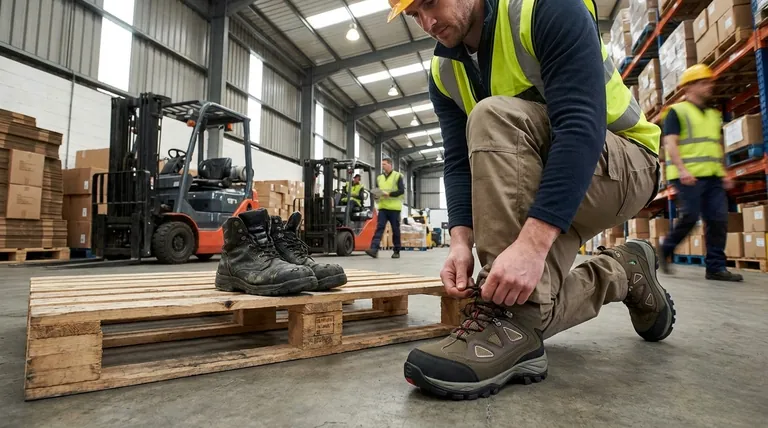
You’re a safety manager or a procurement lead, and the request has landed on your desk: the team wants lighter, more comfortable composite toe boots. But a nagging question stops you. Are they really as safe? Are they OSHA compliant?
You begin the search, typing "OSHA-approved composite toe boots" into Google. What you find is a confusing mix of manufacturer claims, forum debates, and no clear answer from OSHA itself. The risk of an audit failure or, worse, a workplace injury, makes you hesitate. So, you stick with the heavy, traditional steel-toe boots—the "safe" choice. The team grumbles, but at least you think you're compliant.
This scenario plays out in countless businesses, rooted in a fundamental misunderstanding. The good news? There is a simple, clear path forward.
The Cost of Asking the Wrong Question
The debate between composite and steel is where many companies get stuck, and it's a costly distraction. This confusion leads to real business consequences:
- Wasted Hours: Teams spend valuable time researching a question that has no direct answer, delaying procurement and leaving workers with aging or inadequate footwear.
- Decreased Productivity: Forcing workers into heavy, uncomfortable boots "just in case" can lead to fatigue, lower morale, and reduced efficiency over long shifts.
- Hidden Safety Risks: A one-size-fits-all approach can be dangerous. An electrician wearing steel-toe boots near a live circuit is a prime example of choosing the wrong tool for the job, even if the boot protects against impact.
- Financial Liability: Choosing a boot based on its material without verifying its certified performance rating can leave you non-compliant and vulnerable to significant fines.
The struggle is real, but it’s based on a flawed premise. The key to solving this isn't to find a boot that OSHA "approves," but to understand what OSHA actually requires.
The Root of the Problem: OSHA Sets the Rules, ASTM Sets the Standard
Here is the single most important concept that clears up all confusion: OSHA and ASTM have two different, but related, jobs.
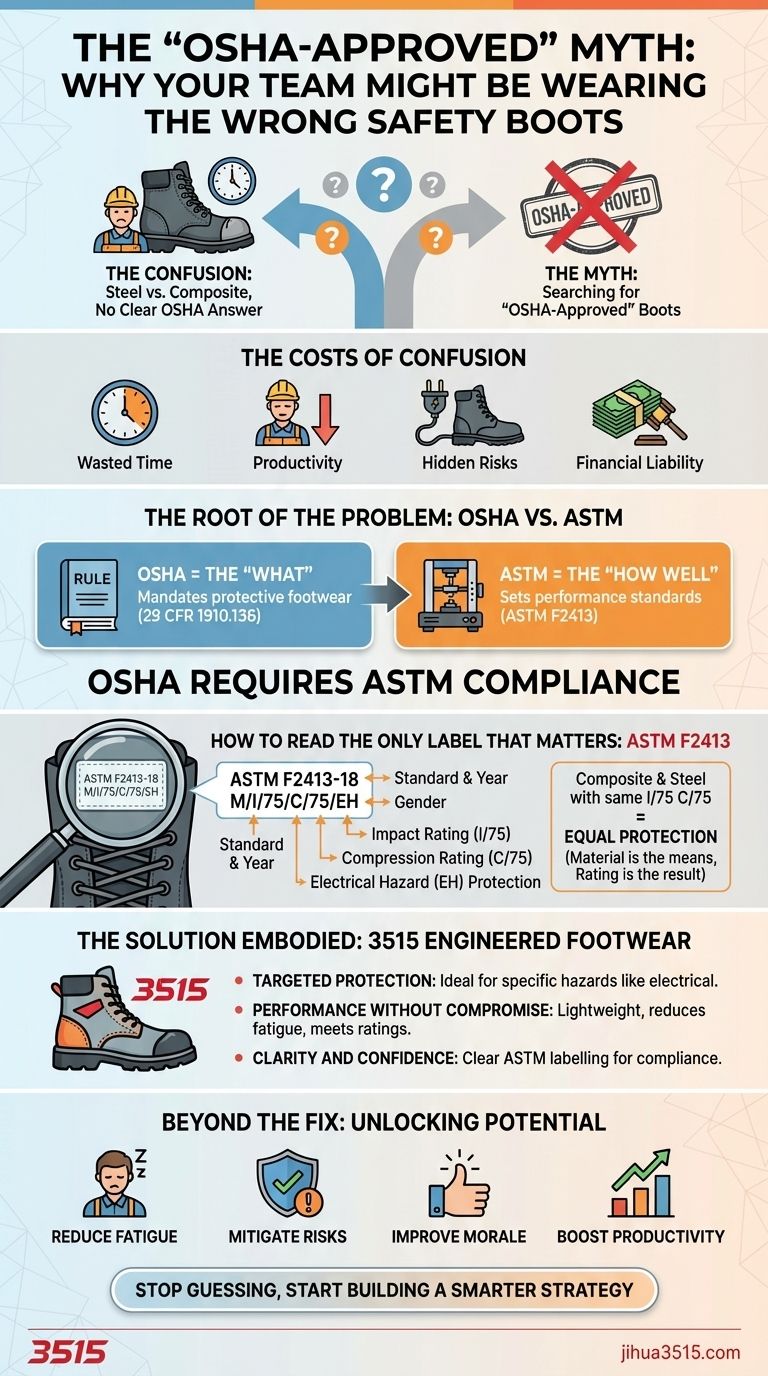
- OSHA is the "What." The Occupational Safety and Health Administration mandates what employers must do. In this case, 29 CFR 1910.136 states that employers must ensure employees use protective footwear when they are exposed to foot hazards. It tells you that you need protection.
- ASTM is the "How Well." ASTM International is the organization that defines how well that protection must perform. The standard, ASTM F2413, sets the specific performance requirements for safety footwear. It defines the tests for impact resistance, compression resistance, and other hazards.
In short: OSHA requires you to use a boot that meets the ASTM standard.
This is why you'll never find an "OSHA-Approved" stamp. OSHA doesn't approve products. They enforce the rule that products must meet the standard. The reason your old "solutions" failed is that you were looking for the wrong seal of approval. The only label that matters for compliance is the one that reads "ASTM F2413."
How to Read the Only Label That Matters
On the tongue of any compliant safety boot, you will find a tag that looks something like this: ASTM F2413-18 M/I/75/C/75/EH.
This isn't just a model number; it's the boot's performance resume. It tells you it meets the ASTM F2413 standard, has a toe cap rated for 75 foot-pounds of impact (I/75) and 2,500 pounds of compression (C/75), and provides Electrical Hazard (EH) protection.
A composite toe boot and a steel toe boot with the exact same I/75 and C/75 ratings offer the exact same level of protection against impact and compression. The material is simply the means to an end; the rating is the result.
The Solution Embodied: A Boot Engineered for the Standard
Once you understand that the goal is to meet a performance standard, not to pick an "approved" material, you can choose a boot that is truly right for the job. To solve this problem systematically, you need a tool—a boot—that was designed with this principle in mind.
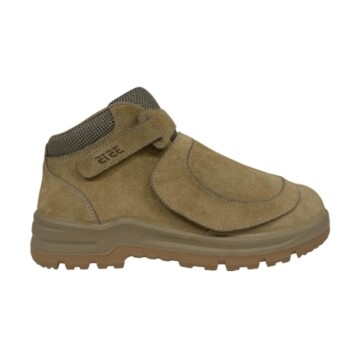
This is where our manufacturing philosophy at 3515 makes a difference. We don't just make "composite boots"; we engineer footwear to meet specific ASTM F2413 ratings for specific workplace hazards.
- Targeted Protection: Our composite toe boots are the ideal solution for environments with electrical hazards. Because the toe cap is non-metallic, it doesn't conduct electricity, making it the superior choice for electricians and maintenance engineers. This directly addresses the "hidden safety risk" of using the wrong type of boot.
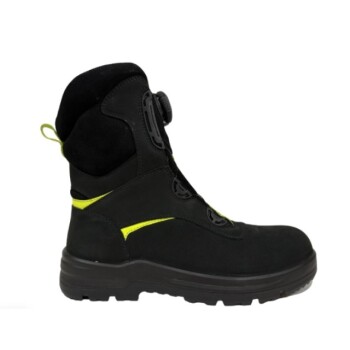
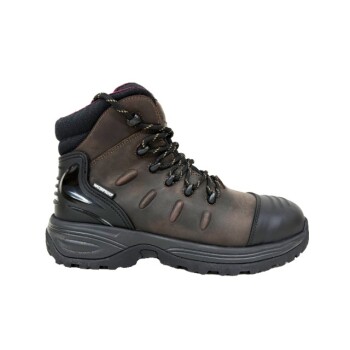
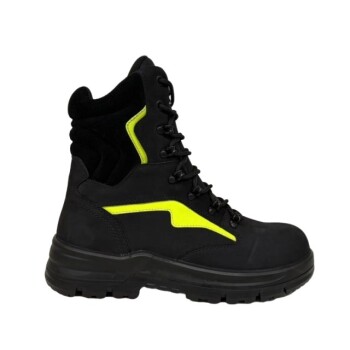
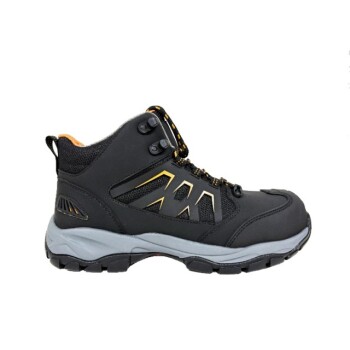
- Performance Without Compromise: Our boots are lightweight by design, which directly combats the worker fatigue and productivity loss associated with heavy, cumbersome footwear. They meet the same I/75 and C/75 ratings as their steel counterparts, providing identical, certified protection.
- Clarity and Confidence: Every boot we produce carries a clear, easy-to-read ASTM label. We remove the guesswork, so you can make procurement decisions with the absolute certainty that you are compliant.
Our footwear isn't a product of chance; it's the result of engineering a solution based on a deep understanding of the standards that truly matter.
Beyond the Fix: Unlocking a Safer, More Productive Workforce
When you move past the "composite vs. steel" myth and embrace a standards-based approach to safety footwear, you do more than just solve a procurement headache. You unlock new potential for your entire organization.
With the certainty that your team's footwear is fully compliant, you are now free to optimize for other critical factors. You can confidently equip your workforce with lighter boots that reduce fatigue, select EH-rated footwear for electricians to mitigate specific risks, and improve overall morale by responding to your team's needs for comfort.
This shift transforms safety footwear from a simple compliance checkbox into a strategic tool that can enhance productivity, reduce workplace injuries, and create a better, safer environment for everyone.
Choosing the right boot is just one piece of a comprehensive safety program, but it's a critical one. Your challenges often extend beyond a single product choice to include supply chain reliability, consistent quality, and finding a partner who understands the nuances of outfitting a large workforce. At 3515, we specialize in manufacturing certified safety footwear at scale, helping distributors and organizations build customized programs that ensure compliance and improve worker satisfaction. Stop guessing and start building a smarter safety footwear strategy. Contact Our Experts to discuss your team's unique requirements and discover how a manufacturing partner can make all the difference.
Visual Guide
Related Products
- Puncture-Resistant Velcro Safety Boots for Wholesale & Custom Manufacturing
- Wholesale Durable Safety Boots | Custom Steel Toe & Puncture-Resistant Manufacturing
- Premium Grain Leather Safety Boots for Bulk Supply
- Heavy-Duty Waterproof Nubuck Safety Boots Safety Shoes for Bulk Supply
- Premium High-Cut Waterproof Safety Boots Manufacturing & Wholesale Solutions
Related Articles
- The Unseen Engineering: Why Steel Toes Succeed or Fail in Oily Environments
- The Anatomy of Trust: A Systems Approach to Workplace Foot Protection
- The Lacing Paradox: Why the Safest Boots Contain Their Own Greatest Risk
- How Industrial Professionals Can Balance Safety Boot Requirements with Professional Appearance
- How to Choose Safety Boots That Reduce Fatigue Without Sacrificing Protection