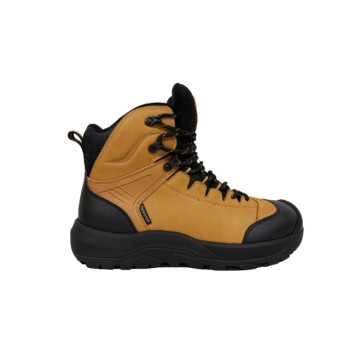
Does this sound familiar? You've sourced a line of winter tactical boots with all the premium features: heavy-duty insulation, a top-tier waterproof membrane, and an aggressive outsole. On paper, it's the perfect product. But then the feedback rolls in from your clients or end-users: "My feet were still cold."
It’s a frustrating and costly problem. You invested in the best materials, yet the product is failing in the one area that matters most.
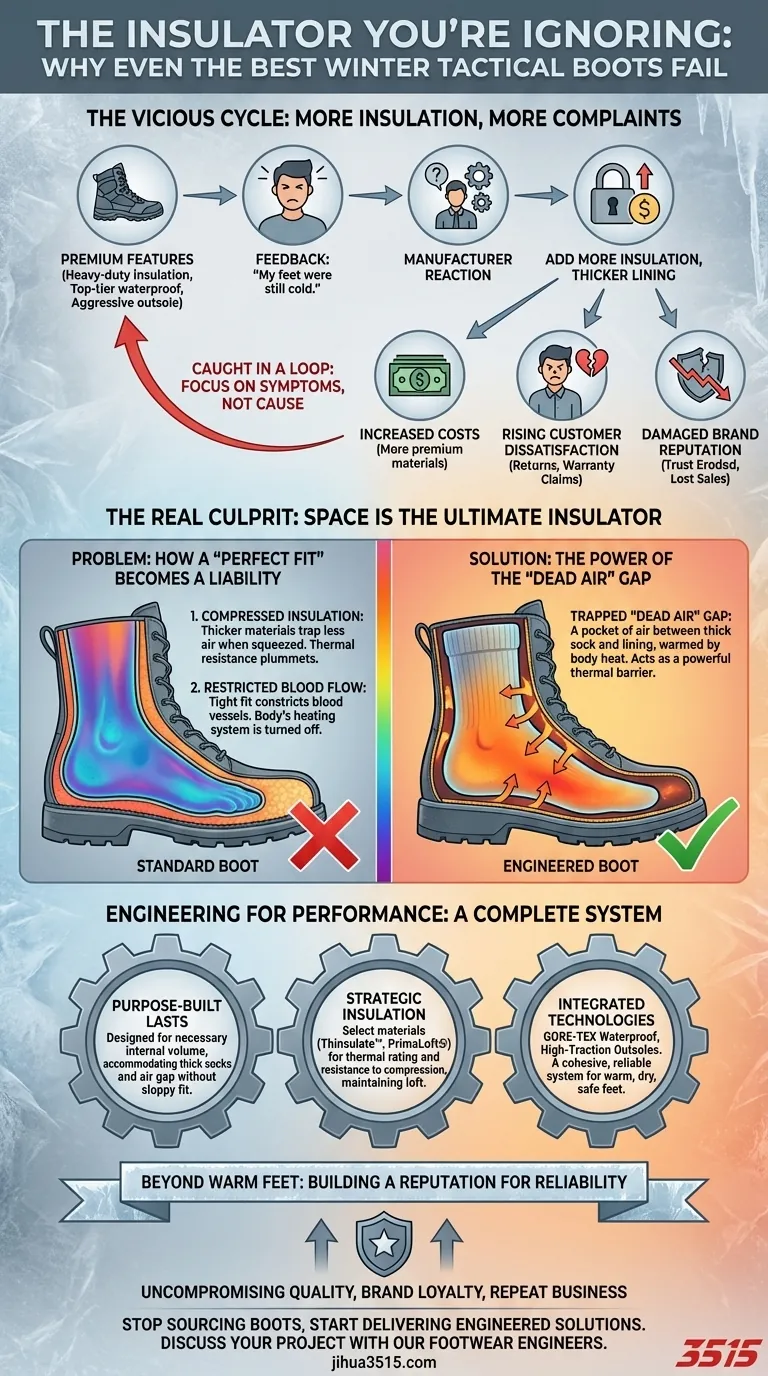
The Vicious Cycle: More Insulation, More Complaints
When faced with this issue, the typical reaction from distributors and brand owners is to go back to the manufacturer and demand more. More insulation, a thicker lining, a higher thermal rating. It seems like a logical fix—if people are cold, add more warmth.
But this approach often makes the problem worse, not better. It leads to a frustrating cycle:
- Increased Costs: You pay for more premium insulation materials, driving up your cost of goods.
- Rising Customer Dissatisfaction: Despite the "upgrades," the negative feedback continues, leading to returns and warranty claims.
- Damaged Brand Reputation: Your brand becomes associated with products that don't perform as promised, eroding trust and losing you future sales.
You're caught in a loop, investing more for diminishing returns, because the focus is on the symptoms, not the true cause of the failure.
The Real Culprit: Why Space is the Ultimate Insulator
The reason so many technically advanced boots fail is a simple, counter-intuitive principle of physics: the most critical insulator is often empty space. A boot packed with material but lacking adequate space for the foot is a fundamentally flawed thermal system.
Here’s the science that many boot designs overlook:
How a "Perfect Fit" Becomes a Dangerous Liability
In a standard boot, a snug fit is desirable for stability. In a winter boot, it’s a liability. When a boot is too tight, two things happen:
- It Compresses Insulation: The thick, fluffy insulation materials work by trapping air. When compressed, their thermal resistance plummets.
- It Restricts Blood Flow: More importantly, a tight fit constricts the blood vessels in the foot. Your blood is your body's natural heating system, carrying warmth to your extremities. Restricting circulation is like turning off the radiator in a cold room.
The Power of the "Dead Air" Gap
The key to warm feet isn't just the boot's built-in insulation; it's the layer of air trapped between a thick sock and the boot's inner lining. This pocket of "dead air" is warmed by body heat and acts as a powerful thermal barrier, dramatically slowing heat loss to the frozen ground.
Without room for thick socks and this essential air gap, the boot cannot function correctly, no matter how much insulation is packed into its walls. This is why simply adding more material to a standard boot design is a recipe for failure—it removes the very space needed for the system to work.
Engineering for Performance: A Boot Is More Than Its Materials
To deliver a winter boot that actually performs, you need more than a factory that can stitch together high-spec materials. You need a manufacturing partner who understands the underlying science and designs the entire system accordingly.
This is the core of our philosophy at 3515. Our winter footwear isn't just assembled; it's engineered.
- Purpose-Built Lasts: We design our winter boot lasts (the mold that gives a shoe its shape) to provide the necessary internal volume to accommodate thicker socks and preserve that critical insulating air gap—all without creating a sloppy, unsafe fit.
- Strategic Insulation: We select and place insulation materials like Thinsulate™ or PrimaLoft® not just for their thermal rating but for their ability to resist compression, ensuring they maintain their heat-trapping loft.
- A Complete System: This engineered fit is integrated with essential technologies like GORE-TEX waterproof membranes and high-traction outsoles. The result isn't just a collection of features; it's a cohesive, reliable system designed to keep the end-user warm, dry, and safe.
Beyond Warm Feet: Building a Reputation for Reliability
When you partner with a manufacturer who understands these principles, the conversation shifts. Instead of managing complaints and returns, you start building a reputation for uncompromising quality and performance.
Your brand becomes the one professionals trust for missions in the most demanding environments. Your distributors can sell with confidence, knowing the product will not fail. You break free from the cycle of costly, ineffective "upgrades" and begin delivering genuine value that secures customer loyalty and drives repeat business.
Understanding the science behind effective cold-weather gear is the difference between a product that disappoints and a brand that leads. This principle of designing for the complete system, not just the spec sheet, applies to all high-performance footwear. Whether your challenge is extreme cold, rugged terrain, or specialized operational needs, the underlying engineering determines success. It’s time to stop sourcing boots and start delivering engineered solutions.
Discuss your specific project requirements with our footwear engineers and see how our manufacturing expertise can become your brand's greatest competitive advantage. Contact Our Experts.
Visual Guide
Related Products
- Wholesale Waterproof Tactical Boots Custom Suede & High-Traction Soles
- Durable Leather Tactical Boots Wholesale & Custom Manufacturing for Brands
- High-Traction Suede Tactical Boots Wholesale & Custom Manufacturing
- Durable Leather High-Ankle Tactical Boots for Wholesale & Custom Manufacturing
- Durable Mid-Cut Tactical Boots for Wholesale & Private Label
Related Articles
- The Agility-Protection Paradox: Deconstructing Safety in Modern Tactical Footwear
- Why Your Tactical Boots Wear Out So Fast—And the Procurement Mistake Behind It
- Why Your Tactical Boots Keep Failing—And Why 'Tougher' Isn't the Answer
- How Tactical Boots Solve Real Workplace Challenges in High-Risk Environments
- Camouflage vs. Durability: The False Choice in Tactical Footwear