The Hidden Enemies of a Work Boot
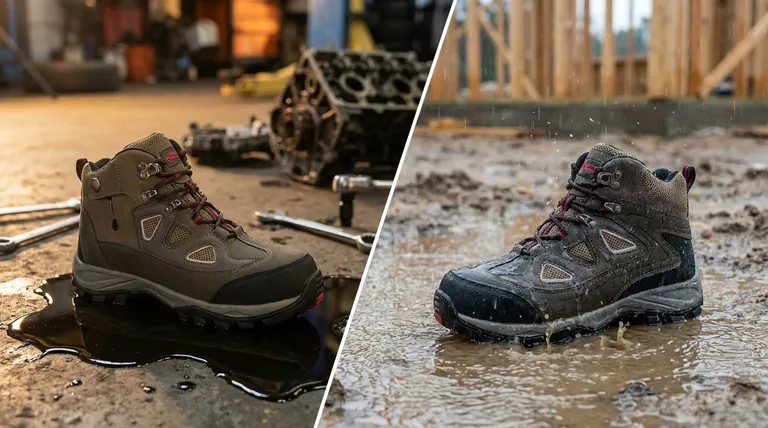
Picture an auto mechanic on a concrete shop floor. A small, unnoticed puddle of hydraulic fluid seeps into the sole of his boot. Day after day, the boot's material doesn't just get dirty; it slowly softens, turning gummy and weak. The structural integrity is failing from a chemical attack.
Now, picture a construction worker framing a house in the pouring rain. Water soaks through the leather of her boots. Her feet are waterlogged, cold, and prone to blisters. The boot itself is fine, but the environment inside has become a hazard to her health.
These two scenarios highlight a common but critical misunderstanding in safety footwear. We often group "protection" into a single category, but the threats are distinct. The choice between oil-resistance and waterproofing isn't about which is better; it's a precise diagnosis of the primary risk in your environment.
One Protects the Tool, the Other Protects the User
The fundamental psychological error is thinking a boot is just a single object. It's a system. And different parts of that system are engineered to defeat different enemies.
The core distinction is simple:
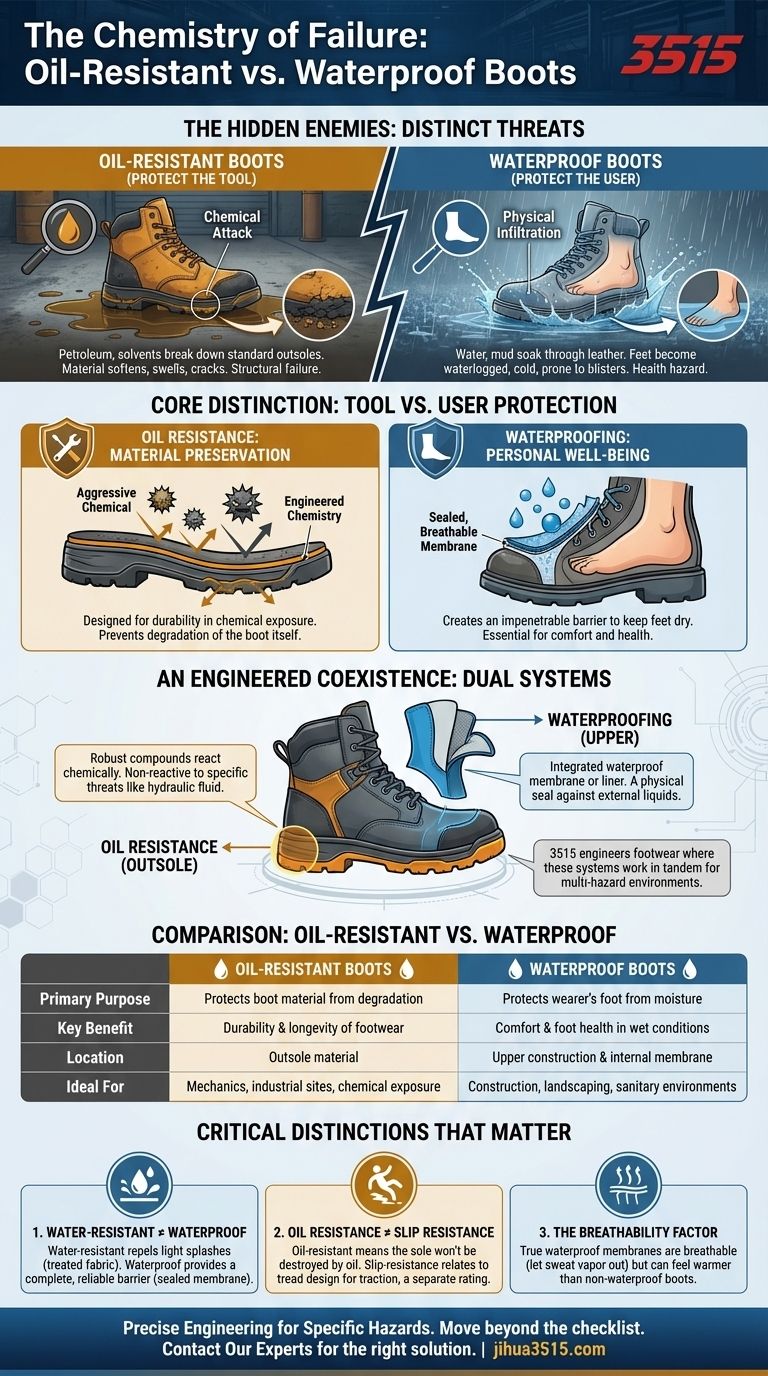
- Oil-resistant boots are designed to protect the boot itself.
- Waterproof boots are designed to protect your foot.
One feature is about material preservation. The other is about personal well-being. Understanding this changes how you evaluate and procure safety equipment.
Oil Resistance: A Defense Against Chemical Decay
The primary function of an oil-resistant boot is durability in the face of chemical exposure. Petroleum-based oils, solvents, and certain chemicals are aggressive agents that attack and break down the polymer compounds in standard outsoles.
This degradation is a quiet failure. It causes the material to swell, crack, or lose its rigidity, compromising the entire boot's structure and any integrated safety features. An "oil-resistant" rating is a certification that the outsole's chemistry is engineered to be non-reactive to these specific threats, ensuring the tool doesn't fail prematurely.
Waterproofing: A Barrier Against Physical Infiltration
Waterproofing, in contrast, is about creating an impenetrable barrier to protect the foot. Its goal is to keep the wearer's feet dry from external liquids like water, mud, or other non-corrosive fluids.
This is achieved not through the outsole's material, but through the boot's upper architecture. It involves a waterproof membrane or liner sealed within the boot's construction. This system is critical for comfort, preventing blisters, and maintaining foot health in wet or sanitary conditions, from construction sites to food processing plants.
An Engineered Coexistence
Because these two protective features reside in different components of the boot, they are not mutually exclusive. A single, high-performance boot can and often should offer both.
- Oil Resistance lives in the Outsole.
- Waterproofing is built into the Upper.
As a large-scale manufacturer, 3515 engineers footwear where these systems work in tandem. We specify robust, oil-resistant compounds for the outsole while integrating advanced waterproof membranes into the upper, creating a comprehensive solution for multi-hazard environments.
| Feature | Oil-Resistant Boots | Waterproof Boots |
|---|---|---|
| Primary Purpose | Protects the boot's material from degradation | Protects the wearer's foot from moisture |
| Key Benefit | Durability and longevity of the footwear | Comfort and foot health in wet conditions |
| Location | Outsole material | Upper construction and internal membrane |
| Ideal For | Mechanics, industrial sites, chemical exposure | Construction, landscaping, sanitary environments |
Critical Distinctions That Matter
When specifying safety footwear, subtle differences in terminology can have significant consequences.
1. "Water-Resistant" vs. "Waterproof"
These terms are not interchangeable. "Water-resistant" typically means the leather or fabric has been treated to repel water. It will withstand light splashes but will fail under sustained exposure. "Waterproof" implies a sealed membrane that provides a complete, reliable barrier.
2. Oil Resistance vs. Slip Resistance
An oil-resistant sole will not be destroyed by oil. This does not automatically mean it is slip-resistant on an oily surface. While often paired, slip-resistance is a separate rating that relates to the tread design and compound friction. Always verify both specifications.
3. The Breathability Factor
True waterproof membranes are engineered to be breathable (letting sweat vapor out), but they can feel warmer than non-waterproof boots. This is a crucial consideration for comfort and user adoption in hot climates.
Ultimately, selecting the right boot is an act of precise engineering, matching a specific tool to a specific job. For procurement managers and brand owners, this means moving beyond a checklist and diagnosing the true nature of the workplace hazards.
Choosing the right boot is a critical decision in industrial safety. To ensure your team is equipped with footwear engineered for the specific challenges they face, Contact Our Experts.
Visual Guide
Related Products
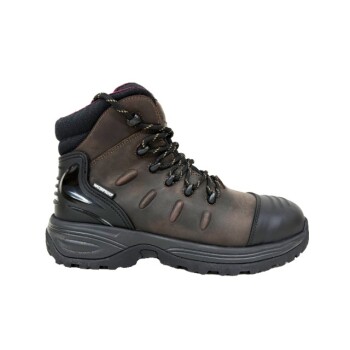
- Premium Oil Wax Leather Safety Boots for Bulk Purchase
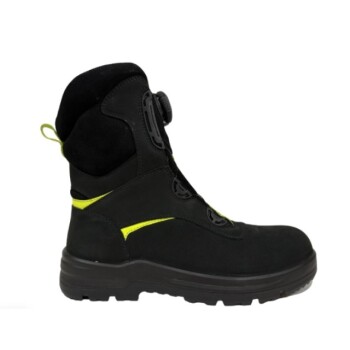
- Premium High-Cut Waterproof Safety Boots Manufacturing & Wholesale Solutions
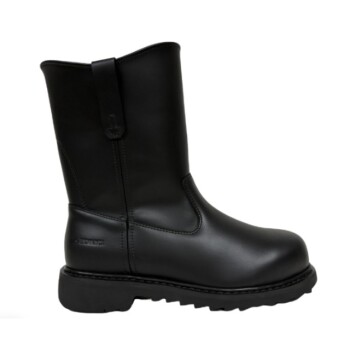
- Heavy-Duty Goodyear Welted Pull-On Safety Rigger Boot
- Premium Wholesale Waterproof Safety Boots High Performance Protection for Industrial Markets
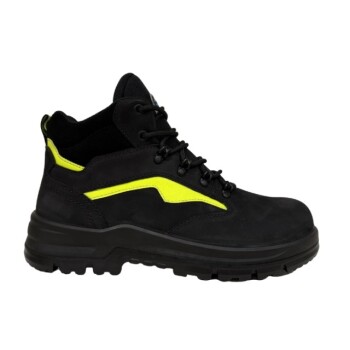
- Heavy-Duty Waterproof Nubuck Safety Boots Safety Shoes for Bulk Supply
Related Articles
- How to Choose Safety Boots That Reduce Fatigue Without Sacrificing Protection
- How Industrial Professionals Can Balance Safety Boot Requirements with Professional Appearance
- The Anatomy of Trust: A Systems Approach to Workplace Foot Protection
- The Lacing Paradox: Why the Safest Boots Contain Their Own Greatest Risk
- How to Choose Safety Boots for Workplace Hazards: A Compliance-Focused Guide