The Floor is a Battlefield We Ignore
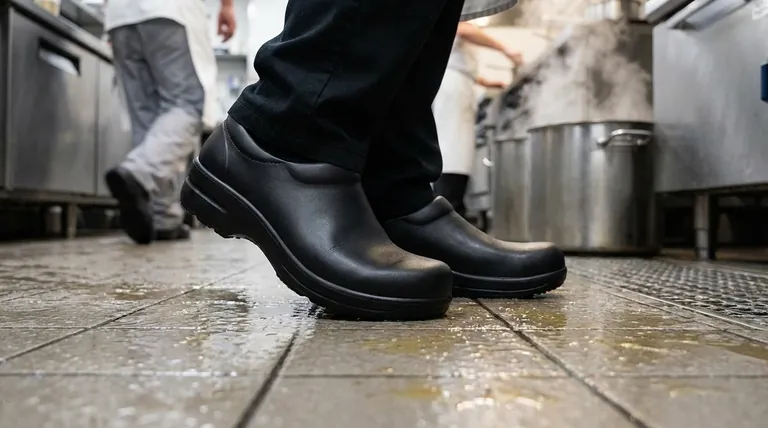
Picture a busy hospital emergency room or a high-end restaurant kitchen during the dinner rush. The focus is always on the immediate, obvious dangers: the scalpel, the open flame, the boiling pot. Our brains are wired to prioritize these acute threats.
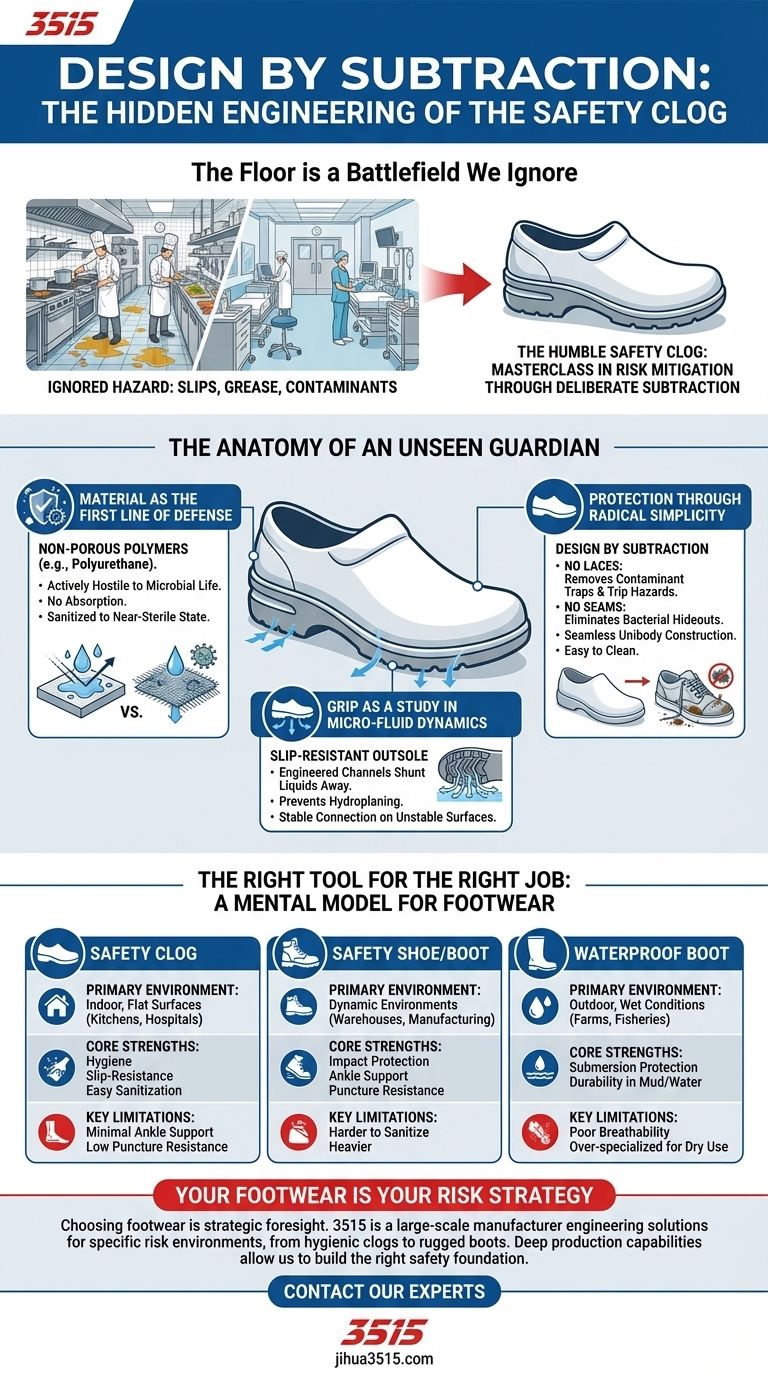
Yet, the most persistent hazard is the one we stand on. The floor is a constant battleground of spilled liquids, grease, and contaminants. The greatest risk isn't always a dramatic event, but the slow, systemic failure of choosing the wrong tool for the job. This is where the psychology of safety and the engineering of footwear intersect.
The humble safety clog is a masterclass in risk mitigation, precisely because its design is an act of deliberate subtraction.
The Anatomy of an Unseen Guardian
The genius of a safety clog isn't in what's added, but in what has been painstakingly removed. It solves the complex problems of a hygienic environment—slips, impacts, and contamination—with brutal simplicity.
H3: Material as the First Line of Defense
The first principle is impenetrability. Clogs are molded from non-porous polymers like polyurethane. This isn't just about being "water-resistant"; it's about creating a surface that is actively hostile to microbial life.
Unlike fabric or leather, which can absorb liquids and harbor bacteria within their fibers, a polymer surface offers no sanctuary. At the end of a shift, it can be sanitized to a near-sterile state. The material itself becomes a critical component of the hygiene protocol.
H3: Grip as a Study in Micro-Fluid Dynamics
A slip-resistant outsole is more than just "grippy rubber." It's an engineered system designed to manage the chaos of a wet or oily floor.
The tread patterns are carefully designed channels that actively shunt liquids away from the point of contact between the sole and the floor. This prevents the foot from hydroplaning on a thin layer of grease or water. It’s a small-scale application of fluid dynamics, ensuring a stable connection to an unstable surface.
H3: Protection Through Radical Simplicity
This is where the principle of "design by subtraction" becomes most apparent.
- No Laces: Laces are contaminant traps. They absorb spills, are notoriously difficult to clean, and can come undone, creating a trip hazard. By removing them, the clog eliminates a primary point of failure.
- No Seams: Every stitch and seam is a microscopic valley where dirt, food particles, and bacteria can hide. The clog’s smooth, seamless unibody construction leaves no quarter for contaminants.
This minimalist construction, combined with a protective closed toe and often a certified safety cap, creates a fortress for the foot that is as easy to clean as a stainless-steel countertop.
The Right Tool for the Right Job: A Mental Model for Footwear
A clog is a specialized instrument. Using it in the wrong context, like on a construction site, is as foolish as using a scalpel to hammer a nail. Understanding the trade-offs is crucial for building an effective safety system.
The choice is not about which shoe is "best," but which shoe correctly addresses the primary, daily risks of your specific environment.
| Footwear Type | Primary Environment | Core Strengths | Key Limitations |
|---|---|---|---|
| Safety Clog | Indoor, Flat Surfaces (Kitchens, Hospitals) | Hygiene, Slip-Resistance, Easy Sanitization | Minimal Ankle Support, Low Puncture Resistance |
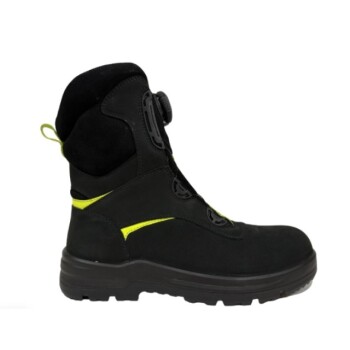
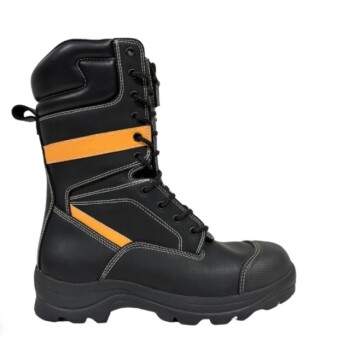
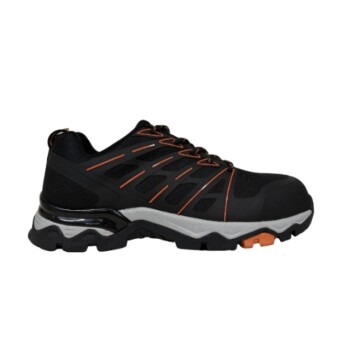
| Safety Shoe/Boot | Dynamic Environments (Warehouses, Manufacturing) | Impact Protection, Ankle Support, Puncture Resistance | Harder to Sanitize, Heavier |
| Waterproof Boot | Outdoor, Wet Conditions (Farms, Fisheries) | Submersion Protection, Durability in Mud/Water | Poor Breathability, Over-specialized for Dry Use |
Your Footwear Is Your Risk Strategy
Choosing footwear is an act of strategic foresight. It requires you to look past the obvious dangers and honestly assess the mundane, everyday risks that lead to the most common workplace injuries. It’s about creating a system that protects people from the hazards they are most likely to overlook.
As a large-scale manufacturer of all footwear types, we at 3515 understand that there is no one-size-fits-all solution. Our deep production capabilities allow us to create everything from specialized, hygienic safety clogs for the food and medical industries to rugged boots for heavy manufacturing. We don't just build shoes; we engineer solutions for specific risk environments.
If you are looking to equip your team with footwear that is perfectly aligned with their daily challenges, we can help you build the right safety foundation from the ground up. Contact Our Experts
Visual Guide
Related Products
- Premium High-Cut Waterproof Safety Boots Manufacturing & Wholesale Solutions
- Puncture-Resistant Velcro Safety Boots for Wholesale & Custom Manufacturing
- Wholesale Durable Safety Boots | Custom Steel Toe & Puncture-Resistant Manufacturing
- Premium Waterproof High-Cut Industrial Safety Boots for Wholesale and Bulk Orders
- Premium Wholesale Waterproof Safety Boots High Performance Protection for Industrial Markets
Related Articles
- The Lacing Paradox: Why the Safest Boots Contain Their Own Greatest Risk
- The Anatomy of Trust: A Systems Approach to Workplace Foot Protection
- How to Choose Safety Boots That Reduce Fatigue Without Sacrificing Protection
- How Industrial Professionals Can Balance Safety Boot Requirements with Professional Appearance
- How Safety Boots Engineer Cutting Resistance: Materials, Standards, and Real-World Protection