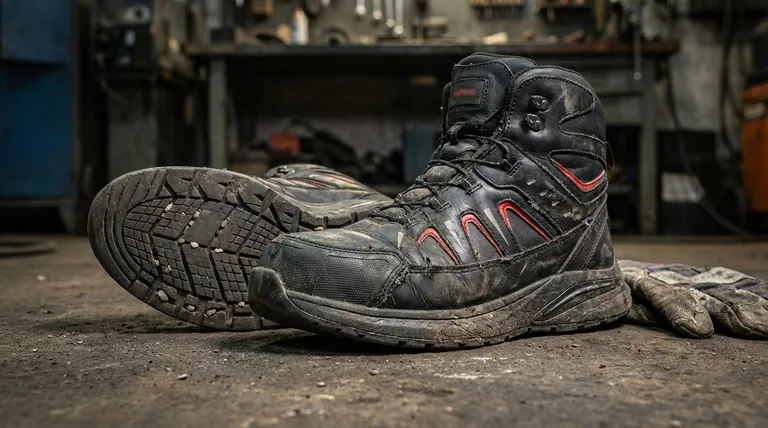
The Normalization of Small Dangers
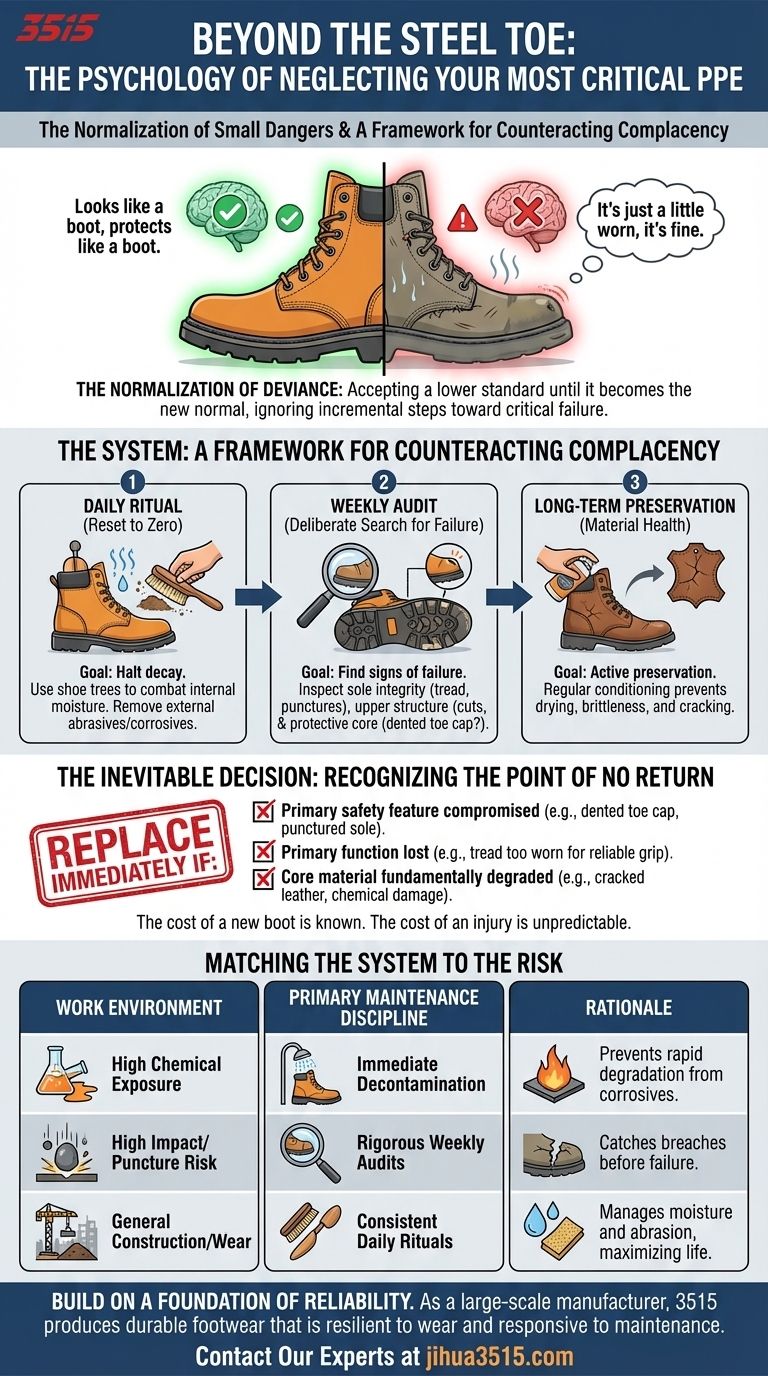
In high-risk engineering, there's a concept called the "normalization of deviance." It describes how we gradually accept a lower standard of performance until it becomes the new normal. A small, acceptable anomaly is ignored. Then another. Over time, the baseline for "safe" quietly shifts until a catastrophe reveals the accumulated risk.
This psychological flaw explains why a space shuttle fails, and it also explains why a worker's safety boot fails.
We don’t notice the slow, methodical decay of our most critical Personal Protective Equipment (PPE). A minor scuff, a slightly worn tread, a bit of frayed stitching—our brain dismisses these as trivial signs of use, not as incremental steps toward a critical failure. The boot still looks like a boot, so we assume it still protects like one.
This is a dangerous assumption. Proper footwear maintenance is not about appearances; it is a rigorous system designed to counteract our own complacency.
The System: A Framework for Counteracting Complacency
A professional doesn't leave safety to chance. They build systems. A maintenance routine for your safety footwear is just that: a simple, repeatable system to ensure your gear performs at its certified rating, day after day.
This system is built on three distinct disciplines: the daily reset, the weekly audit, and long-term preservation.
The Daily Ritual: Resetting to Zero
The goal after every shift is to return the footwear to a neutral, stable state. This isn't just cleaning; it's a fundamental reset that halts the progress of decay.
- Fight Internal Enemies: Use shoe trees. They are not a luxury. They are a tool to combat the boot's most insidious enemy: internal moisture. Sweat degrades linings and leather from the inside out. A shoe tree draws out that moisture, preserving the material and maintaining the shoe's structural shape.
- Remove External Corrosives: A quick brush or wipe-down removes dirt, dust, and chemical residues. Left unattended, these abrasive and corrosive particles slowly grind away at stitching and compromise the integrity of the upper material.
The Weekly Audit: A Deliberate Search for Failure
Complacency is beaten by active inspection. A weekly audit is not a casual glance; it's a focused, physical examination with the specific goal of finding signs of failure.
- Sole Integrity: Is the anti-slip tread worn smooth? Has the sole begun to separate from the upper? Are there any embedded objects that could lead to a puncture? Grip and puncture resistance are not optional features.
- Upper Structure: Look for deep cuts, punctures, or failing seams. The upper is the boot's first line of defense, and any breach compromises the entire system.
- Protective Core: Carefully examine the steel or composite toe area. If the boot has sustained a significant impact, the toe cap may be dented or compromised. It did its job once, but its ability to protect against the next impact is now critically uncertain.
The Long-Term Investment: Preserving Material Health
For materials like leather, preservation is an active process. Regular conditioning is not about making the boot look shiny. It is a technical necessity.
Conditioning keeps leather supple and hydrated, preventing it from drying, becoming brittle, and cracking under stress. A cracked upper is a failed upper.
The Inevitable Decision: Recognizing the Point of No Return
Maintenance extends a boot's life, but it cannot make it immortal. The most critical part of the system is knowing when to retire a piece of equipment.
Our instinct is often to delay this cost. But the cost of a new pair of boots is a known, manageable expense. The cost of a puncture wound, a crushed foot, or a slip-and-fall injury is unpredictable and life-altering.
A boot must be replaced if:
- A primary safety feature is compromised (e.g., a dented toe cap, a punctured sole).
- Its primary function is lost (e.g., the tread is too worn to provide reliable grip).
- The core material is fundamentally degraded (e.g., cracked leather, chemical damage).
Matching the System to the Risk
Your maintenance discipline should reflect the specific dangers of your environment. A one-size-fits-all approach is inefficient.
| Work Environment | Primary Maintenance Discipline | Rationale |
|---|---|---|
| High Chemical Exposure | Immediate Decontamination | Prevents rapid material degradation from corrosives. |
| High Impact/Puncture Risk | Rigorous Weekly Audits | Catches breaches in soles and toe caps before failure. |
| General Construction/Wear | Consistent Daily Rituals | Manages moisture and abrasion, maximizing service life. |
The foundation of any effective safety program is starting with equipment engineered for the demands of the job. A well-designed boot is more resilient to wear and more responsive to maintenance. As a large-scale manufacturer, 3515 produces a comprehensive range of footwear designed for durability, providing a strong baseline of resilience that makes your safety system effective from day one.
Ensure your team is built on a foundation of reliability. Contact Our Experts
Visual Guide
Related Products
- Premium Suede Sport Safety Shoes for Wholesale & Bulk Orders
- Premium Lightweight Safety Shoes for Wholesale & Bulk Orders
- Wholesale Anti-Smash & Puncture-Proof Safety Shoes Custom Manufacturing for Brands
- Premium KPU Injection Athletic Style Safety Shoes
- Premium Safety Shoes with Rotating Buckle Safety Sneakers
Related Articles
- The Ghost in the Machine: Why an Obsolete Footwear Standard Creates Modern Risk
- Beyond the Steel Toe: The Hidden Ergonomics of Workplace Safety
- Why Traditional Laces Are a Hidden Safety Risk—And What to Do About It
- The True Cost of Skipping Safety Shoes: Long-Term Risks and Smart Protection
- How Safety Shoe Engineering Prevents Workplace Injuries Across Industries



















