The Manager's Dilemma
Imagine a senior project manager walking a sprawling construction site. In an hour, she has to present a progress update to a group of executives in a polished boardroom.
Traditionally, this scenario presents a friction point. She could wear bulky, over-the-top safety boots all day, feeling out of place and unprofessional in the meeting. Or she could keep a pair of dress shoes in her office, creating the hassle of a wardrobe change.
This isn't a problem of logistics. It's a problem of psychology. The right tool for one environment feels like a costume in another. This conflict creates a subtle but powerful resistance to safety compliance.
The Psychology of Protection
We often assume that resistance to personal protective equipment (PPE) is about discomfort or inconvenience. But frequently, it's about identity.
Clunky, purpose-built safety gear can feel like a uniform that separates "the field" from "the office." For professionals who straddle both worlds, this can be a source of cognitive dissonance. They don't want to look like a visitor on their own project, nor an outsider in their own meeting.
The greatest innovation in modern safety footwear, therefore, isn't just a new material or construction method. It's the near-total elimination of this psychological trade-off. It’s engineering that makes protection invisible.
The Illusion of a Normal Shoe
Today's safety shoe achieves this by building protection into the silhouette of conventional footwear, rather than adding it on top. This is a feat of strategic, minimalist engineering.
The Disappearing Toe Cap: Steel vs. Composite
The heart of a safety shoe is its protective toe cap.
- Steel: The traditional standard, steel offers maximum impact resistance in a relatively thin profile. However, it's heavier and conducts temperature.
- Composite Materials: Lighter and non-conductive, composite toes (like carbon fiber or Kevlar) are a game-changer for style. They can be molded into less bulbous, more discreet shapes, allowing for a sleek profile that's indistinguishable from a standard dress shoe or sneaker.
The choice is an engineering trade-off: the brute strength and slimness of steel versus the lightweight, climate-friendly nature of composites.
The Sole: A Silent, Multi-Layered Guardian
The sole of a modern safety shoe is a platform of hidden technology. While the exterior might look like a classic welt or a sleek athletic base, the layers within provide critical protection.
- Anti-Perforation Midsoles: Woven composite fabrics or thin steel plates are layered into the sole to prevent punctures from below, remaining completely flexible and unseen.
- Anti-Slip Treads: Advanced rubber compounds and tread patterns are designed for maximum grip on wet or oily surfaces, without needing aggressive, heavy lugs.
- Electrostatic Dissipative (ESD) Properties: Special compounds are used to safely discharge static electricity, a critical feature that is entirely invisible.
How a Shoe is Born: Construction Defines Character
The method used to attach the sole to the upper dictates the shoe's final look, flexibility, and durability. It’s the architectural blueprint of the footwear.
Cementing: For Agility and Formality
The sole is attached with a powerful adhesive, just like in high-end sneakers and formal dress shoes. This method allows for lightweight construction and sleek, flexible designs, making it perfect for safety shoes intended to blend into an office or light-duty environment.
Goodyear Welting: A Testament to Durability
A strip of leather (the "welt") is stitched to both the upper and the sole. This time-honored technique, found in premium work boots and classic dress shoes, creates an incredibly robust, water-resistant, and re-soleable shoe. It lends a classic, substantial aesthetic that signals quality.
Direct Injection Molding: The Seamless Bond
The upper is placed in a mold, and liquid sole material (like polyurethane) is injected, fusing directly to it. This creates a seamless, watertight bond perfect for modern, athletic-style safety shoes where a clean, integrated look is paramount.
The Engineer's Compromise
Perfect integration is an ideal, and even the best designs must navigate inherent compromises.
- Protection vs. Profile: The highest levels of protection, like external metatarsal guards for the top of the foot, will always add bulk. The key is matching the level of protection to the actual hazard, not over-engineering for risks that don't exist in your environment.
- Comfort is Non-Negotiable: A shoe that is technically safe but painfully uncomfortable is, in practice, unsafe. It leads to fatigue, distraction, and a desire to remove it. Ergonomic design, cushioned insoles, and proper fit are not features—they are foundational requirements.
This level of thoughtful engineering—balancing materials, construction methods, and human factors—is what defines a truly effective safety footwear program. It moves beyond simple compliance to genuine, wearable performance. As a large-scale manufacturer, 3515 specializes in producing this new generation of footwear, with production capabilities encompassing all types of safety shoes and boots engineered for this exact balance.
Ready to equip your team with safety footwear that protects their feet and respects their professional identity? Contact Our Experts.
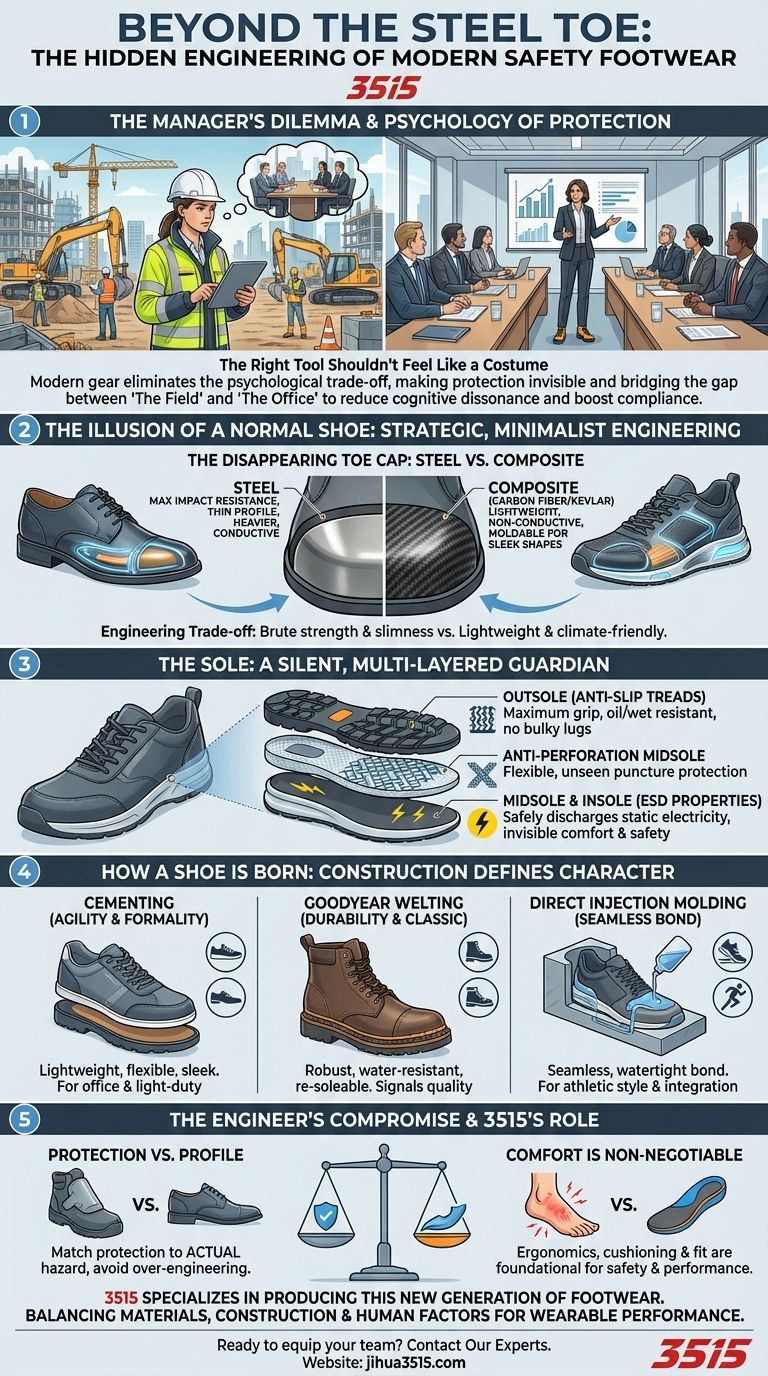
Visual Guide
Related Products
- Premium Suede Sport Safety Shoes for Wholesale & Bulk Orders
- Premium Lightweight Safety Shoes for Wholesale & Bulk Orders
- Wholesale Anti-Smash & Puncture-Proof Safety Shoes Custom Manufacturing for Brands
- Premium KPU Injection Athletic Style Safety Shoes
- Premium Safety Shoes with Rotating Buckle Safety Sneakers
Related Articles
- The Ghost in the Machine: Why an Obsolete Footwear Standard Creates Modern Risk
- Beyond the Steel Toe: The Hidden Ergonomics of Workplace Safety
- Why Traditional Laces Are a Hidden Safety Risk—And What to Do About It
- The True Cost of Skipping Safety Shoes: Long-Term Risks and Smart Protection
- How Safety Shoe Engineering Prevents Workplace Injuries Across Industries