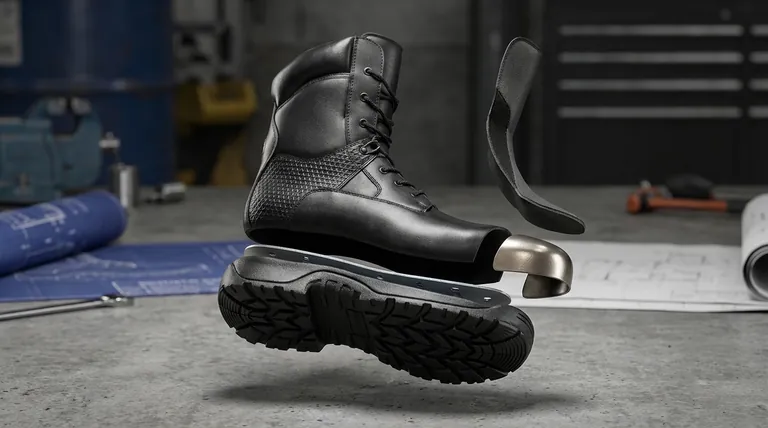
The Overlooked Complexity of a Simple Tool
We have a cognitive bias for the complex. We admire intricate machines and sophisticated software, often overlooking the profound engineering embedded in the simplest tools. Yet, in hazardous environments, survival and safety depend on these fundamentals.
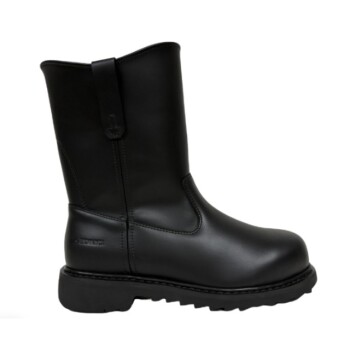
The safety wellington boot is a perfect example. It appears simple—a rubber boot. But it's not. It is a purpose-built system of protection, where every component is a deliberate choice designed to counteract a specific physical threat. It’s less a piece of clothing and more a piece of personal protective engineering.
More Than Just a Shell
To understand its value, you must look at it as a system of distinct, interlocking defenses. Each element addresses a different aspect of risk.
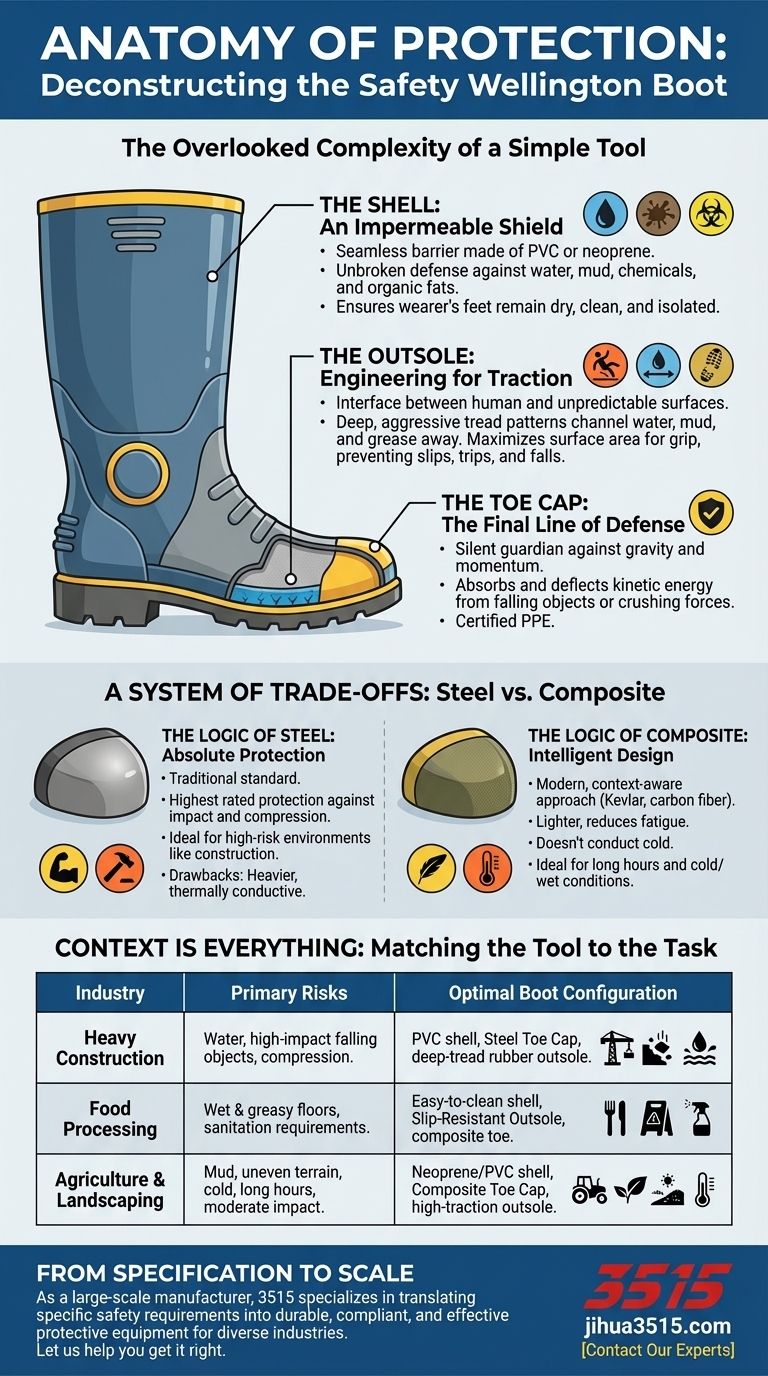
The Shell: An Impermeable Shield
The first job of a welly is to create a barrier. On a farm, this means protection from water and mud. In a food processing plant, it's a defense against water, cleaning agents, and organic fats.
The seamless shell, typically made of PVC or neoprene, is the obvious feature. But its true function is to provide an unbroken defense against the environment, ensuring the wearer's feet remain dry, clean, and isolated from external contaminants.
The Outsole: Engineering for Traction
Slips, trips, and falls are the silent majority of workplace accidents. The outsole of a safety welly is the direct countermeasure. It is not just a platform for walking; it is an interface between a human and an unpredictable surface.
The deep, aggressive tread patterns are a feat of micro-engineering. They are designed to channel water, mud, and grease away from the point of contact, maximizing the surface area that can grip the ground. This small detail is the difference between a secure step and a catastrophic fall.
The Toe Cap: The Final Line of Defense
The protective toe cap is the most dramatic feature—a silent guardian against the laws of gravity and momentum. It exists for one reason: to absorb and deflect kinetic energy from a falling object or a crushing force.
This single component turns a simple boot into certified PPE. The choice of its material is one of the most critical decisions in its design.
A System of Trade-offs: Steel vs. Composite
The decision between a steel or composite toe cap is not about which is "better," but which is right for the specific context. It's a classic engineering trade-off between absolute strength and nuanced performance.
The Logic of Steel: Absolute Protection
Steel is the traditional standard for a reason. It offers the highest rated protection against impact and compression.
Imagine a construction site, where a dropped piece of rebar or a heavy tool is a constant possibility. In this environment, the uncompromising strength of steel is the primary concern. Its drawbacks—weight and thermal conductivity—are secondary to its core function of preventing a severe injury.
The Logic of Composite: Intelligent Design
Composite materials (like Kevlar or carbon fiber) represent a more modern, context-aware approach to safety.
Picture a landscaper or agricultural worker on their feet for ten hours in cold, wet conditions. A lighter composite toe cap reduces fatigue, which is itself a safety risk. It doesn't conduct cold, preventing discomfort and potential long-term harm. In these roles, all-day performance and environmental comfort are just as critical as impact protection.
Context is Everything: Matching the Tool to the Task
There is no universally "best" safety welly. The optimal choice is always a function of the environment. The primary risks of the job should dictate the boot's specification.
| Industry | Primary Risks | Optimal Boot Configuration |
|---|---|---|
| Heavy Construction | Water, high-impact falling objects, compression. | PVC shell, Steel Toe Cap, deep-tread rubber outsole. |
| Food Processing | Wet & greasy floors, sanitation requirements. | Easy-to-clean shell, Slip-Resistant Outsole, composite toe. |
| Agriculture & Landscaping | Mud, uneven terrain, cold, long hours, moderate impact. | Neoprene/PVC shell, Composite Toe Cap, high-traction outsole. |
From Specification to Scale
For distributors, brand owners, and large organizations, the challenge isn't just understanding these nuances—it's sourcing a diverse range of footwear that meets them reliably and at scale. Equipping hundreds or thousands of workers requires a manufacturing partner who understands the deep connection between design, material, and application.
As a large-scale manufacturer, 3515 specializes in this exact challenge. We produce a comprehensive range of footwear, including safety wellingtons tailored for the distinct hazards of industries like construction, agriculture, and food processing. We translate specific safety requirements into durable, compliant, and effective protective equipment.
Choosing the right boot is a critical operational decision. Let us help you get it right. Contact Our Experts
Visual Guide
Related Products
- Heavy-Duty Goodyear Welted Pull-On Safety Rigger Boot
- Durable Waterproof Rain Boots | Custom Manufacturer for Wholesale & Brands
- Wholesale Durable Safety Boots | Custom Steel Toe & Puncture-Resistant Manufacturing
- Puncture-Resistant Velcro Safety Boots for Wholesale & Custom Manufacturing
- Premium Wholesale Tactical Style Safety Shoes Boots with Quick Lacing
Related Articles
- Beyond the Tread: The Molecular Battle for Grip on Oily Surfaces
- How to Choose Safety Boot Certifications for Your Industry's Hazards
- How Safety Boot Features Address Industry-Specific Workplace Hazards
- The True Cost of a Safety Boot: Why Your Footwear Budget Is Breaking
- How Safety Boot Engineering Protects Against Workplace Hazards: A Buyer's Guide