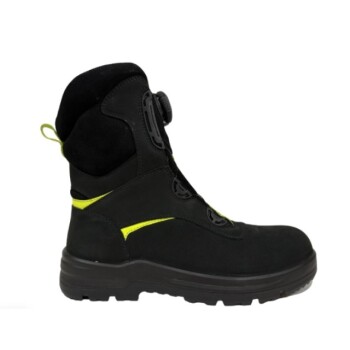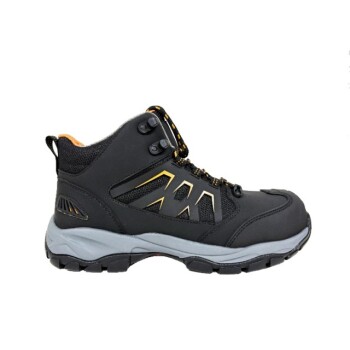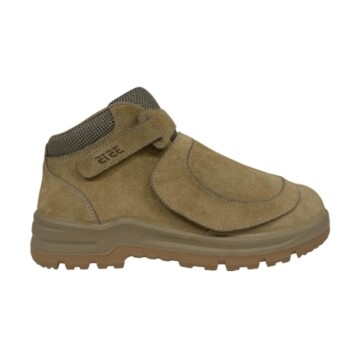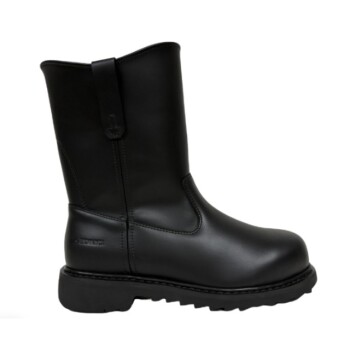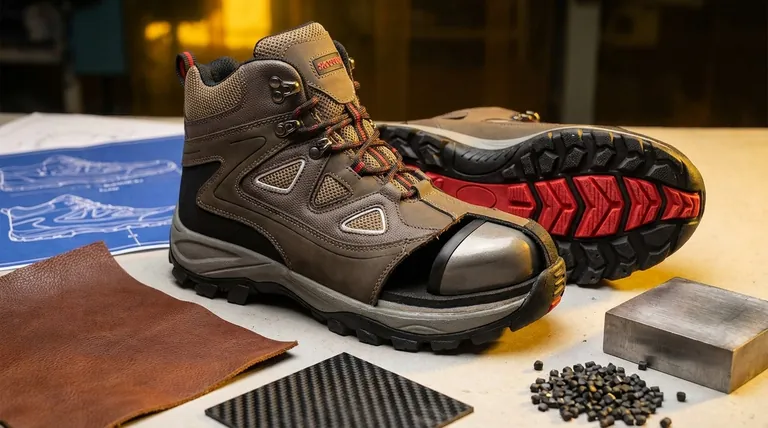
A System Designed for a Single Moment
Think about the last hour of a ten-hour shift. A welder on a scaffold, a technician in a chemical plant, a logistics operator on a concrete floor. Their focus is on the task, but their body is keeping a silent score. The weight of their boots, the feedback from the ground, the confidence in their footing—it all adds up.
A safety boot isn't footwear; it's a piece of personal engineering. Its success or failure is determined long before it's worn, in the selection of its core materials. This choice is not about aesthetics. It is a calculated response to a specific set of risks.
Deconstructing the Protective System
A safety boot is a system of materials working in concert. To understand the whole, you must first understand the function of its parts.
The Upper: Your First Barrier
The upper is the boot's chassis. It provides structural integrity and the primary defense against the immediate environment.
- Leather: The classic choice for a reason. Its fibrous structure offers unmatched durability against abrasion and a natural degree of breathability. It's the standard for environments where mechanical wear and tear is the primary enemy.
- Synthetics & Textiles: Where leather offers ruggedness, synthetics offer specialization. They can be engineered for extreme breathability or flexibility, reducing the boot's overall weight and increasing comfort in less physically aggressive environments.
- PVC, Rubber, & Neoprene: These are not materials; they are seals. In environments with chemical splash or constant moisture, their non-porous nature is the only thing that matters. They create an impermeable barrier between the foot and the hazard.
The Toe Cap: The Science of Impact Resistance
The protective toe cap is the boot's most iconic feature. It is a marvel of material science, designed to absorb and deflect kinetic energy in a critical moment.
- Steel: The original and the benchmark for raw strength. Its density provides maximum impact protection, but it comes with a weight penalty paid with every step.
- Composite (Kevlar, Carbon Fiber): The modern solution. These materials are significantly lighter, reducing fatigue over a long day. Crucially, they do not conduct electricity or heat, making them essential for electricians or workers in extreme temperatures.
- Alloy (Aluminum, Titanium): A sophisticated compromise, offering the strength of metal at a fraction of steel's weight. It provides robust protection without the associated fatigue.
The Outsole: The Critical Interface with the Ground
The outsole dictates the relationship between the worker and their environment. It governs grip, stability, and the absorption of thousands of daily impacts.
- Rubber: Prized for its exceptional grip (high coefficient of friction) and its resistance to heat, oil, and slips. It is the definitive choice for unpredictable or hazardous surfaces.
- Polyurethane (PU): A lighter, more flexible material known for its incredible shock absorption. It acts as a cushion, mitigating the cumulative stress of standing on hard surfaces, directly reducing physical fatigue.
- Thermoplastic Polyurethane (TPU): The high-performance hybrid. It combines the durability and resistance of rubber with the lightweight, cushioning properties of PU, offering an optimal balance for demanding, multi-faceted roles.
The Psychology of the Right Compromise
There is no single "best" material. Every choice is a trade-off, an engineering decision that impacts not just safety, but the worker's physical and mental stamina.
The Weight Tax
A heavy boot with a steel toe feels reassuringly solid. But over 10,000 steps, every extra gram becomes a tax on the body's energy reserves. This cumulative fatigue doesn't just lead to sore feet; it can diminish focus and increase the risk of late-shift errors. A lighter composite boot might be a more intelligent investment in human performance.
Specificity Over General Strength
We think of leather as "durable," but that term is meaningless without context. A full-grain leather boot is incredibly durable on a construction site but will fail catastrophically in a chemical spill. A PVC boot, while less resistant to abrasion, offers absolute protection in that specific context. True safety comes from matching the material's specific resistance to the specific hazard.
Matching the Material to the Mission
The right choice becomes clear when you define the mission.
| Environment | Key Hazard(s) | Optimal Material System |
|---|---|---|
| Heavy Industry/Construction | Impact, Abrasion, Puncture | Leather Upper + Steel Toe + Rubber Outsole |
| Electrical/High-Security | Electrical Shock, Metal Detection | Synthetic Upper + Composite Toe + PU/Rubber Outsole |
| Chemical/Agriculture | Liquid Permeation, Slips | PVC or Neoprene Upper + Steel/Composite Toe + Rubber Outsole |
| Logistics/Warehouse | Long Hours on Concrete, Fatigue | Textile/Synthetic Upper + Composite Toe + PU Outsole |
For organizations responsible for outfitting entire teams, understanding this material science is a fundamental aspect of operational excellence. It is about creating a safer, more productive environment by providing workers with tools so well-suited to their task that they become an extension of themselves.
As a large-scale manufacturer, 3515 has the expertise to engineer footwear for every specific hazard. We build comprehensive footwear solutions for distributors and brand owners, utilizing the precise combination of materials your workforce needs—from the toughest leathers and steels to the lightest composites and most advanced polymers. Let us help you make the right engineering choice for your team. Contact Our Experts
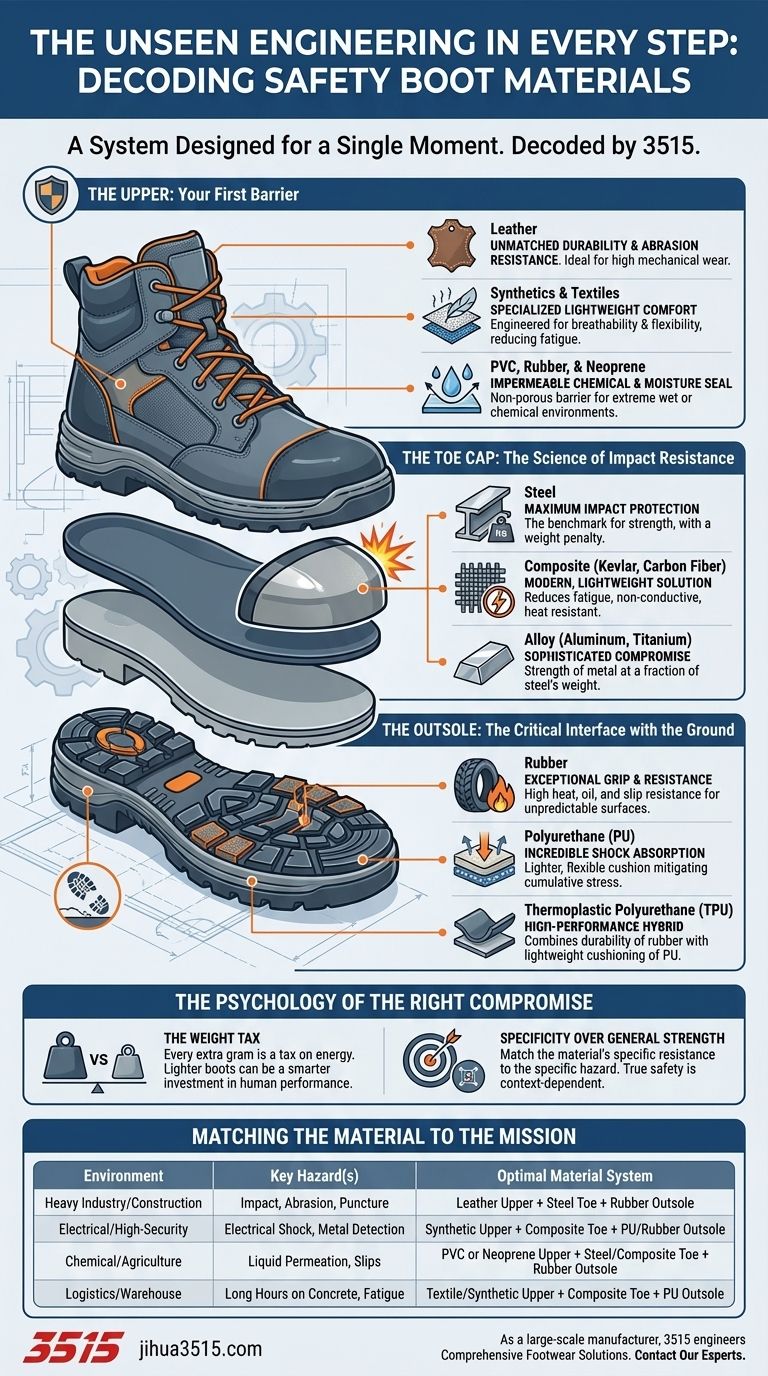
Visual Guide
Related Products
- Puncture-Resistant Velcro Safety Boots for Wholesale & Custom Manufacturing
- Wholesale Durable Safety Boots | Custom Steel Toe & Puncture-Resistant Manufacturing
- Premium Grain Leather Safety Boots for Bulk Supply
- Heavy-Duty Waterproof Nubuck Safety Boots Safety Shoes for Bulk Supply
- Premium High-Cut Waterproof Safety Boots Manufacturing & Wholesale Solutions
Related Articles
- The Unseen Engineering: Why Steel Toes Succeed or Fail in Oily Environments
- The Anatomy of Trust: A Systems Approach to Workplace Foot Protection
- The Lacing Paradox: Why the Safest Boots Contain Their Own Greatest Risk
- How Industrial Professionals Can Balance Safety Boot Requirements with Professional Appearance
- How to Choose Safety Boots That Reduce Fatigue Without Sacrificing Protection