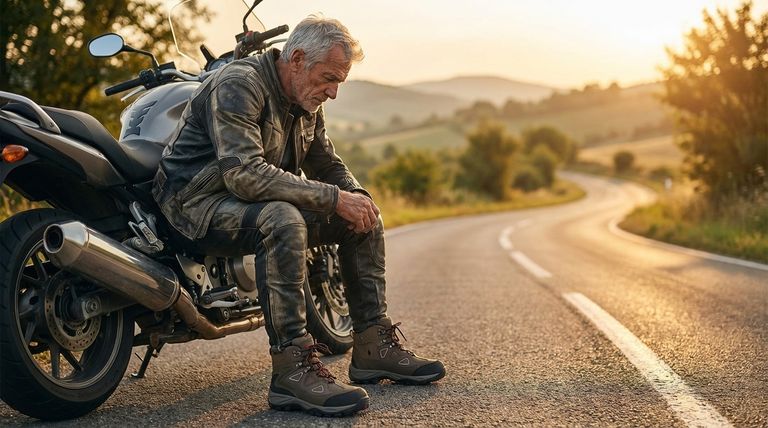
For older riders, the preference for motorcycle boots over regular shoes is a direct response to the cumulative physical toll of riding. Decades of exposure to road vibrations and shocks can lead to chronic discomfort in the feet and ankles, and proper boots are specifically engineered to provide the support and shock absorption needed to mitigate this long-term wear and tear.
The decision to wear dedicated motorcycle boots stems from a deeper understanding that regular footwear fails to provide the critical protection, support, and stability required to manage both the immediate risks and the long-term physical stresses of motorcycling.
The Engineering Behind Rider Safety and Comfort
A common misconception is that any sturdy boot offers sufficient protection. However, motorcycle boots are specialized pieces of safety equipment designed with the unique physics of riding and crashing in mind.
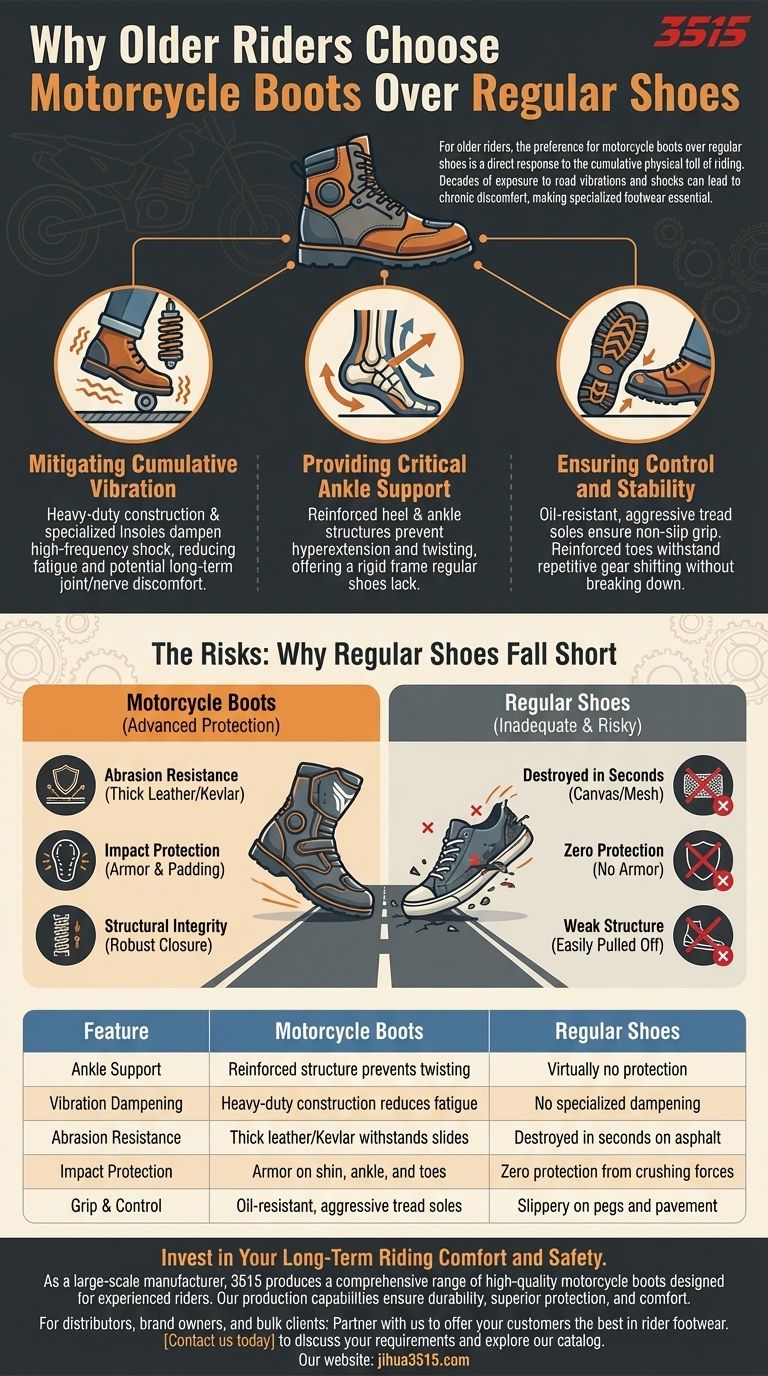
Mitigating Cumulative Vibration
Years on the road mean thousands of hours of your feet resting on vibrating pegs. This constant, high-frequency shock travels up through your feet, ankles, and legs.
Motorcycle boots use heavy-duty construction and specifically designed insoles to dampen these vibrations, reducing fatigue and the potential for long-term joint or nerve discomfort.
Providing Critical Ankle Support
Your ankles are exceptionally vulnerable during a ride and especially in an accident. Regular shoes offer virtually no protection against the twisting forces (torsion) that can occur if your foot is caught or trapped.
Motorcycle boots are built with reinforced structures around the heel and ankle to prevent hyperextension and twisting, providing a rigid frame that regular footwear completely lacks.
Ensuring Control and Stability
Proper control of your motorcycle starts where you connect with the bike and the ground.
The soles of motorcycle boots are made from oil-resistant compounds with aggressive tread patterns, ensuring a non-slip grip on the pegs and on pavement. They also feature reinforced toes to withstand the repetitive pressure of shifting gears without breaking down.
The Risks: Why Regular Shoes Fall Short
Understanding the specific failures of standard footwear highlights why experienced riders are so insistent on proper gear. Choosing sneakers or work boots introduces significant, unnecessary risks.
A Critical Lack of Abrasion Resistance
In a slide, asphalt acts like a high-speed belt sander. Regular shoes, made from canvas, soft leather, or mesh, can be destroyed in seconds, leaving your skin and bone exposed.
Motorcycle boots use thick leather, Kevlar, and other durable synthetics precisely because they can withstand prolonged abrasion, giving you a crucial layer of defense.
No Meaningful Impact Protection
Regular shoes offer zero protection from the crushing force of a motorcycle falling on your foot or from impacts with other objects.
Purpose-built boots incorporate armor and impact-absorbing padding over the ankles, shin, and toes. This reinforcement is designed to distribute and absorb impact energy, preventing fractures and crush injuries.
Weak Structural Integrity
The construction of a regular shoe is not designed to stay on your foot during the violent tumbling of a crash. Laces can snap, and the shoe itself can be pulled off easily.
Motorcycle boots utilize robust closure systems and a rigid overall structure to ensure the boot remains securely in place when you need it most.
Making the Right Choice for Your Ride
Your choice of footwear should directly reflect your riding style and priorities.
- If your primary focus is long-distance comfort: Look for touring boots that blend robust protection with features designed to reduce fatigue from vibration and offer more flexibility for walking.
- If your primary focus is commuting and versatility: Consider shorter riding shoes that still offer reinforced toes, ankle protection, and abrasion resistance but in a more casual-looking package.
- If your primary focus is maximum safety for aggressive riding: Choose full-height race or sport boots with extensive external armor, ankle braces, and replaceable sliders.
Ultimately, investing in proper motorcycle boots is an investment in your own long-term comfort and safety on the road.
Summary Table:
| Feature | Motorcycle Boots | Regular Shoes |
|---|---|---|
| Ankle Support | Reinforced structure prevents twisting | Virtually no protection |
| Vibration Dampening | Heavy-duty construction reduces fatigue | No specialized dampening |
| Abrasion Resistance | Thick leather/Kevlar withstands slides | Destroyed in seconds on asphalt |
| Impact Protection | Armor on shin, ankle, and toes | Zero protection from crushing forces |
| Grip & Control | Oil-resistant, aggressive tread soles | Slippery on pegs and pavement |
Invest in Your Long-Term Riding Comfort and Safety
As a large-scale manufacturer, 3515 produces a comprehensive range of high-quality motorcycle boots designed for the specific needs of experienced riders. Our production capabilities ensure durability, superior protection, and the comfort required for long-distance touring, commuting, or aggressive riding.
For distributors, brand owners, and bulk clients: Partner with us to offer your customers the best in rider footwear. Contact us today to discuss your requirements and explore our catalog.
Visual Guide
Related Products
- High Performance Fire-Retardant Waterproof Safety Boots
- Premium High-Cut Waterproof Safety Boots Manufacturing & Wholesale Solutions
- Wholesale Tactical Boots High-Traction & Reflective for Bulk & Brand Orders
- Durable Goodyear Welt Leather Work Boots for Wholesale & Private Label
- Wholesale High-Traction Camo Boots - Custom Manufacturer for Brands
People Also Ask
- Why are waterproof safety boots recommended for certain work environments? Essential Protection for Wet & Hazardous Jobs
- What roles do 3D vision systems and industrial robots play in the manufacturing of fire safety boots? Smart Automation
- What is the difference between waterproof and water-resistant boots? Choose the Right Footwear for Any Condition
- What should you look for to ensure boots are fully waterproof? The Essential 2-Part System
- How can you ensure your feet stay dry during winter walks? A Two-Part Defense System for Total Comfort