
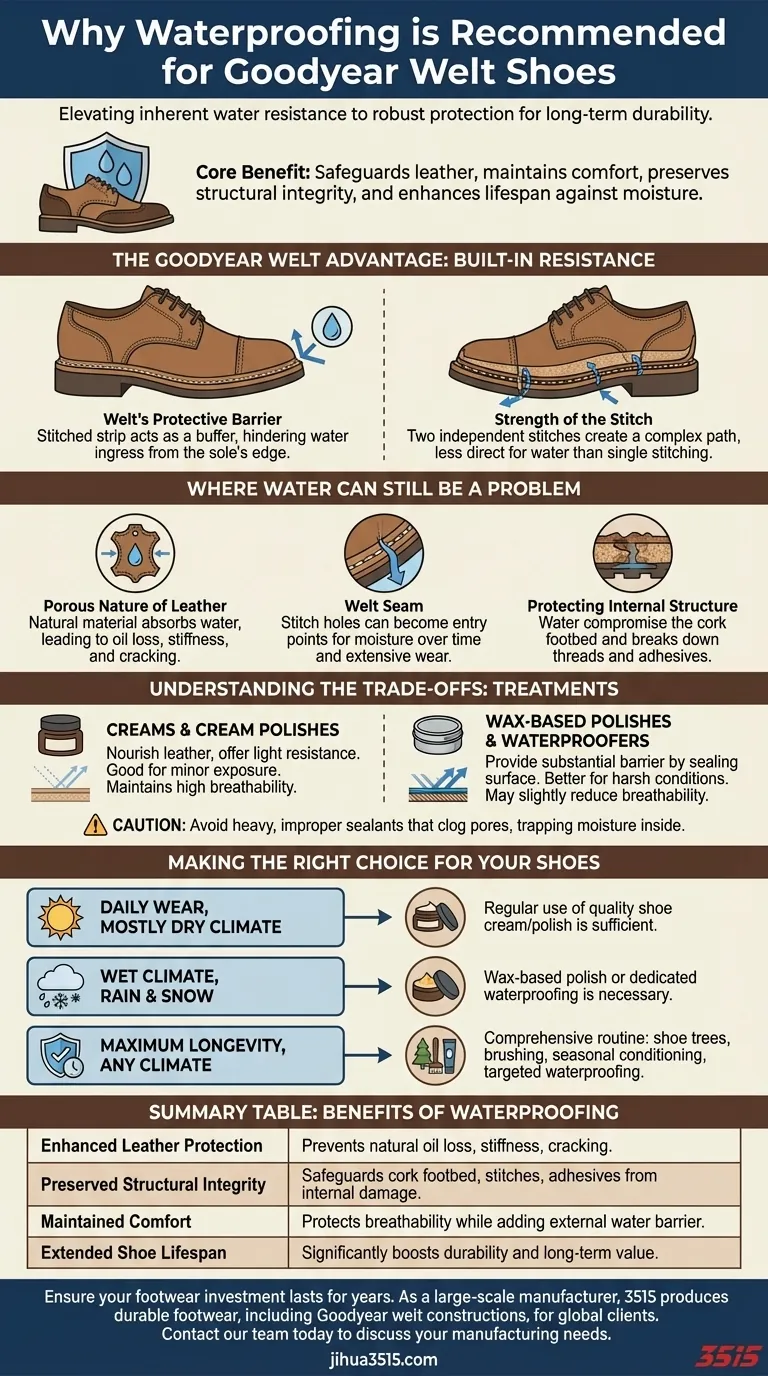
At its core, waterproofing is recommended for Goodyear welt shoes to elevate their inherent water resistance into more robust protection. This preventative care safeguards the leather, maintains comfort, and preserves the shoe's structural integrity, significantly enhancing its durability against moisture.
The Goodyear welt construction provides excellent water resistance, but not complete waterproofing. Applying a treatment closes this gap, protecting your investment from the long-term damage that repeated water exposure can cause.
The Built-in Advantage: Why Goodyear Welts Resist Water
A Goodyear welted shoe is engineered for durability, and that design provides a natural defense against water from the ground up.
The Welt's Protective Barrier
The "welt" is a strip of leather stitched around the bottom edge of the shoe's upper. This component acts as a buffer between the upper and the outsole.
This design means water has a much harder time seeping in from the side of the sole, which is a common failure point in lesser constructions.
The Strength of the Stitch
The Goodyear welt method uses two independent stitches. One attaches the welt to the upper and insole, and another attaches it to the outsole.
This creates a more complex and less direct path for water to travel into the shoe's interior compared to a single stitch that goes straight through to the inside.
Where Water Can Still Be a Problem
While highly resistant, the construction is not a perfect seal. The materials themselves are the primary reason additional waterproofing is a wise decision.
The Porous Nature of Leather
Leather is a natural, porous material. Both the upper and a traditional leather sole will absorb water if exposed for long enough.
When leather becomes saturated and then dries, it can lose its natural oils, leading to stiffness, cracking, and a shortened lifespan.
The Welt Seam
Over time and with extensive wear, the stitch holes along the welt can become potential points for moisture to wick through, especially during prolonged exposure like walking through puddles or snow.
Protecting Internal Structure
Water that gets inside can compromise the cork footbed, which is essential for comfort and support. It can also lead to premature breakdown of the threads and adhesives used in construction.
Understanding the Trade-offs
Applying waterproofing treatments is a balancing act. It's crucial to use the right products to avoid potential downsides.
Breathability is Key
One of leather's greatest assets is its breathability. Heavy, improper sealants (like some silicone sprays) can clog the leather's pores entirely.
This traps moisture and perspiration inside the shoe, which can lead to discomfort and accelerate the breakdown of the leather from the inside out.
Creams vs. Waxes
Conditioning creams and cream polishes nourish the leather and offer a light level of water resistance, which is often sufficient for minor exposure.
Wax-based polishes and dedicated waterproofing products provide a much more substantial barrier by sealing the surface. These are better for harsher conditions but may slightly reduce breathability.
Making the Right Choice for Your Shoes
Your approach to waterproofing should match your environment and how you use your shoes.
- If your primary focus is daily wear in a mostly dry climate: Regular use of a quality shoe cream or cream polish will provide enough protection for occasional encounters with rain.
- If you live in a wet climate or frequently face rain and snow: Applying a wax-based polish or a dedicated waterproofing conditioner is a necessary step to protect your investment.
- If your goal is maximum longevity regardless of climate: A comprehensive care routine including shoe trees, regular brushing, and seasonal conditioning with targeted waterproofing is the best strategy.
Proactive care ensures your Goodyear welted shoes will not only survive the elements but thrive for years to come.
Summary Table:
| Benefit of Waterproofing | Why It Matters |
|---|---|
| Enhanced Leather Protection | Prevents loss of natural oils, stiffness, and cracking from water exposure. |
| Preserved Structural Integrity | Safeguards the cork footbed, stitches, and adhesives from internal moisture damage. |
| Maintained Comfort | Protects breathability while adding a barrier against external water. |
| Extended Shoe Lifespan | A preventative measure that significantly boosts durability and value. |
Ensure your footwear investment lasts for years. As a large-scale manufacturer, 3515 produces a comprehensive range of durable footwear for distributors, brand owners, and bulk clients. Our production capabilities encompass all types of shoes and boots, including those built with robust constructions like the Goodyear welt. Let us help you provide high-quality, long-lasting footwear to your customers. Contact our team today to discuss your manufacturing needs.
Visual Guide
Related Products
- Durable Goodyear Welt Leather Work Boots for Wholesale & Private Label
- Wholesale Durable Leather Work Boots | 8-Inch Goodyear Welt Manufacturer
- Wholesale Durable & Breathable Training Shoes for Custom Brands
- Custom OEM Training Shoes Wholesale Manufacturer Durable & Breathable
- Wholesale Breathable Training Shoes Custom Athletic Footwear Manufacturer
People Also Ask
- What is the difference between full-grain and top-grain leather? Premium Material Guide for Boot Manufacturers
- What are the advantages of leather as an upper material for work boots? Unmatched Durability & Custom Comfort
- Why is it important to waterproof leather work boots? Protect Your Investment and Performance
- How should new leather work boots be broken in? A Guide to Comfort and Durability
- What are the advantages of leather uppers in work boots? Unmatched Durability & Protection


















