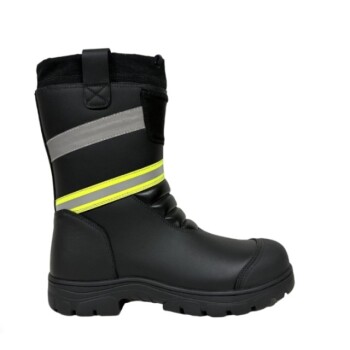
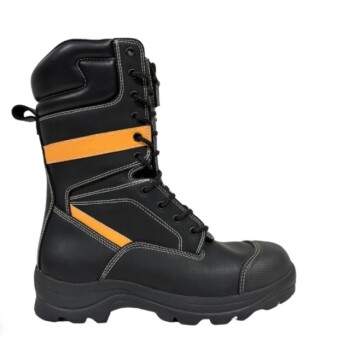
Ultra-High Molecular Weight Polyethylene (UHMWPE) is rapidly becoming the standard for next-generation protective equipment because it fundamentally changes the relationship between mass and safety. Its primary value lies in an exceptional strength-to-weight ratio, allowing engineers to design gear that offers maximum defense while significantly reducing the physical burden on the wearer.
Core Insight: UHMWPE solves the historical compromise between mobility and safety. It enables the manufacturing of protective gear that is chemically resistant and impact-absorbent, yet light enough to maintain the extreme flexibility required for high-performance applications.
The Engineering Behind the Performance
The Advantage of Strength-to-Weight
The defining characteristic of UHMWPE is its ability to provide robust protection with minimal weight.
Traditional protective materials often force a trade-off: more protection equals more bulk. UHMWPE disrupts this by delivering high-level defense in a lightweight form factor.
Impact Absorption and Flexibility
Beyond simple tensile strength, this material demonstrates exceptional impact performance.
It is capable of absorbing significant energy from blunt forces or ballistic impacts. Because the material is inherently lightweight, it allows for the manufacturing of gear that maintains extreme flexibility, crucial for users who need to move freely while staying protected.
Resistance to Environmental Stressors
Durability extends beyond physical impact; the material offers significant chemical resistance.
This ensures that the structural integrity of the protective equipment remains stable even when exposed to harsh environmental conditions or hazardous substances.
Validating Performance and Safety
The Necessity of Benchmarking
Adopting a high-performance material like UHMWPE requires rigorous validation to prove its efficacy over standard materials.
Researchers often use high-density polyethylene foam as a control material or performance benchmark. Because this foam has a uniform composition and stable mechanical properties, it serves as a reliable baseline for comparison.
Eliminating Experimental Errors
To ensure that the protective capabilities of UHMWPE are genuine, they must be tested alongside these control groups under identical conditions.
For example, utilizing standardized "raking conditions" helps eliminate experimental system errors. This isolation of variables ensures that the data reflects the gear's actual performance rather than testing anomalies.
Proving Efficacy Against Trauma
The ultimate goal of this validation is to scientifically demonstrate the gear's ability to prevent injury, such as skin lacerations.
By comparing damage on skin surrogates covered by standard foam versus those protected by UHMWPE gear, manufacturers can quantify the exact upgrade in safety the new material provides.
Understanding the Implementation Challenges
The Requirement for Rigorous Testing
While the material properties of UHMWPE are superior, simply using the material does not guarantee a successful product.
The challenge lies in the scientific demonstration of effectiveness. As indicated by the reliance on control groups and skin surrogates, the implementation of UHMWPE requires a commitment to data-driven validation to ensure real-world safety.
Making the Right Choice for Your Goal
When integrating UHMWPE into your protective equipment strategy, consider your specific performance requirements:
- If your primary focus is Mobility: Prioritize UHMWPE for its high strength-to-weight ratio to reduce fatigue without sacrificing safety.
- If your primary focus is Durability: Leverage the material's chemical resistance for environments where gear faces exposure to corrosive or hazardous elements.
- If your primary focus is Product Validation: Establish a testing protocol using stable control groups, such as high-density polyethylene foam, to scientifically prove your gear's protective claims.
By selecting UHMWPE, you are choosing a material that does not force you to choose between the safety of the user and their ability to perform.
Summary Table:
| Feature | Advantage | Performance Impact |
|---|---|---|
| Strength-to-Weight | 15x stronger than steel | Reduces fatigue & increases mobility |
| Impact Absorption | High energy dissipation | Superior defense against blunt & ballistic force |
| Chemical Resistance | Inert to most corrosives | Long-term durability in harsh environments |
| Material Weight | Low density | Enables extreme flexibility for high-performance use |
Elevate Your Protection with 3515’s Advanced Footwear Solutions
As a large-scale manufacturer serving distributors and brand owners, 3515 offers comprehensive production capabilities for all footwear types, anchored by our flagship Safety Shoes series. Our expertise in high-performance materials like UHMWPE ensures that our work and tactical boots, outdoor shoes, training shoes, and sneakers provide the ultimate balance of mobility and safety.
Partner with us to leverage our extensive portfolio and scientific validation processes to meet your diverse bulk requirements. Contact us today to discuss how our manufacturing excellence can add value to your brand!
References
- Rahul Dev Choudhury, Sukanta Ch Nath. Progress of protective gear in preventing sports injuries. DOI: 10.34117/bjdv10n3-012
This article is also based on technical information from 3515 Knowledge Base .
Related Products
- High Performance Fire-Retardant Waterproof Safety Boots
- Premium Flame-Retardant Waterproof Safety Boots and Shoes
- Premium Wholesale Waterproof Safety Boots High Performance Protection for Industrial Markets
- Premium Grain Leather Safety Boots for Bulk Supply
- Heavy-Duty Waterproof Nubuck Safety Boots Safety Shoes for Bulk Supply
People Also Ask
- Why are waterproof safety boots recommended for certain work environments? Essential Protection for Wet & Hazardous Jobs
- What roles do 3D vision systems and industrial robots play in the manufacturing of fire safety boots? Smart Automation
- What are the primary benefits of incorporating waterproof technology into professional and outdoor boots? Boost Value
- What should you look for to ensure boots are fully waterproof? The Essential 2-Part System
- What are the drawbacks of waterproof boots? The Breathability vs. Protection Trade-Off