At its core, toe protection in hiking boots is a non-negotiable safety feature. It is specifically designed to guard your feet against direct, painful impacts with rocks, roots, and other trail hazards. This protection, typically in the form of a reinforced toe cap or a rubber rand, significantly reduces the risk of bruised or broken toes, making your hike safer and more enjoyable.
Understanding toe protection moves beyond just preventing stubs; it's about preserving the integrity of both your boot and your foot, ensuring you can navigate challenging terrain with confidence and without injury.
The Role of Toe Protection in Hiking
The front of your boot is the first point of contact with countless obstacles on the trail. Without adequate reinforcement, both your feet and your gear are vulnerable.
Preventing Direct Injury
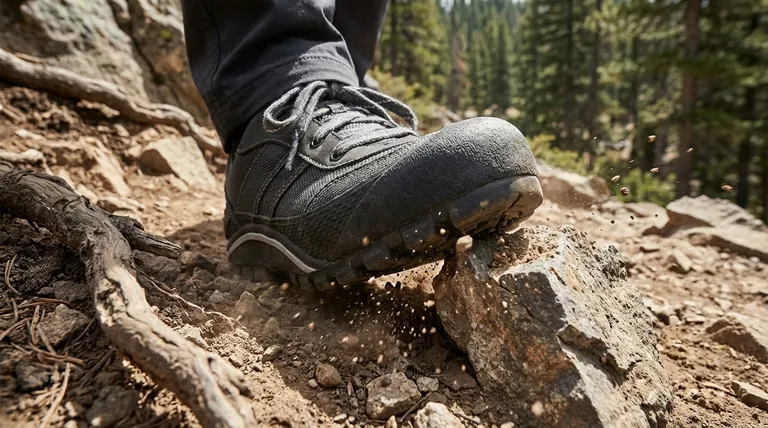
The most obvious function of a toe cap is to absorb and deflect force. When you kick a rock or stumble into a fallen log, this reinforced area prevents that impact from transferring directly to your toes.
This is critical for preventing common hiking injuries, from painful stubbed toes to more severe fractures that could end a trip immediately.
Enhancing Boot Durability
A reinforced toe area, often called a toe rand, also serves as a sacrificial layer for the boot itself. This rubber bumper protects the more delicate upper materials, like leather or synthetic fabrics, from abrasions and cuts.
By shielding the boot from constant scuffs and scrapes, toe protection dramatically extends its operational lifespan, particularly in rocky and rugged environments.
Maintaining Structural Integrity
Impacts on the front of the boot can cause the materials to deform or delaminate over time. A sturdy toe cap helps maintain the boot's shape and structure.
This ensures that other critical features, such as waterproofing and a secure fit, are not compromised by damage to the toe box. A boot that holds its shape provides more consistent support throughout its life.
Understanding the Trade-offs
While essential, the type and extent of toe protection can influence other aspects of the boot's performance.
Protection vs. Weight
More substantial toe protection, like a thick, wrap-around rubber rand, adds weight. For hikers prioritizing speed and minimalist gear, this extra weight might be a consideration.
However, for most hikers on varied or technical trails, the safety benefits far outweigh the minor weight penalty. Lighter trail runners often have minimal toe caps, which is a key reason they are less suitable for truly rugged terrain.
Stiffness vs. Flexibility
A heavily reinforced toe box is inherently stiffer than an unprotected one. This stiffness is excellent for protection and for kicking steps into snow or scree.
Conversely, it can slightly reduce the boot's flexibility and "trail feel." This is a deliberate trade-off, prioritizing safety and durability for the demands of hiking over the nimbleness of a lighter shoe.
Making the Right Choice for Your Goal
When selecting footwear, match the level of toe protection to your intended activity.
- If your primary focus is well-maintained trails and day hiking: A boot with a standard, reinforced toe cap offers sufficient protection without unnecessary bulk.
- If your primary focus is off-trail scrambling, mountaineering, or backpacking in rocky terrain: Prioritize a boot with a substantial, full-wrap rubber rand for maximum durability and foot safety.
- If your primary focus is trail running or fastpacking: You will likely use a shoe with a minimal toe bumper, accepting the trade-off of less protection for a lighter, more flexible feel.
Ultimately, choosing a boot with appropriate toe protection is a foundational step in ensuring you can hike safely and confidently, no matter where the trail leads.
Summary Table:
| Key Function | Benefit |
|---|---|
| Prevents Direct Injury | Shields toes from impacts with rocks and roots, reducing the risk of bruises and fractures. |
| Enhances Boot Durability | A protective toe rand acts as a sacrificial layer, extending the boot's lifespan against abrasion. |
| Maintains Structural Integrity | Keeps the boot's shape and critical features like waterproofing intact after repeated impacts. |
| Trade-off: Weight & Stiffness | Increased protection adds minimal weight and reduces flexibility, a worthwhile trade for safety. |
Ready to equip your customers with high-performance hiking boots that offer superior toe protection?
As a large-scale manufacturer, 3515 produces a comprehensive range of durable and safe footwear for distributors, brand owners, and bulk clients. Our production capabilities encompass all types of hiking boots and shoes, ensuring your customers get the perfect blend of safety, durability, and comfort for any terrain.
Contact us today to discuss your footwear needs and discover how we can help you build a safer, more reliable product line.
Visual Guide

Related Products
- Wholesale High-Traction Camo Boots - Custom Manufacturer for Brands
- Durable Rubber Sole Outdoor Shoes Wholesale & Custom Manufacturing
- Durable Spiked Camouflage Boots Wholesale & Factory Production
- Wholesale Lightweight Tactical Boots Custom Manufacturer for Desert & Combat Use
- Wholesale Waterproof Tactical Boots Custom Suede & High-Traction Soles
People Also Ask
- What are the key features of the new line of camo boots? Built for Extreme Cold & Rugged Terrain
- Are camo boots necessary for hunting success? Prioritize Performance Over Pattern
- What is the technical logic behind using closed-eye testing for tactical boots? Unlocking Peak Footwear Stability
- How does the Rank Score Test identify the primary causes of premature failure in tactical and work boots? Key Insights
- What shoes to wear for a security job? Durable, Protective Footwear for Long Shifts