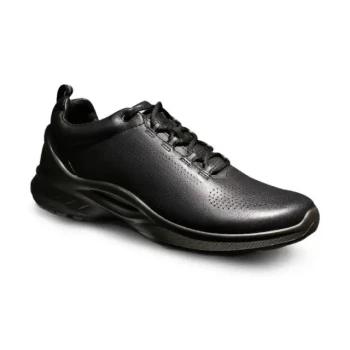
Standardized footwear acts as a fundamental control variable in high-precision biomechanical analysis. The use of identical training shoes or sneakers is critical because it eliminates the external noise caused by variations in personal footwear, such as differing sole thickness, shoe weight, and arch support. This standardization ensures that collected data—specifically regarding gait asymmetry and joint angles—reflects the subject's actual physiology rather than the mechanical properties of their equipment.
Core Insight: Reliability in biomechanical research relies on isolating the human variable. By removing the inconsistencies inherent in personal footwear, researchers create a stable baseline that ensures measured asymmetries and mechanical work originate solely from the subject's musculoskeletal system.
The Necessity of Eliminating Variables
Controlling Shoe Geometry and Structure
Personal footwear varies wildly in design. Factors such as sole thickness and arch support directly alter the foot’s position relative to the ground.
By standardizing these elements, researchers prevent artificial skewing of joint angle data. This ensures that any observed deviation in ankle or knee alignment is anatomical, not a byproduct of a specific shoe's construction.
Neutralizing Weight and Grip Coefficients
A heavy shoe alters the inertia of the leg during the swing phase of a gait cycle, while different tread patterns affect friction and push-off mechanics.
Standardized sneakers provide a consistent weight and grip coefficient across all subjects. This uniformity is vital for accurately calculating energy expenditure and joint moments without having to mathematically correct for the mass or traction of different shoes.
Ensuring Data Purity and Consistency
Isolating the Source of Asymmetry
In gait asymmetry research, the goal is to identify imbalances in the body. Variations in shoe wear patterns (e.g., a worn-down heel on a personal shoe) can mechanically induce asymmetry where none exists physiologically.
Standardized footwear provides a consistent force transmission interface. This guarantees that measured mechanical asymmetries originate solely from the participant's biomechanical characteristics, effectively eliminating equipment interference as a confounding variable.
Measuring Mechanical Efficiency
Professional training shoes serve as the critical interface for energy absorption and ground contact.
When assessing internal and external work, standard shoes allow researchers to accurately measure how specific gait modifications—such as shifting from a heel-strike to a flat-foot landing—impact efficiency. This analysis helps determine the synergistic effects of gait adjustments without the data being clouded by the energy-return properties of premium performance shoes versus basic trainers.
Balancing Control with Ecological Validity
Simulating Natural Walking Conditions
While barefoot analysis offers the "purest" data, it does not reflect real-world locomotion for most modern populations.
Standard training shoes provide basic cushioning and support that simulate natural walking conditions. This approach ensures the data remains ecologically valid—meaning the results are applicable to real-world scenarios—while maintaining experimental control.
Reducing Gait Compensation
Switching to unfamiliar or highly specialized laboratory footwear can cause subjects to walk unnaturally as they adjust to the new feel.
Using standard, commercially available training shoes reduces the likelihood of short-term gait compensation. Because the footwear feels familiar, the data reflects the participant's habitual motor patterns rather than a temporary adaptation to strange equipment.
Understanding the Trade-offs
The "Average" Fit Limitation
While standardization helps the data, it ignores individual foot anatomy. A standard "neutral" shoe may affect a flat-footed subject differently than a subject with high arches.
Potential for Discomfort
If the standardized shoe does not fit a participant well, it may induce pain or blisters. This physical discomfort can subconsciously alter a subject's gait, introducing the very variability the standardization aimed to eliminate.
Making the Right Choice for Your Study
When designing a protocol or analyzing gait data, consider the primary objective of the research to determine how strictly to apply footwear standardization.
- If your primary focus is strictly biomechanical mechanics: Prioritize rigorous standardization to ensure that joint angles and force transmission data are free from equipment-induced noise.
- If your primary focus is rehabilitative or clinical intervention: Ensure the standard shoe provides adequate neutral support to simulate the real-world environment where the patient will be recovering.
- If your primary focus is analyzing gait modifications: Use standardized shoes to accurately calculate energy absorption and mechanical work, ensuring changes are attributed to the gait strategy, not the shoe's cushioning.
True biomechanical insight requires knowing where the equipment ends and the human body begins.
Summary Table:
| Key Variable | Impact on Biomechanical Research | Benefit of Standardization |
|---|---|---|
| Shoe Geometry | Alters joint angles and foot positioning | Ensures anatomical accuracy over mechanical bias |
| Weight & Mass | Affects leg inertia during swing phase | Consistent calculations for energy expenditure |
| Tread/Grip | Influences friction and push-off mechanics | Uniform force transmission across all subjects |
| Wear Patterns | Induces artificial gait asymmetries | Isolates musculoskeletal issues from gear wear |
| Cushioning | Modifies energy absorption data | Accurate measurement of internal/external work |
Partner with 3515 for High-Precision Footwear Solutions
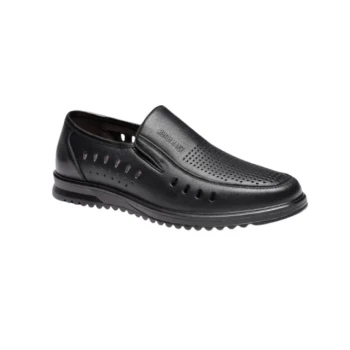
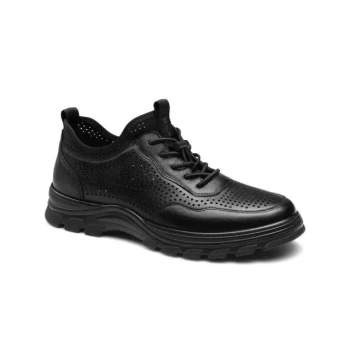
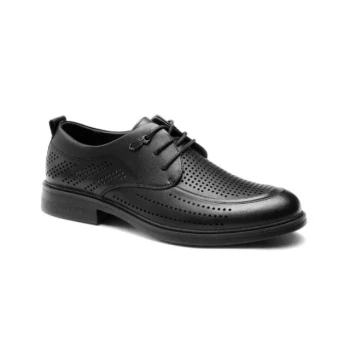
As a premier large-scale manufacturer, 3515 specializes in providing high-quality, standardized footwear essential for distributors and brand owners worldwide. Our flagship Safety Shoes series and comprehensive portfolio—including tactical boots, outdoor shoes, training sneakers, and dress shoes—are designed to meet the rigorous demands of professional use and research environments.
Why Choose 3515?
- Scalable Production: Robust capabilities for consistent, bulk manufacturing.
- Diverse Portfolio: Everything from high-performance training shoes to formal footwear.
- Quality Control: Stringent standards that ensure every pair acts as a reliable variable for your clients.
Ready to elevate your product line with precision-engineered footwear? Contact us today to discuss your bulk requirements.
References
- I‐Lin Wang, Yu Su. The effect of transcranial direct current stimulation on bilateral asymmetry and joint angles of the lower limb for females when crossing obstacles. DOI: 10.1186/s13102-023-00793-2
This article is also based on technical information from 3515 Knowledge Base .
Related Products
- Wholesale Breathable Athletic Sneakers - Custom Lightweight Cushioned Footwear Manufacturer
- Lightweight Breathable Sneakers with Wet-Traction Grip for Wholesale & Private Label
- Wholesale Durable Camouflage Canvas Shoes with High-Traction Cleated Rubber Sole
- Wholesale Lightweight Cushioned Athletic Sneakers for Custom Bulk Production
- Wholesale Smart Casual Sneakers with Dial Closure | Factory Direct Manufacturing
People Also Ask
- Why are breathable sneakers necessary for tropical commuting? Stay Cool and Dry in High Humidity
- In what ways do high-performance Athletic Shoes support stability and proprioception? Enhance Your Movement Precision
- What is the primary role of shoes in physical activities? Protection, Support & Performance
- What materials are best for athletic activities in warm climates? Stay Cool with Moisture-Wicking Fabrics
- How do specialized lightweight foam midsole materials contribute to the performance and safety of athletic shoes?