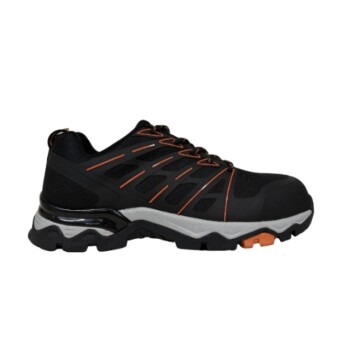
Professional safety shoes provide a standardized mechanical foundation that minimizes gait variability during industrial monitoring. Unlike consumer footwear, the specific grip, support, and mechanical properties of specialized work boots stabilize the user's center of gravity and stride rhythm, ensuring that collected data reflects the user's actual biomechanics rather than footwear idiosyncrasies.
By standardizing footwear, researchers eliminate data "noise" caused by varying sole properties. This physical stability allows deep learning models to distinguish between random footwear-related fluctuations and genuine biomechanical impairments, significantly improving the accuracy of early warning systems.
The Mechanics of Data Stability
Standardizing the Physical Interface
In gait analysis, the shoe is the interface between the subject and the ground. Common consumer footwear introduces random gait fluctuations due to inconsistent cushioning, wear patterns, and sole flexibility. Professional safety shoes provide a uniform baseline, allowing analysts to attribute observed changes to the worker rather than their equipment.
Center of Gravity Control
The mechanical properties of safety shoe soles are designed for rigorous environments. This specific design directly influences how a subject controls their center of gravity. By providing consistent support, the footwear ensures that the stride rhythm remains steady, which is essential for establishing a reliable "normal" gait profile.
Minimizing Compensatory Movements
Uneven outsole friction or poor foot containment in casual shoes can force a worker to make subconscious adjustments while walking. These atypical compensatory movements distort data. Professional footwear provides the necessary wrapping and traction to prevent these artificial deviations, ensuring the data captures authentic movement.
Enhancing Deep Learning Accuracy
Focusing on True Impairment
The primary goal of industrial gait monitoring is to identify biomechanical changes caused by external factors, such as physical impairment or fatigue. If the footwear variable is not controlled, algorithms struggle to differentiate between a slip caused by a poor shoe and a stumble caused by worker exhaustion.
Improving Signal-to-Noise Ratio
Deep learning systems thrive on consistency. By removing the variability of footwear through the use of standardized work boots, the system can focus entirely on identifying risk patterns. This increases the sensitivity of the system to actual safety threats, making early warning alerts more reliable.
Critical Factors for Sensor Fidelity
Minimum Foot Clearance (MFC) Precision
Accurate gait analysis often relies on calculating the Minimum Foot Clearance—the closest the foot gets to the ground during a swing. Professional footwear facilitates precise sensor positioning at key anatomical points like the heel and toe. This structural consistency allows for the accurate tracking of foot movement trajectories.
The Impact of Fatigue on Stability
Gait stability is not just mechanical; it is also physiological. Professional safety shoes often include comfortable inner linings designed to alleviate fatigue from prolonged standing. Since fatigue causes gait deterioration, minimizing it helps maintain a consistent data baseline over long shifts.
Understanding the Trade-offs
The Degradation of Accuracy Over Time
Standardization is not permanent. The protective features of safety shoes, such as anti-slip tread depth and material toughness, decline with use. Worn outsoles can alter friction coefficients, re-introducing instability and compromising the integrity of the gait data.
The Necessity of Lifecycle Management
To maintain data validity, shoes cannot simply be issued and forgotten. There must be a determination of service life and regular maintenance. Failing to replace shoes with material aging leads to a sharp decline in both physical protection and the reliability of the monitoring system.
Optimizing Your Monitoring Strategy
For industrial safety monitoring to be effective, the hardware (footwear) must be treated with the same rigor as the software (algorithms).
- If your primary focus is Algorithm Training: Prioritize the strict standardization of footwear models across all subjects to eliminate mechanical noise from your dataset.
- If your primary focus is Long-Term Monitoring: Implement a rigid inspection schedule to ensure outsole wear does not introduce data drift or safety hazards.
True predictive safety is achieved only when the physical environment is as controlled as the digital analysis.
Summary Table:
| Factor | Professional Safety Shoes | Consumer Footwear | Impact on Gait Analysis |
|---|---|---|---|
| Mechanical Foundation | Standardized & Uniform | High Variability | Minimizes data noise and artificial fluctuations. |
| Center of Gravity | High Stability/Support | Inconsistent Support | Ensures steady stride rhythm for reliable profiling. |
| Signal-to-Noise Ratio | High (Clear Signals) | Low (Distorted Data) | Allows algorithms to detect true fatigue vs. footwear issues. |
| Sensor Positioning | Precise/Fixed Points | Variable/Flexible | Improves Minimum Foot Clearance (MFC) trajectory accuracy. |
| Long-term Stability | Controlled Degradation | Unpredictable Wear | Facilitates lifecycle management for data integrity. |
Elevate Your Safety Standards with 3515 Footwear
Precise monitoring starts with a standardized foundation. As a large-scale manufacturer serving distributors and brand owners, 3515 offers comprehensive production capabilities for all footwear types. Our flagship Safety Shoes series provides the mechanical stability and structural consistency required for advanced gait analysis and industrial monitoring.
Beyond safety, our extensive portfolio covers work and tactical boots, outdoor shoes, training shoes, and sneakers, as well as Dress & Formal shoes to meet your diverse bulk requirements. We help you eliminate data noise and protect your workforce with high-performance, durable designs.
Ready to optimize your safety footwear strategy?
Contact Us Today to Discuss Bulk Orders & Custom Solutions
References
- Suah Park, Yun Jung Heo. A Deep-Learning Approach for Identifying a Drunk Person Using Gait Recognition. DOI: 10.3390/app13031390
This article is also based on technical information from 3515 Knowledge Base .
Related Products
- Premium Suede Sport Safety Shoes for Wholesale & Bulk Orders
- Premium Lightweight Safety Shoes for Wholesale & Bulk Orders
- Wholesale Anti-Smash & Puncture-Proof Safety Shoes Custom Manufacturing for Brands
- Premium KPU Injection Athletic Style Safety Shoes
- Premium Safety Shoes with Rotating Buckle Safety Sneakers
People Also Ask
- What industries have specific OSHA footwear requirements? Ensure Compliance & Protect Your Workforce
- What are the primary functions of professional safety shoes? Maximize Safety in Water Supply Confined Spaces
- What role do specialized safety shoes play in preventing falls? Engineering Stability in Industrial Environments
- How do complex outsole tread designs in safety shoes work with coated floors? Master Slip Resistance Engineering
- What happens during the cutting stage of safety shoes manufacturing? Precision, Process & Quality