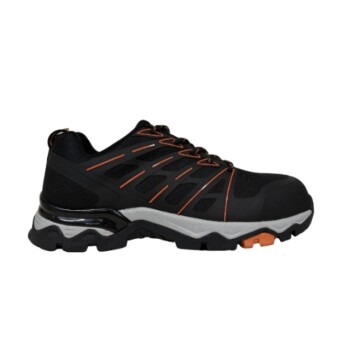
The detection of safety shoes poses unique technical challenges because they lack the visual uniformity inherent in other protective gear. While items like hard hats possess consistent geometric shapes and distinct colors, safety shoes exhibit high variability in style and frequently blend into their surroundings. This forces automated systems to rely on complex feature recognition rather than simple shape or color matching.
Core Takeaway: Unlike the standardized geometry of hard hats, safety shoes suffer from high visual diversity and low environmental contrast. This "camouflage effect" against workshop floors requires significantly more sophisticated algorithms and comprehensive feature libraries to ensure reliable detection.
The Challenge of Visual Variance
Lack of Geometric Uniformity
Hard hats generally follow a predictable, semi-spherical structure that is mathematically consistent across different brands. This allows computer vision models to easily categorize them based on shape alone.
Safety shoes, conversely, lack this uniform geometry. Their shapes shift dramatically based on style (sneaker vs. boot), brand, and specific protective requirements, creating a dataset that is difficult to normalize.
High Variability in Appearance
Protective clothing, such as high-visibility vests, utilizes distinct neon colors specifically designed to contrast with the environment.
Footwear comes in a vast array of colors, materials, and textures. This prevents detection systems from relying on simple color-thresholding techniques, demanding a much higher-quality feature library to identify what constitutes a "shoe."
The Contrast Problem
Low-Contrast Environments
In manufacturing settings, workshop floors are typically constructed of dark concrete, gray metal, or painted surfaces.
Because safety footwear is frequently black, dark brown, or gray, the object often shares a similar tonal value with the floor it stands on.
Segmentation Difficulties
Computer vision relies heavily on edge detection and contrast to separate an object from its background (segmentation).
When a dark shoe sits on a dark floor, the visual boundaries blur. This causes the system to "lose" the object, as it cannot effectively isolate the footwear pixels from the background pixels.
Understanding the Trade-offs
Algorithm Complexity vs. Speed
To overcome the issues of camouflage and variability, systems must employ deeper, more complex neural networks rather than simple classifiers.
While this improves accuracy, it increases the computational load, potentially slowing down real-time processing speeds compared to lighter models used for hard hat detection.
The Dependency on Data Quality
The system is only as good as its training data.
Because the visual definition of a safety shoe is so broad, a standard library is often insufficient. You must invest in extensive feature libraries that cover a wide range of shoe styles and floor textures to avoid false negatives.
Strategies for Robust Detection
To address these challenges effectively, you must align your technical approach with your safety goals:
- If your primary focus is rapid, low-latency processing: Prioritize the detection of high-contrast items like hard hats and vests, accepting that footwear detection may require a separate, more intensive processing pipeline.
- If your primary focus is comprehensive compliance: Invest in advanced algorithms and diverse training datasets that specifically target low-contrast edge detection to separate dark footwear from dark floors.
Achieving total safety compliance requires acknowledging that not all PPE is created equal in the eyes of an automated system.
Summary Table:
| Feature | Hard Hats & Vests | Safety Shoes |
|---|---|---|
| Geometric Shape | Predictable, semi-spherical | Highly variable (sneaker vs. boot) |
| Color Contrast | High-visibility/Neon colors | Low (Black, Brown, Gray) |
| Environment | Stands out against backgrounds | Blends with dark workshop floors |
| Detection Logic | Simple shape/color matching | Complex neural networks/edge detection |
| Computing Load | Low-latency processing | High computational demand |
Partner with 3515 for High-Performance Safety Footwear Solutions
Navigating the complexities of safety compliance requires footwear that meets the highest standards of design and durability. As a leading large-scale manufacturer, 3515 provides distributors and brand owners with a comprehensive production suite.
Our flagship Safety Shoes series is engineered for both protection and distinctiveness, complemented by our extensive portfolio of tactical boots, outdoor shoes, sneakers, and formal dress footwear. Whether you are sourcing for bulk industrial needs or specialized brand requirements, our manufacturing expertise ensures your products stand out in quality and performance.
Ready to elevate your inventory with industry-leading footwear?
Contact 3515 Today to Discuss Your Bulk Requirements
References
- Khania O.P.P. Nugraha, Achmad Pratama Rifai. Convolutional Neural Network for Identification of Personal Protective Equipment Usage Compliance in Manufacturing Laboratory. DOI: 10.23917/jiti.v22i1.21826
This article is also based on technical information from 3515 Knowledge Base .
Related Products
- Premium Suede Sport Safety Shoes for Wholesale & Bulk Orders
- Premium Lightweight Safety Shoes for Wholesale & Bulk Orders
- Wholesale Anti-Smash & Puncture-Proof Safety Shoes Custom Manufacturing for Brands
- Premium KPU Injection Athletic Style Safety Shoes
- Premium Safety Shoes with Rotating Buckle Safety Sneakers
People Also Ask
- What are the primary functions of professional safety shoes? Maximize Safety in Water Supply Confined Spaces
- What industries have specific OSHA footwear requirements? Ensure Compliance & Protect Your Workforce
- What role do specialized safety shoes play in preventing falls? Engineering Stability in Industrial Environments
- What happens during the cutting stage of safety shoes manufacturing? Precision, Process & Quality
- What are the technical advantages of integrating sensors into safety shoes? Achieve Superior Motion Capture Precision