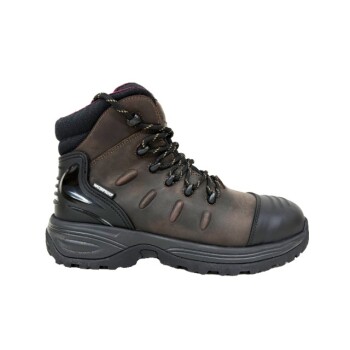
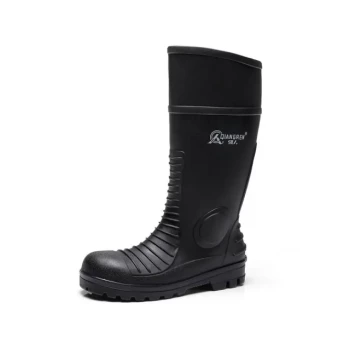
Material integrity serves as the critical line of defense against severe toxicity in chemical extraction mining. In environments utilizing hazardous substances such as mercury, cyanide, or strong bases, the material composition of safety footwear creates an impermeable physical barrier. This prevents corrosive agents from contacting the skin, thereby neutralizing the immediate risk of chemical burns and the insidious threat of systemic poisoning.
In chemical extraction settings, safety footwear is more than just impact protection; it is a shield against biological absorption. By blocking contact with toxic agents, high-integrity materials prevent both local tissue damage and catastrophic neurological harm.
The Critical Role of the Chemical Barrier
Preventing Direct Tissue Damage
In gold extraction and similar mining processes, workers are frequently exposed to strong bases and corrosive chemicals.
The primary function of material integrity is to prevent these substances from breaching the footwear's outer shell. Without this robust physical barrier, workers face a high risk of severe chemical burns upon contact.
Blocking Systemic Absorption
The danger extends beyond surface-level injuries. Certain toxins, particularly mercury and cyanide, can be absorbed through the skin into the bloodstream.
High-quality footwear materials prevent this transmission. By stopping the substance at the surface, the footwear prevents acute poisoning and long-term neurological damage associated with systemic toxicity.
Adaptation to Semi-Mechanized Environments
Withstanding Mechanical Stress
Modern mining operations are transitioning toward semi-mechanization, utilizing equipment such as mechanical winches and hammer crushers.
This equipment introduces intense physical stress and abrasion risks that lower-quality materials cannot withstand. Durable safety shoes provide the structural support necessary to endure an industrialized workspace without compromising their protective qualities.
Ensuring Long-Term Durability
A compromise in physical structure often leads to a failure in chemical protection.
The material must be durable enough to resist the wear and tear of mechanical environments. This structural integrity prevents physical accidents and protects against long-term occupational injuries caused by equipment hazards.
Understanding Material Limitations and Trade-offs
The Risk of Physical Degradation
It is crucial to recognize that chemical resistance relies on the physical condition of the shoe.
Mechanical damage from crushers or winches can create microscopic cracks or tears in the material. Once the physical integrity is compromised by mechanical stress, the chemical barrier is effectively nullified, regardless of the material's original rating.
Specificity of Resistance
No single material is impervious to every chemical agent.
A material that resists strong bases may degrade rapidly when exposed to specific solvents or acids. Relying on "general" safety footwear without verifying compatibility with the specific chemicals used (e.g., cyanide vs. mercury) creates a false sense of security.
Making the Right Choice for Your Goal
To select the appropriate footwear, you must evaluate both the chemical agents present and the mechanical intensity of the environment.
- If your primary focus is Chemical Safety: Prioritize footwear certified for impermeability against specific agents like mercury and cyanide to prevent systemic absorption.
- If your primary focus is Mechanical Durability: Prioritize reinforced materials that can withstand abrasion from semi-mechanized equipment to maintain the structural barrier.
True safety in extraction environments requires a material that can endure physical abuse while maintaining an impenetrable seal against toxicity.
Summary Table:
| Feature | Protection Benefit | Mining Environment Application |
|---|---|---|
| Chemical Impermeability | Blocks mercury, cyanide, and bases | Chemical extraction & leaching tanks |
| Structural Durability | Resists tears from winches/crushers | Semi-mechanized & industrial zones |
| Skin Barrier | Prevents systemic absorption | Handling toxic agents & liquid chemicals |
| Mechanical Strength | Prevents physical structural failure | High-abrasion sites with heavy equipment |
Secure Your Workforce with Premium Protective Footwear
As a large-scale manufacturer serving distributors and brand owners, 3515 offers comprehensive production capabilities for all footwear types, anchored by our flagship Safety Shoes series. We understand that in mining, a material failure is a safety failure. Our extensive portfolio covers work and tactical boots, outdoor shoes, training shoes, and sneakers, as well as Dress & Formal shoes to meet your diverse bulk requirements.
Partner with 3515 to provide your clients with footwear that bridges the gap between mechanical durability and chemical resistance. Contact us today to discuss your manufacturing needs and see how our expertise can protect your target customers.
References
- Josephine Singo, Antony Mamuse. Health and Safety Risk Mitigation among Artisanal and Small-Scale Gold Miners in Zimbabwe. DOI: 10.3390/ijerph192114352
This article is also based on technical information from 3515 Knowledge Base .
Related Products
- Premium Wheat Nubuck Safety Shoes for Bulk Distribution
- Premium Grain Leather Safety Boots for Bulk Supply
- Premium Oil Wax Leather Safety Boots for Bulk Purchase
- Premium Wholesale Waterproof Safety Boots High Performance Protection for Industrial Markets
- Safety Footwear Wholesale Manufacturer for Custom OEM/ODM Production
People Also Ask
- What are the primary protective functions of safety shoes with steel toes in the automotive repair industry?
- What type of safety shoe is recommended for workers exposed to heavy machinery? Steel Toe Boots for Ultimate Protection
- What are the main materials used in steel toe safety shoes? A Guide to Protective Footwear Construction
- Why is it mandatory to wear safety shoes with steel toe protection during metal loading? Prevent Crushing Injuries
- What role do steel-toe safety shoes play in high-rise construction? Essential PPE for Vertical Build Security