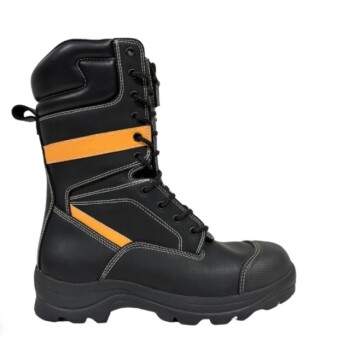
Yes, certified vegan firefighter boots are available. These boots are constructed from high-performance synthetic materials and advanced fabrics engineered to meet the same demanding safety standards as traditional leather boots, offering a viable and effective alternative for firefighters who adhere to a vegan lifestyle.
The critical factor in choosing a firefighter boot is not whether it's made of leather or synthetic material, but whether it is certified to meet NFPA 1971 standards. Modern material science ensures that certified vegan-friendly boots provide the necessary protection for structural firefighting.
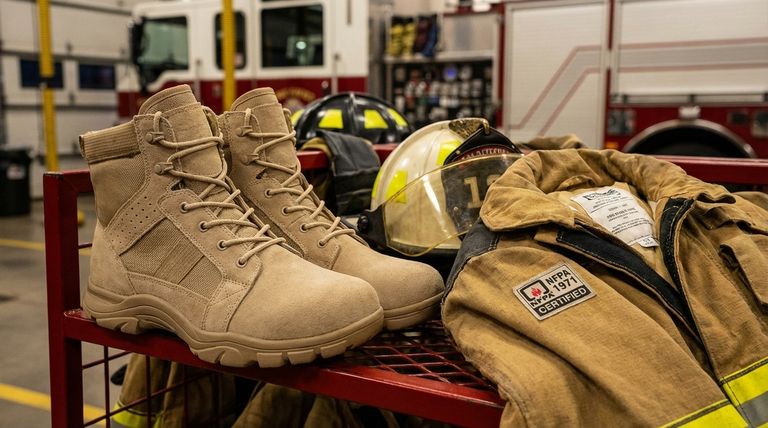
Why Leather Was the Traditional Standard
To understand the effectiveness of modern alternatives, it's helpful to know why leather became the original material of choice for firefighting.
### A Legacy of Durability
For decades, specially treated, thick leather was one of the few materials that could offer the required combination of puncture resistance, heat insulation, and durability needed on the fireground.
### Conforming to the Foot
Leather has the unique ability to mold to the wearer's foot over time, providing a custom fit that enhances comfort and stability during long incidents.
The Rise of High-Performance Synthetics
While leather set the historical benchmark, modern material engineering has produced synthetic alternatives that meet and often exceed its performance in key areas.
### What Are Vegan Boots Made Of?
Vegan firefighter boots are not made from simple plastics. They are constructed from a composite of advanced, specially engineered materials.
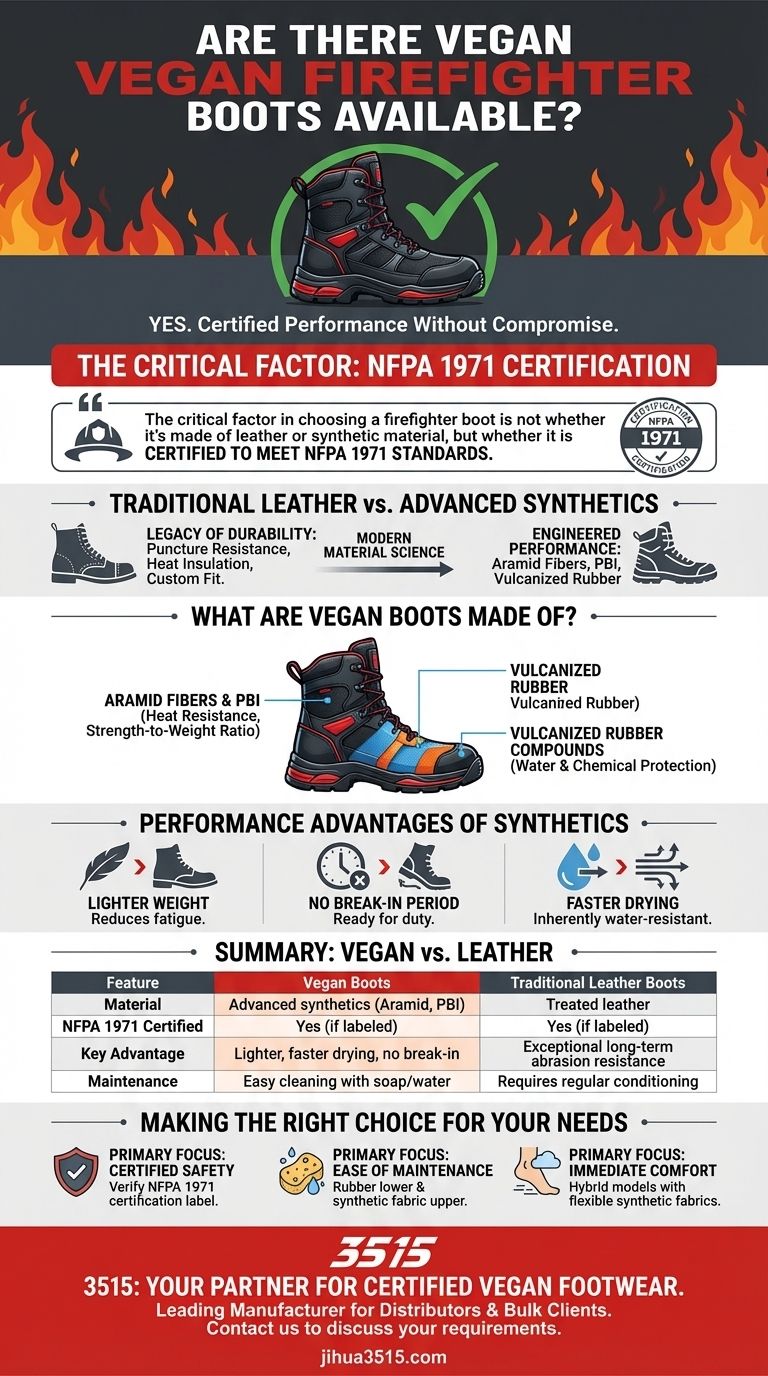
These often include aramid fibers (like Kevlar® and Nomex®) and polybenzimidazole (PBI), renowned for their incredible thermal resistance and strength-to-weight ratio. The lower portions are typically made from specialized vulcanized rubber compounds for water and chemical protection.
### The Non-Negotiable: NFPA Certification
The single most important factor for any structural firefighting boot is certification. The NFPA 1971 standard dictates the minimum performance requirements for heat resistance, puncture resistance, liquid penetration, and overall construction.
Any boot, whether leather or synthetic, that carries an NFPA 1971 certification label has undergone rigorous third-party testing to prove it is safe for duty. A certified vegan boot is a certified safe boot.
### Performance Advantages of Synthetics
In many cases, fabric-based synthetic boots offer practical benefits. They are often lighter than all-leather counterparts, reducing fatigue.
They also require virtually no break-in period and are inherently more water-resistant, drying much faster than saturated leather.
Understanding the Trade-offs
Choosing between materials involves recognizing their different characteristics, as no single option is perfect for every scenario.
### Durability and Wear Patterns
Traditional leather is known for its exceptional long-term abrasion resistance. While advanced synthetics are incredibly strong and won't rot, they can be susceptible to fraying or damage from sharp, abrasive materials in a way that is different from how leather scuffs.
### Maintenance and Care
Leather requires regular cleaning and conditioning to maintain its flexibility and water resistance. Synthetic and rubber boots, by contrast, are generally easier to clean and decontaminate, often requiring only soap and water.
### Cost and Availability
Because they utilize specialized, advanced materials, high-performance synthetic boots can sometimes be priced at a premium compared to some standard leather models. They may also be less commonly stocked, sometimes requiring a special order.
Making the Right Choice for Your Needs
Your final decision should be guided by official standards and departmental policy, but these points can help you select the right vegan-friendly option.
- If your primary focus is certified safety: Your first and only step is to verify the boot has a clear NFPA 1971 certification label inside. This is the non-negotiable guarantee of protection.
- If your primary focus is ease of maintenance and water resistance: A boot constructed with a rubber lower and a synthetic fabric upper is an excellent and highly practical choice.
- If your primary focus is immediate comfort and reduced weight: Look for hybrid models that combine flexible synthetic fabrics with a rubber structure, as they often have a much shorter break-in period than heavy leather boots.
Ultimately, choosing a certified vegan boot means you can meet the rigorous demands of firefighting without compromising your personal ethics.
Summary Table:
| Feature | Vegan Boots | Traditional Leather Boots |
|---|---|---|
| Material | Advanced synthetics (Aramid, PBI) | Treated leather |
| NFPA 1971 Certified | Yes (if labeled) | Yes (if labeled) |
| Key Advantage | Lighter, faster drying, no break-in | Exceptional long-term abrasion resistance |
| Maintenance | Easy cleaning with soap/water | Requires regular conditioning |
As a leading manufacturer, 3515 produces a comprehensive range of NFPA-certified footwear for distributors, brand owners, and bulk clients. Our advanced production capabilities ensure high-performance vegan firefighter boots that meet the strictest safety standards without compromising on ethics or protection.
Ready to equip your team with reliable, certified gear? Contact us today to discuss your specific requirements and explore our full product catalog.
Visual Guide
Related Products
- High Performance Fire-Retardant Waterproof Safety Boots
- Premium Flame-Retardant Waterproof Safety Boots and Shoes
People Also Ask
- Why are waterproof safety boots recommended for certain work environments? Essential Protection for Wet & Hazardous Jobs
- What roles do 3D vision systems and industrial robots play in the manufacturing of fire safety boots? Smart Automation
- What materials make waterproof boots durable? The Ultimate Guide to Long-Lasting Footwear
- What are the primary benefits of incorporating waterproof technology into professional and outdoor boots? Boost Value
- What is the difference between waterproof, water-resistant, and water-repellent boots? Choose the Right Protection for Your Feet