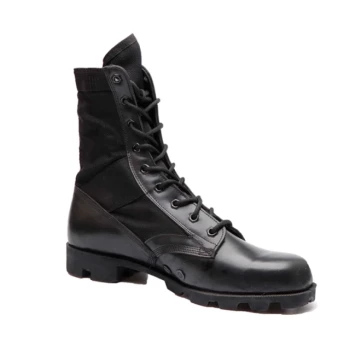
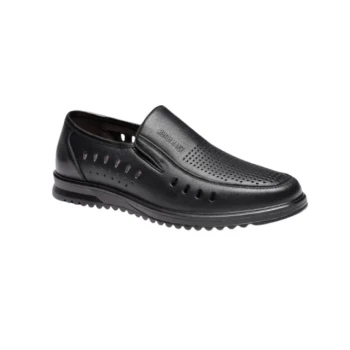
High-performance biodegradable fibers serve as the critical link between product durability and environmental responsibility. In collaborations between footwear brands and material suppliers, these fibers allow for the creation of shoe components—such as uppers and linings—that withstand the rigors of daily use while enabling controlled degradation after disposal, directly addressing the industry’s massive waste footprint.
The core value of these fibers is their ability to decouple product longevity from environmental persistence, but successful implementation requires a precise alignment of material science and manufacturing capability.
The Dual Mandate: Performance and Ecology
The primary driver for adopting high-performance biodegradable fibers is the need to solve the lifecycle paradox of modern footwear.
Engineered for Controlled Degradation
Standard footwear often persists in landfills for centuries. High-performance bio-based fibers provide a material science solution that facilitates waste management at the end of the lifecycle.
Through specific chemical engineering, these materials are designed to undergo controlled degradation once they reach the disposal phase. This significantly reduces the societal waste footprint compared to traditional synthetic alternatives.
Maintaining Product Integrity
Sustainability cannot come at the cost of utility. A critical requirement for these fibers is that they remain durable during use.
Brands and suppliers must collaborate to ensure that the biodegradability mechanism is not triggered prematurely by sweat, rain, or friction. The material must perform identically to standard textiles until the product is discarded.
Navigating Technical Complexity
While the primary benefit is environmental, the implementation poses distinct technical challenges. The physical and chemical properties of these advanced circular materials differ significantly from traditional polymers.
Divergence from Standard Material Behaviors
Biodegradable fabrics and high-proportion recycled polymers do not behave like virgin plastics during processing. Their melting points, tensile strength, and elasticity often require different handling.
Without specialized knowledge, standard production assumptions will fail. Suppliers must communicate these unique characteristics clearly to manufacturers to ensure the materials are viable for mass production.
The Necessity of Precision Calibration
High-precision production machinery is often calibrated for traditional materials. Incorrect processing parameters applied to biodegradable fibers can lead to substandard product quality or structural failure.
Machinery must be tuned specifically to the material's unique profile to function at optimal efficiency. This prevents the degradation of the fiber's integrity during the manufacturing process itself.
Understanding the Trade-offs
Adopting these fibers introduces operational risks that must be managed proactively.
The Operational Skill Gap
The most significant hurdle is human error. Without employee skill training, even the best materials will fail on the production line.
Operators need specialized training to handle these materials. A lack of specific operational knowledge can result in significant downtime and material waste, negating the environmental benefits intended by the switch.
Risks of Equipment Damage
Attempting to force advanced circular materials through untuned machinery can cause physical damage to expensive equipment.
This creates a financial trade-off: the long-term sustainability gain requires an upfront investment in training and potentially equipment modification.
Making the Right Choice for Your Goal
Collaborations must be built on transparency regarding both the environmental potential and the manufacturing requirements of these fibers.
- If your primary focus is Environmental Impact: Prioritize materials with verified controlled degradation rates to ensure the product actually reduces the societal waste footprint at the end of its life.
- If your primary focus is Production Scalability: Mandate comprehensive employee skill training and machine calibration protocols to prevent equipment damage and ensure consistent quality.
Success lies not just in selecting the right fiber, but in mastering the unique process required to weave it.
Summary Table:
| Key Factor | Benefit to Footwear Brands | Technical Requirement |
|---|---|---|
| Controlled Degradation | Significant reduction in long-term landfill waste | Specific chemical engineering for end-of-life trigger |
| Product Integrity | Ensures shoes withstand daily use (sweat, rain, friction) | Stability testing to prevent premature breakdown |
| Precision Calibration | Maintains high-quality structural standards | Specialized machinery tuning for unique fiber profiles |
| Employee Expertise | Minimizes material waste and operational downtime | Intensive skill training for handling circular materials |
Partner with 3515 for Sustainable Manufacturing Excellence
Transitioning to high-performance biodegradable fibers requires more than just raw materials—it demands a manufacturing partner with the technical precision to handle them. As a large-scale manufacturer serving global distributors and brand owners, 3515 offers the expertise and comprehensive production capabilities needed to integrate advanced circular materials into your product lines.
From our flagship Safety Shoes and tactical boots to high-performance training shoes and formal dress footwear, we ensure that sustainability never compromises durability. We provide our clients with:
- Advanced Material Integration: Expert handling of bio-based and recycled polymers.
- Precision Engineering: Calibrated production lines that prevent equipment damage and material failure.
- Bulk Scalability: Reliable high-volume manufacturing for diverse footwear categories.
Contact us today to discuss your next sustainable footwear project and leverage our decades of manufacturing heritage to grow your brand.
References
- Tulin Dzhengiz, Anders Broström. Configurations of sustainability‐oriented textile partnerships. DOI: 10.1002/bse.3372
This article is also based on technical information from 3515 Knowledge Base .
Related Products
- Lightweight Breathable Sneakers with Wet-Traction Grip for Wholesale & Private Label
- Wholesale Lightweight Tactical Boots Custom Manufacturer for Desert & Combat Use
- Durable High-Ankle Tactical Boots Wholesale Manufacturer for Custom & Bulk Orders
- Durable Military Combat Boots with Water Drainage for Wholesale & OEM
- Wholesale Breathable Athletic Sneakers - Custom Lightweight Cushioned Footwear Manufacturer
People Also Ask
- Why are breathable sneakers necessary for tropical commuting? Stay Cool and Dry in High Humidity
- What role do lightweight training shoes play in urban traffic? Boost Agility and Reaction for Safer City Navigation
- How do lightweight shoes provide support? The Science of Efficient Cushioning & Stability
- How do lightweight shoes improve breathability? Discover the Science of Cool, Dry Feet
- What are the style advantages of lightweight shoes? Sleek, Versatile & Modern Comfort