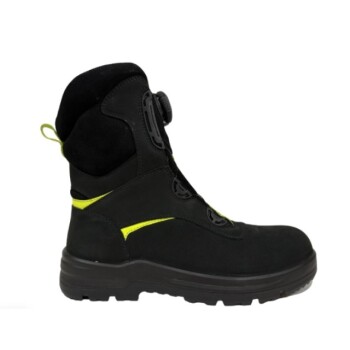
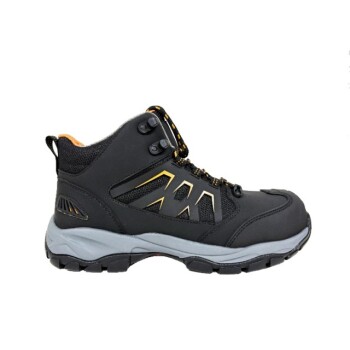
Anatomical alignment is the first line of defense against targeted foot trauma. In safety and tactical boots, precise structural alignment is critical because it ensures the boot distributes weight evenly across the heel rather than allowing it to focus on a single point. Without this alignment, excessive force concentrates directly on the medial calcaneal tubercle, leading to immediate inflammation and long-term mechanical injury.
The core function of anatomical alignment is to convert high-impact forces into manageable, dispersed pressure. By preventing stress concentration on sensitive bony structures, aligned footwear preserves the long-term health of the foot’s internal mechanics.
The Vulnerability of the Medial Calcaneal Tubercle
Understanding the Sensitivity
The medial calcaneal tubercle is a specific bony prominence on the heel. It is highly sensitive and susceptible to localized stress.
Because it bears significant weight during the heel strike, it requires protection. Even minor repetitive impacts can trigger inflammation in this area if the foot is not properly supported.
The Consequence of Misalignment
When a boot lacks precise structural alignment, it fails to cradle the heel correctly. This results in the full force of a step drilling into the tubercle rather than being absorbed by the surrounding tissues.
This concentration of force creates mechanical trauma. Over time, this leads to chronic pain and can compromise the internal structures of the foot.
How Alignment Mitigates Force
Uniform Pressure Distribution
High-quality safety and tactical boots are engineered to achieve uniform pressure distribution. This design principle ensures that the boot makes contact with the foot evenly.
By spreading the load, the boot prevents any single anatomical point from becoming a "hot spot" for stress. This is essential for protecting the medial calcaneal tubercle from overload.
Reducing Physical Risks
In heavy-duty work environments, the physical risks are amplified by heavy loads and rough terrain. Structural alignment acts as a stabilizer against these external variables.
It ensures that the foot remains in a neutral, supported position. This minimizes the risk of injury during high-stress activities common in tactical scenarios.
Common Pitfalls to Avoid
The "Break-in" Myth
A common misconception is that a boot will eventually align to your foot after a painful break-in period. If the boot puts pressure on the medial calcaneal tubercle immediately, the structural alignment is likely fundamentally flawed.
Relying on a break-in period for heel comfort can lead to immediate inflammation before the boot ever molds to the foot.
Overlooking Internal Geometry
Many users focus solely on external durability, such as tough leather or slip-resistant soles. However, a boot can be externally tough but internally destructive if the alignment ignores the sensitivity of the heel bone.
Ignoring the internal geometry exposes the wearer to preventable long-term health issues.
Making the Right Choice for Your Goal
To protect your foot health in demanding environments, assess footwear based on how it manages internal pressure.
- If your primary focus is immediate injury prevention: Prioritize boots that explicitly feature "uniform pressure distribution" in the heel cup to eliminate hot spots.
- If your primary focus is long-term career longevity: Select footwear with "precise structural alignment" to protect internal structures from cumulative mechanical trauma.
True protection requires a boot that respects the anatomy of the foot as much as it resists the hazards of the environment.
Summary Table:
| Key Alignment Feature | Benefit for the Foot | Impact on Injury Prevention |
|---|---|---|
| Uniform Pressure Distribution | Eliminates "hot spots" on the heel | Prevents localized inflammation and pain |
| Precise Structural Alignment | Neutralizes foot positioning | Protects internal mechanics from long-term trauma |
| Engineered Heel Cup | Cradles the medial calcaneal tubercle | Reduces direct force during high-impact strikes |
| Internal Geometry Focus | Balances weight across the foot | Minimizes mechanical trauma in high-stress tasks |
Secure Superior Foot Protection with 3515
As a premier large-scale manufacturer serving global distributors and brand owners, 3515 specializes in footwear engineered for maximum anatomical safety. Our production capabilities cover everything from our flagship Safety Shoes and Tactical Boots to outdoor, training, and formal dress shoes.
By partnering with 3515, you gain access to precision-engineered footwear that prioritizes uniform pressure distribution and structural alignment, ensuring your customers receive the ultimate protection against mechanical trauma. Contact us today to discuss your bulk requirements and discover how our manufacturing expertise can elevate your product line.
References
- Rachit Sharma, Kailash Kumar Bhandari. Effect of platelet-rich plasma versus steroid injection in plantar fasciitis: a randomized clinical trial. DOI: 10.1186/s12891-023-06277-1
This article is also based on technical information from 3515 Knowledge Base .
Related Products
- Premium Wholesale Tactical Style Safety Shoes Boots with Quick Lacing
- Wholesale Durable Mid-Cut Tactical Boots for Custom & Private Label Brands
- Durable Leather Tactical Boots Wholesale & Custom Manufacturing for Brands
- Wholesale Waterproof Tactical Boots Custom Suede & High-Traction Soles
- High-Traction Suede Tactical Boots Wholesale & Custom Manufacturing
People Also Ask
- How are gait analysis research findings applied to the functional design of safety shoes and tactical boots?
- How can specialized footwear mitigate safety risks? High-Volume OEM/ODM Solutions since 1951
- How does anthropomorphic design influence material selection? Enhance Footwear Performance through Biological Alignment
- How do quality certification standards for safety shoes reduce perceived risk? Buy Online with Technical Certainty
- Why is the synchronization of craftsmanship and UX development emphasized for bulk customization of safety shoes?