
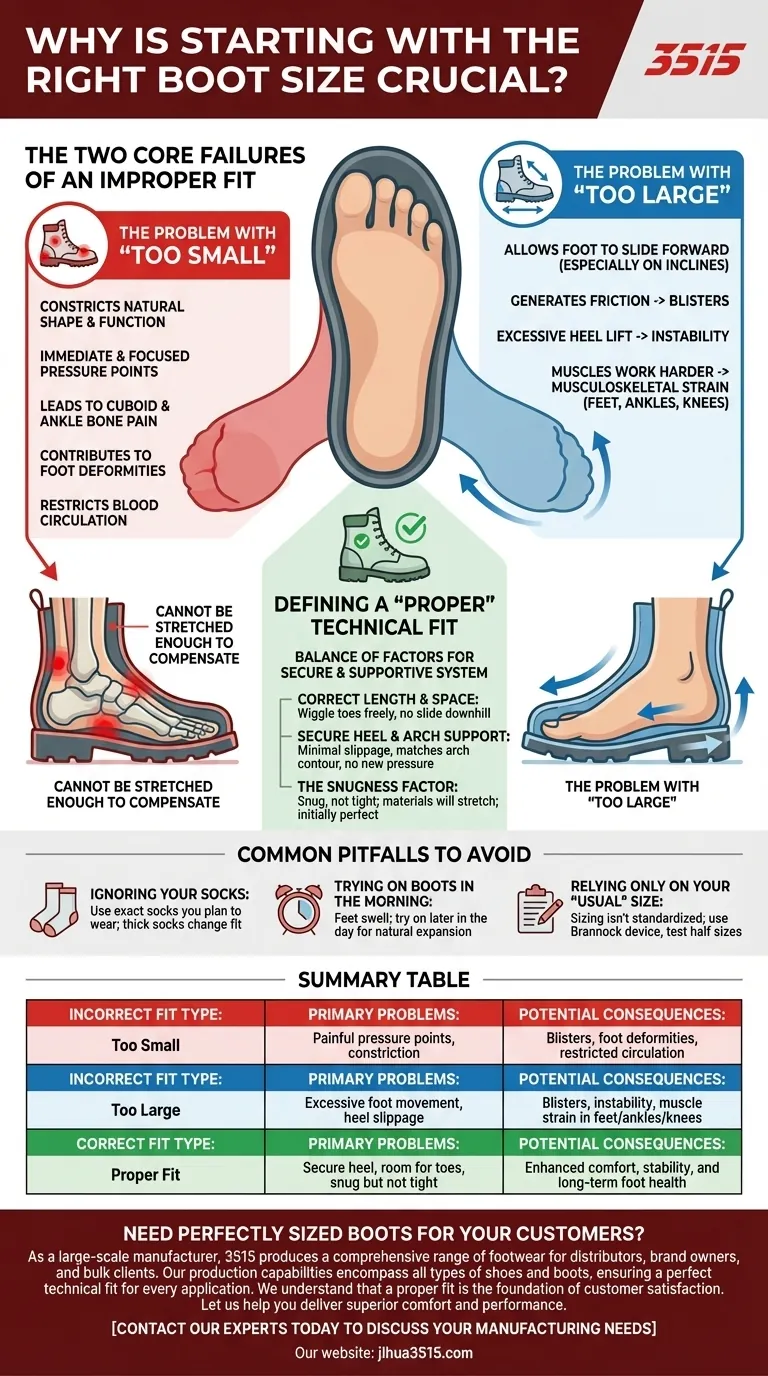
Starting with the correct boot size is non-negotiable because it's the foundation of comfort, performance, and long-term foot health. Boots that are too small create painful pressure points and can't be stretched enough to fix the problem, while boots that are too large allow excessive foot movement, leading to friction, blisters, and instability.
An incorrect boot size isn't just an inconvenience; it's a direct path to injury. The goal is to find a technical fit that secures your foot without constriction, preventing both immediate pain and chronic issues.
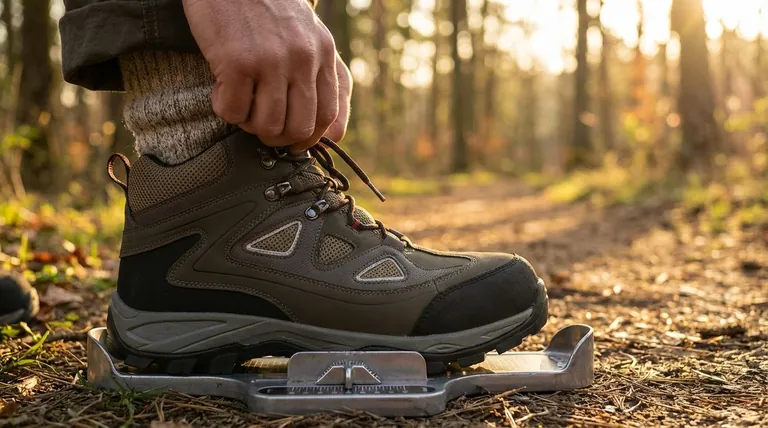
The Two Core Failures of an Improper Fit
Understanding why a poor fit is so detrimental comes down to two opposing problems: excessive pressure and excessive movement.
The Problem with "Too Small"
When a boot is too small, it constricts the foot's natural shape and function. This creates immediate and focused pressure points.
This consistent pressure can lead to conditions like cuboid pain or lateral malleolus (ankle bone) pain. Over time, it can even contribute to foot deformities and restrict critical blood circulation.
Unlike some materials, the rigid structure of most boots means they cannot be stretched enough to compensate for a fundamentally wrong size.
The Problem with "Too Large"
A boot that is too large is equally damaging. It allows your foot to slide forward with every step, especially on inclines.
This constant back-and-forth movement generates friction, which is the primary cause of painful blisters. Your heel will also lift excessively, compromising stability and support.
To compensate, your muscles work harder to stabilize your foot, leading to unnecessary musculoskeletal strain on your feet, ankles, and even your knees.
Defining a "Proper" Technical Fit
A correct fit is more than just matching a number to your foot; it's a balance of several factors that create a secure and supportive system.
Correct Length and Space
The most basic test is length. You should have enough space at the end of the boot to wiggle your toes freely.
However, your foot should not slide forward and hit the front of the boot when walking downhill. A proper fit locks your foot in place.
Secure Heel and Arch Support
While your toes need room, your heel should have minimal slippage. A small amount of lift is normal, but excessive movement indicates the boot is too large or the wrong shape for your foot.
The boot should also match the contour of your arch, providing support without creating a new pressure point.
The Snugness Factor
A new boot should feel snug, but not uncomfortably tight. It should hold your foot securely without pinching or causing numbness.
Keep in mind that materials like leather will stretch and mold to your foot slightly over time, so an initially perfect, snug fit is ideal.
Common Pitfalls to Avoid
Many people end up with the wrong size by making simple mistakes during the selection process. Avoiding these pitfalls is critical.
Ignoring Your Socks
Your boots and socks function as a single system. Always try on boots while wearing the exact type and thickness of sock you plan to use with them.
A thick hunting or hiking sock can easily change your fit by a half size. Consistency in your sock-boot combination is key to repeatable comfort.
Trying on Boots in the Morning
Feet naturally swell throughout the day due to gravity and activity. A boot that fits perfectly in the morning may feel painfully tight by the afternoon.
Always try on new footwear later in the day to get a measurement that accounts for this natural expansion.
Relying Only on Your "Usual" Size
Sizing is not standardized between brands. Your size 10 in one brand might be a 10.5 or 9.5 in another.
Use a Brannock device for a baseline measurement, but always test half sizes above and below what you think you need. If buying online, order multiple sizes and return the ones that don't fit.
Making the Right Choice for Your Foot
Ultimately, finding the right boot is about a methodical approach to fitting, not just picking a number off a chart.
- If your primary focus is precision and safety: Get measured professionally and always try on boots in a store with your intended socks in the late afternoon.
- If your primary focus is long-term comfort: Prioritize a snug fit with ample toe room and minimal heel lift, and trust the feel over the size number on the box.
- If your primary focus is convenience when buying online: Order multiple sizes to compare fits at home, and be prepared to return the pairs that are not a perfect match.
A properly fitted boot becomes an extension of your body, enabling you to perform safely and comfortably.
Summary Table:
| Incorrect Fit Type | Primary Problems | Potential Consequences |
|---|---|---|
| Too Small | Painful pressure points, constriction | Blisters, foot deformities, restricted circulation |
| Too Large | Excessive foot movement, heel slippage | Blisters, instability, muscle strain in feet/ankles/knees |
| Proper Fit | Secure heel, room for toes, snug but not tight | Enhanced comfort, stability, and long-term foot health |
Need perfectly sized boots for your customers?
As a large-scale manufacturer, 3515 produces a comprehensive range of footwear for distributors, brand owners, and bulk clients. Our production capabilities encompass all types of shoes and boots, ensuring a perfect technical fit for every application.
We understand that a proper fit is the foundation of customer satisfaction. Let us help you deliver superior comfort and performance.
Contact our experts today to discuss your manufacturing needs.
Visual Guide
Related Products
- Wholesale Durable Safety Boots | Custom Steel Toe & Puncture-Resistant Manufacturing
- Premium Wholesale Tactical Style Safety Shoes Boots with Quick Lacing
- Durable Goodyear Welt Leather Work Boots for Wholesale & Private Label
- Durable Leather Work Boots for Wholesale & Custom Manufacturing
- Premium Wholesale Waterproof Safety Boots High Performance Protection for Industrial Markets
People Also Ask
- Why is proper storage important for safety boots? Preserve Protection and Extend Lifespan
- How should safety boots be cleaned to avoid damage? A Gentle Guide to Preserve Your Boots
- What are the key features of safety boots? Essential Protection for Hazardous Workplaces
- What are the consequences of not wearing safety boots? Protect Your Finances and Career
- What makes durable safety boots? The Ultimate Guide to Long-Lasting Work Footwear



















