
In short, reinforced stitching is critical because it is the primary defense against the sandpaper-like abrasion of your skateboard's grip tape. Without it, the threads holding the shoe together in high-contact areas would shred quickly, causing the shoe to fall apart prematurely. This feature directly enhances the durability and lifespan of your skate shoe.
Skateboarding subjects footwear to a unique and destructive force: grip tape. While materials like suede are important, the stitching is often the first point of failure. Reinforced stitching is not a luxury; it is a fundamental requirement for any shoe designed to withstand the sport.
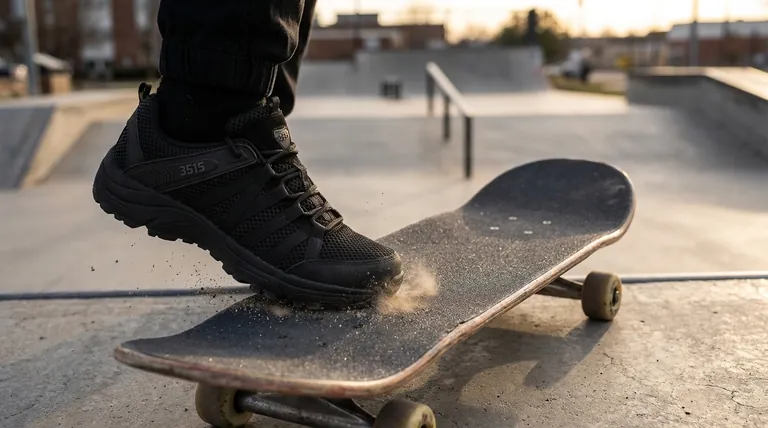
The Primary Enemy: Grip Tape Abrasion
To understand why stitching matters so much, you must first appreciate the force it's up against. Your skateboard's grip tape is essentially a sheet of sandpaper glued to a piece of wood.
How Grip Tape Destroys Shoes
Every time you slide your foot to perform a trick—like an ollie or a kickflip—you are dragging your shoe across a highly abrasive surface. This constant friction generates immense wear.
Standard threads used in casual sneakers are not designed for this kind of abuse. They are quickly worn down and severed by the sharp grit, leading to panel separation and blowouts.
High-Wear Zones: A Skater's Footprint
The specific areas that receive the most punishment depend on your personal skating style, stance, and trick selection. However, the most common high-wear zone is the ollie area, located on the outer side of your front foot's shoe.
Reinforced stitching is concentrated in these key zones to provide strength precisely where it is needed most.
Methods of Reinforcement
"Reinforced" isn't a single technique but rather a collection of construction strategies designed to protect the shoe's structural integrity.
Double and Triple Stitching
The most common method is using multiple parallel rows of stitches. Double or triple stitching in the ollie area and around the toe cap ensures that if one line of thread is severed by grip tape, one or two backup lines remain intact.
Hidden or Recessed Stitches
Another effective technique involves placing the stitches in a groove or recess within the shoe's upper material. This design cleverly protects the thread from making direct contact with the grip tape, significantly increasing its lifespan.
Stronger Thread Material
While not always advertised, dedicated skate shoe brands often use more robust thread materials that have a higher tensile strength and abrasion resistance than those found in standard fashion footwear.
Common Pitfalls to Avoid
Even a shoe with reinforced stitching can have weaknesses. True durability comes from a holistic design, not a single feature.
Ignoring the Upper Material
Reinforced stitching is only as strong as the material it's holding together. Look for durable uppers like suede or high-quality leather, which offer significantly more resistance to abrasion than standard canvas.
Overlooking the Toe Cap
A one-piece toe cap is a highly desirable feature. By eliminating the seam from the front of the shoe, it removes a major potential failure point that is directly in the line of fire for most flip tricks.
Confusing Bulk with Durability
While some heavily reinforced shoes are bulky, this is not always the case. Modern designs often incorporate reinforcement in sleek, minimalist packages. Don't assume a shoe is weak just because it isn't overly padded.
Making the Right Choice for Your Skating
Your ideal shoe depends on balancing durability, board feel, and budget. Use stitching as a key indicator of a shoe's intended purpose.
- If your primary focus is maximum durability: Seek out shoes with triple stitching in key wear zones, combined with a suede upper and a one-piece toe cap.
- If your primary focus is board feel and flexibility: Look for a vulcanized sole, but still insist on at least double stitching in the ollie area to avoid a premature blowout.
- If your primary focus is a budget-friendly option: Make reinforced stitching your non-negotiable feature; it's the single best indicator of a shoe built for actual skateboarding versus one that just has the look.
Ultimately, examining the stitching is the fastest way to determine if a shoe is truly built to withstand the rigors of skateboarding.
Summary Table:
| Feature | Benefit for Skaters |
|---|---|
| Double/Triple Stitching | Provides backup lines of thread if one fails, preventing panel separation. |
| Hidden/Recessed Stitches | Protects thread from direct contact with abrasive grip tape, increasing lifespan. |
| Stronger Thread Material | Offers higher tensile strength and abrasion resistance than standard threads. |
| Concentrated in High-Wear Zones | Reinforces areas like the ollie patch, where abrasion is most intense. |
Need Durable Skate Shoes Built to Last?
As a large-scale manufacturer, 3515 produces a comprehensive range of high-performance footwear for distributors, brand owners, and bulk clients. Our production capabilities encompass all types of durable skate shoes, built with reinforced stitching, quality suede uppers, and one-piece toe caps designed to withstand the rigors of the sport.
Let us help you deliver the durability your customers demand. Contact our team today to discuss your skate shoe production needs.
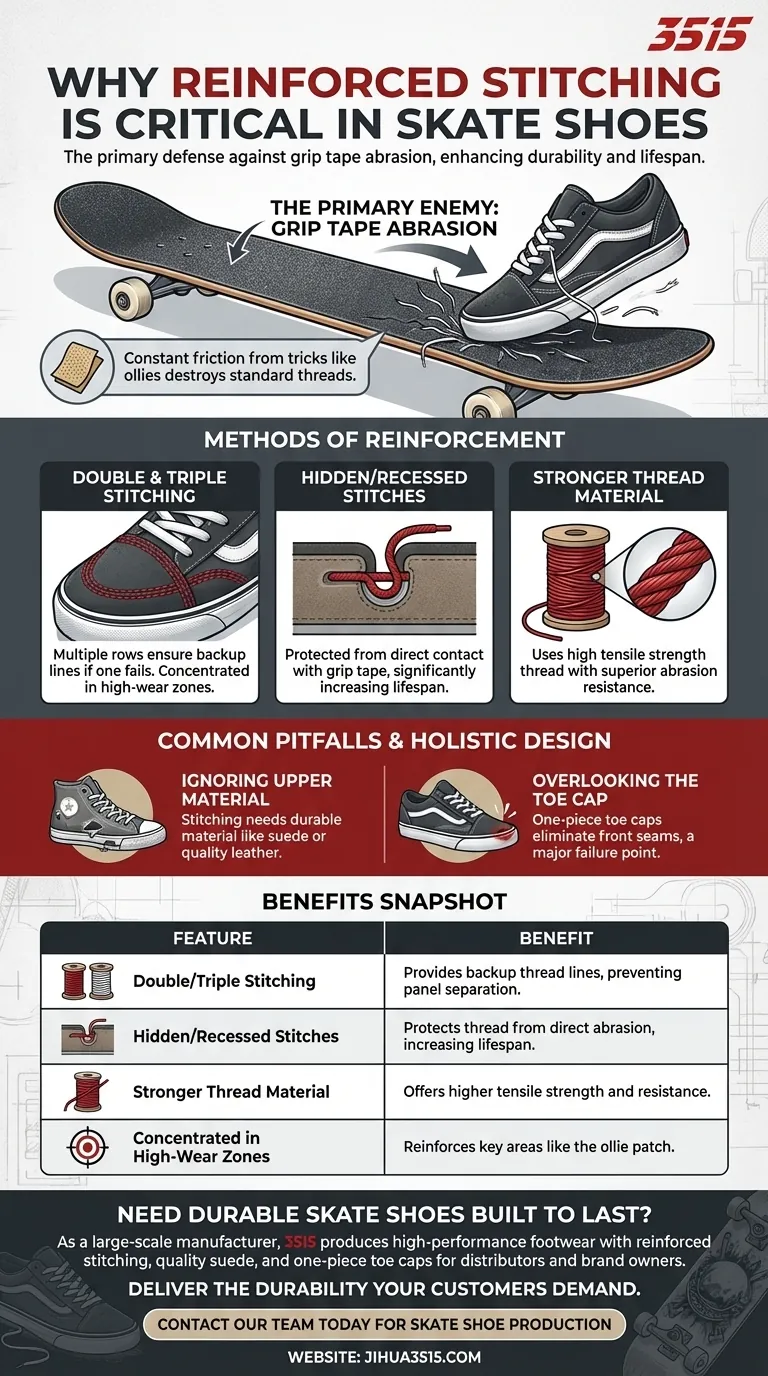
Visual Guide
Related Products
- Wholesale Durable Camouflage Canvas Shoes with High-Traction Cleated Rubber Sole
- Advanced KPU Athletic Safety Shoe with Steel Toe Cap Anti-Slip Rotary Lacing System
- Premium Suede Sport Safety Shoes for Wholesale & Bulk Orders
- Wholesale Durable & Breathable Training Shoes for Custom Brands
- Wholesale Breathable Training Shoes Custom Athletic Footwear Manufacturer
People Also Ask
- Why is the selection of high-strength fabric materials necessary in the production of canvas shoes and training shoes?
- What are the properties of canvas as a shoe material? A Guide to Lightweight Comfort & Style
- Can canvas shoes be worn in rainy conditions? The Truth About Water Resistance
- What are some examples of vulcanized shoes? Discover the Flexibility and Board Feel of Classic Sneakers
- What are the characteristics of canvas as a shoe material? A Guide to Lightweight, Breathable Footwear



















