
At its core, regular cleaning is not about aesthetics; it is a critical maintenance function. Unaddressed dirt, grit, and moisture act as abrasive agents that physically break down the materials of your tactical boots, compromising their structural integrity, weather resistance, and ultimately, their lifespan.
The primary reason for cleaning tactical boots is to preserve their material and structural integrity. It is a preventative measure that protects your investment and ensures the boots perform as designed when you need them most.
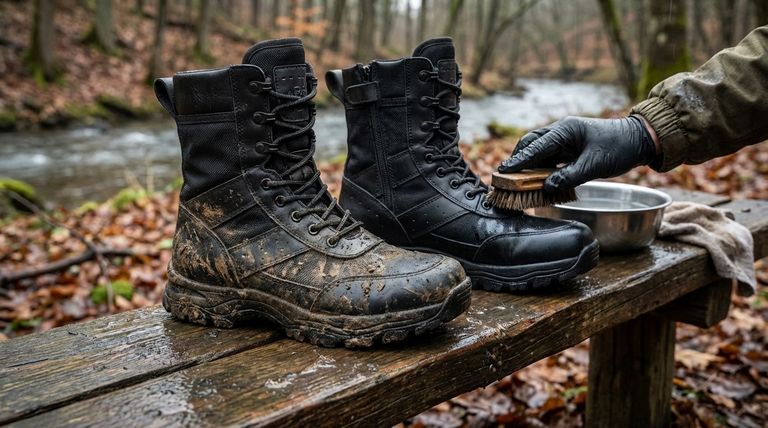
Why Materials Degrade Without Cleaning
Tactical boots are engineered systems where "form follows function." Their durability comes from a careful selection of materials and construction methods. Neglecting cleaning directly undermines this engineering.
How Abrasives Weaken Materials
Fine particles of dirt, sand, and grit become embedded in the boot's materials, especially in flex points and seams.
With every step you take, these particles act like sandpaper, grinding against the fibers of leather or synthetic fabrics. This constant friction physically wears down the material, leading to premature thinning and failure.
The Impact of Trapped Moisture
Mud and caked-on dirt trap moisture against the boot's surface long after it should have evaporated.
This prolonged dampness can cause leather to weaken and rot. It can also degrade the adhesives used to bond the sole to the upper, increasing the risk of delamination.
The Breakdown of Water-Resistant Barriers
Modern tactical boots often rely on waterproofing treatments or breathable membranes.
A layer of dirt and grime can clog the pores of these membranes, rendering them ineffective. It also prevents the effective reapplication of waterproofing treatments, leaving the boot vulnerable to moisture.
A Practical Guide to Boot Maintenance
A consistent maintenance routine is simple to execute and is the single most effective way to maximize the life and performance of your boots.
The Cleaning Process
First, remove laces and insoles. Use a soft brush to remove all loose dirt and debris from the boot, paying special attention to seams and the sole's lugs.
For stubborn dirt, use a cloth with lukewarm water and a mild soap. Gently scrub the surface, rinse with a clean damp cloth, and avoid soaking the boot entirely.
The Importance of Proper Drying
Never use a direct heat source—like a radiator, campfire, or hair dryer—to dry your boots.
Direct heat can cause leather to become brittle and crack, and it can melt the glues used in construction, leading to sole separation. Always let boots air dry naturally in a cool, well-ventilated area.
Conditioning and Waterproofing
After cleaning and drying leather boots, apply a suitable conditioner to nourish the leather and keep it from drying out.
Regularly reapply a waterproofing treatment to all boots, as factory coatings wear off with use. This creates a crucial first line of defense against moisture.
Common Pitfalls to Avoid
Mistakes in the maintenance process can cause as much damage as neglect. Understanding what not to do is as important as knowing what to do.
Using Harsh Chemicals
Avoid using household detergents, solvents, or harsh chemical cleaners. These products can strip the natural oils from leather and damage the delicate synthetic materials and adhesives used in modern boots.
Neglecting the Interior
The inside of the boot needs attention, too. Regularly remove the insoles to let them air out. This prevents the buildup of bacteria and fungus, which create odors and can degrade the interior lining over time.
Improper Storage
Storing boots while they are still damp or dirty is a common mistake. Always ensure they are completely clean and dry before storing them in a cool, dark, and dry place away from direct sunlight, which can fade and weaken materials.
Making the Right Choice for Your Goal
Your maintenance routine should align with how you use your equipment.
- If your primary focus is maximum longevity: Make routine cleaning and conditioning after every few uses a non-negotiable habit.
- If your primary focus is peak performance in wet conditions: Prioritize the regular reapplication of waterproofing treatments on a clean surface.
- If your primary focus is daily comfort and hygiene: Emphasize proper drying, airing out the insoles, and rotating between pairs to allow each to fully recover.
Ultimately, treating your boots as a piece of essential equipment, not just footwear, ensures they will support you reliably for years to come.
Summary Table:
| Maintenance Goal | Key Action | Benefit |
|---|---|---|
| Maximize Longevity | Routine cleaning & conditioning after use | Prevents abrasive wear and material breakdown |
| Peak Wet Weather Performance | Regular reapplication of waterproofing | Maintains protective barriers against moisture |
| Daily Comfort & Hygiene | Proper drying & airing out of insoles | Prevents odor, bacteria, and interior degradation |
Ensure your team's gear is built to last. As a large-scale manufacturer, 3515 produces a comprehensive range of durable tactical, work, and safety footwear for distributors, brand owners, and bulk clients. Our expertise in material science and construction ensures every pair is engineered for maximum performance and longevity. Let us help you equip your customers with reliable footwear. Contact our team today to discuss your manufacturing needs.
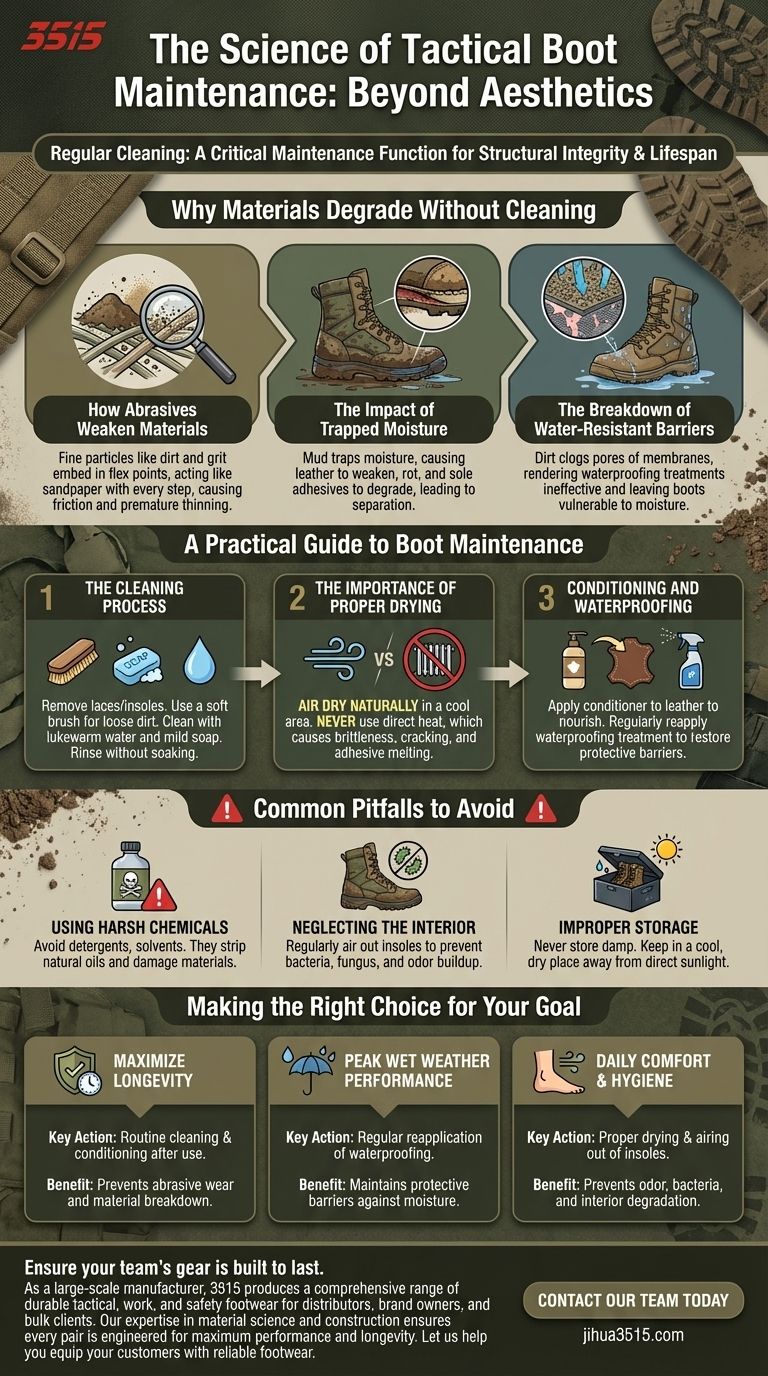
Visual Guide
Related Products
- Durable Leather Tactical Boots Wholesale & Custom Manufacturing for Brands
- High-Traction Suede Tactical Boots Wholesale & Custom Manufacturing
- Durable Leather High-Ankle Tactical Boots for Wholesale & Custom Manufacturing
- Durable Mid-Cut Tactical Boots for Wholesale & Private Label
- Wholesale Waterproof Tactical Boots Custom Suede & High-Traction Soles
People Also Ask
- What specialized protections do tactical boots offer? Maximize Endurance with High-Performance Footwear
- What features should law enforcement officers look for in tactical boots? Essential Guide for Safety & Performance
- Importance of Professional Tactical Boots in Loess Gully Regions: Ensure Safety and Precision for Field Monitoring
- What is rucking, and why are tactical boots suitable for it? Discover the Ultimate Footwear for Heavy Loads
- What makes the traction of tactical boots superior? Unlock the Science of Unbeatable Grip















