
At its most fundamental level, proper boot fastening ensures the boot remains on your foot when you need its protection the most, such as during a fall or a slide. It is the critical link that guarantees the boot's safety features are in position to do their job, preventing a minor mishap from becoming a major injury.
The core purpose of fastening a boot is not just to keep it from falling off. It is to create a secure, integrated system between your foot and the boot, activating its full potential for support, protection, and performance.
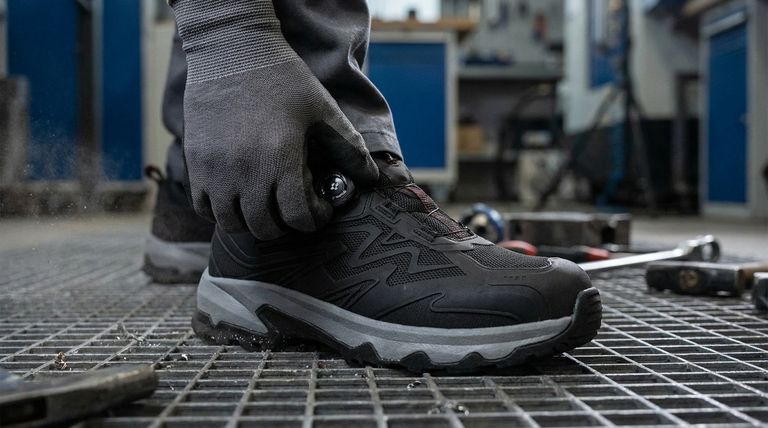
The Anatomy of a Secure System
A boot's features are only effective when the boot is properly secured to your foot. Fastening is the action that transforms a piece of footwear into a piece of protective equipment.
Beyond Just Staying On
While keeping the boot on is the most obvious reason for fastening, the real value is in security during dynamic situations. During a tumble, your foot and leg are subjected to unpredictable forces. Proper fastening ensures the boot moves with you, not against you or off you.
Activating Structural Support
Many boots are designed with rigid ankle support, reinforced heel cups, and toe boxes. A loose boot allows your foot to move around inside this structure, rendering that support useless. Snug fastening locks your foot into place, engaging these components to prevent twists and impacts.
Ensuring Consistent Protection
Protective elements, like steel toes or ankle armor, are placed in precise locations. If your boot is loose, your foot can shift, misaligning these critical features. A securely fastened boot guarantees that the protection is exactly where it needs to be at the moment of impact.
The Critical Link Between Fit and Fastening
You cannot solve a poor fit with tight laces. Fastening is the final, crucial step that perfects a boot that is already the correct size and shape for your foot.
The Foundation of a Proper Fit
Before you even consider fastening, the boot must fit correctly. This means your toes have space to wiggle, but your heel experiences minimal to no slippage as you walk. The boot should feel snug across your foot's width without creating pressure points.
Fastening to Eliminate Gaps
Once you have the right size, fastening is what customizes the fit. It closes any remaining small gaps around the ankle and instep, ensuring your foot is held securely in place. This is especially important with materials like leather, which will stretch slightly over time.
Understanding the Trade-offs
The goal is a secure fit, but there is a fine line between "secure" and "too tight," both of which create problems.
The Danger of Overtightening
Excessive tightness is just as hazardous as a loose boot. It can restrict blood flow, leading to numbness, discomfort, and even long-term nerve issues. It also creates painful pressure points that can cause blisters and sores.
The Problem of Under-tightening
A boot that is too loose creates constant friction as your foot slides internally, which is a primary cause of blisters. More importantly, it completely negates the boot's ankle support and protective alignment, creating a significant safety risk.
Achieving the Optimal Fastening for Your Goal
Your ideal level of tightness depends on your activity and the boot's material. Use these principles to guide your approach.
- If your primary focus is maximum protection (e.g., work sites, motorcycling): Your goal is to immobilize the foot within the boot's protective structure, ensuring a snug fit that prevents any internal movement without cutting off circulation.
- If your primary focus is long-distance comfort (e.g., hiking): Aim for a secure fit that eliminates heel slip to prevent blisters, but allows for slight adjustments to accommodate natural foot swelling throughout the day.
- If your primary focus is breaking in new leather boots: Start with a very snug fastening, as the leather will stretch and mold to your foot over the first several wears, requiring you to find a new "perfect" tightness.
Properly fastening your boots is the final step in unlocking their full protective and performance capabilities.
Summary Table:
| Fastening Goal | Key Benefit | Key Risk of Improper Fastening |
|---|---|---|
| Maximum Protection (Work, Motorcycling) | Activates structural support; ensures protective features are aligned. | Loss of ankle support; misalignment of safety components. |
| Long-Distance Comfort (Hiking) | Eliminates heel slip to prevent blisters; allows for natural foot swelling. | Internal friction causing blisters; discomfort from constant movement. |
| Breaking In New Boots | Ensures leather molds correctly to the shape of your foot for a custom fit. | Boots may stretch incorrectly, leading to a permanently poor fit. |
Need Boots That Fit Perfectly and Fasten Securely?
As a large-scale manufacturer, 3515 produces a comprehensive range of safety, work, and outdoor footwear for distributors, brand owners, and bulk clients. Our expertise ensures every pair is designed for optimal fit and secure fastening right out of the box.
We help you provide footwear that offers:
- Uncompromised Safety: Boots engineered to lock the foot in place, activating all protective features.
- Superior Comfort: Designs that minimize internal movement to prevent blisters and fatigue.
- Durable Performance: High-quality materials and construction built to withstand demanding environments.
Contact 3515 today to discuss your footwear needs and discover how our production capabilities can deliver the perfect boot for your market.
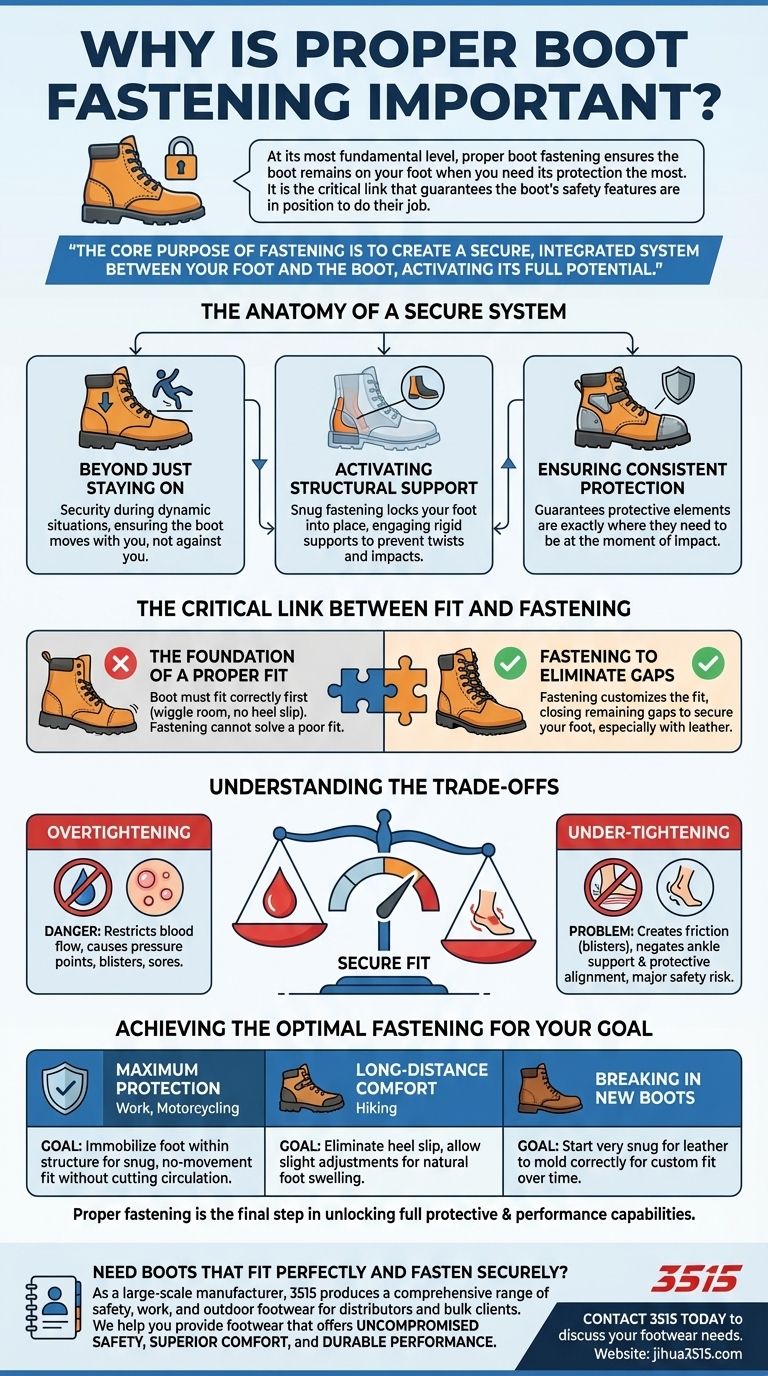
Visual Guide
Related Products
- Premium Wholesale Tactical Style Safety Shoes Boots with Quick Lacing
- High Performance Fire-Retardant Waterproof Safety Boots
- Premium Waterproof High-Cut Industrial Safety Boots for Wholesale and Bulk Orders
- Durable Leather Work Boots for Wholesale & Custom Manufacturing
- Durable Leather Work Boots for Wholesale & Custom OEM Manufacturing
People Also Ask
- How are gait analysis research findings applied to the functional design of safety shoes and tactical boots?
- How does anthropomorphic design influence material selection? Enhance Footwear Performance through Biological Alignment
- Why is the synchronization of craftsmanship and UX development emphasized for bulk customization of safety shoes?
- How can specialized footwear mitigate safety risks? High-Volume OEM/ODM Solutions since 1951
- How do quality certification standards for safety shoes reduce perceived risk? Buy Online with Technical Certainty



















