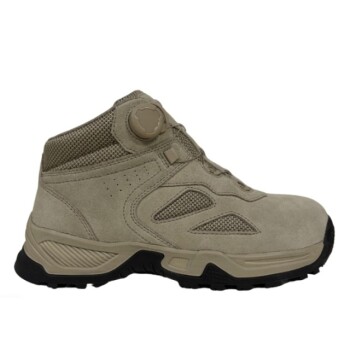
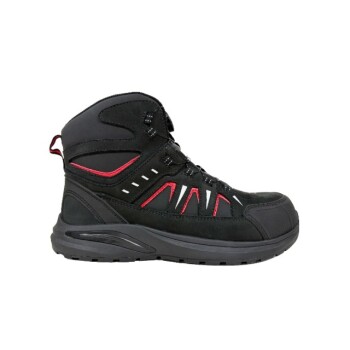
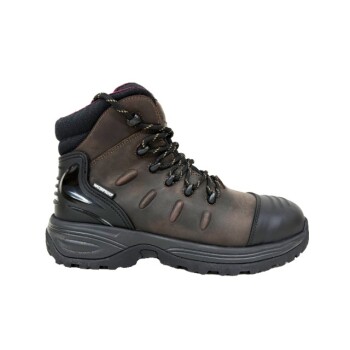
Professional industrial-grade safety footwear serves as an ideal carrier for diabetic rehabilitation insoles primarily due to its superior internal volume and structural stability. These boots are uniquely engineered to accommodate the significant thickness of therapeutic vibration insoles without creating dangerous pressure points or restricting the foot inside the shoe.
The effectiveness of a diabetic rehabilitation system relies on "Volume Management": the footwear must provide enough internal space to house the therapeutic device while simultaneously shielding the neuropathic foot from external mechanical trauma.
The Critical Role of Internal Volume
Accommodating Therapeutic Thickness
Rehabilitation insoles, particularly those utilizing therapeutic vibration, often possess a specific thickness that exceeds standard cushioning.
Standard consumer footwear typically lacks the depth required to house these devices.
Industrial-grade boots are designed with greater internal volume, allowing these thicker insoles to sit flat and function correctly without altering the fit of the shoe.
Preventing Neuropathic Compression
When a thick insole is forced into a shallow shoe, it reduces the remaining space for the foot.
For a diabetic patient with neuropathy (loss of sensation), this compression is dangerous as it can restrict blood flow or cause friction blisters that go unnoticed.
The generous cavity of specialty work boots ensures the foot remains uncompressed, preventing irritation even with the added bulk of the rehabilitation device.
Structural Stability and External Protection
Providing a Stable Foundation
The primary reference highlights that industrial footwear offers a "stable structural base."
This rigidity is essential for the rehabilitation insole to function mechanically; a flimsy shoe would collapse under the insole, negating its therapeutic effects.
The boot acts as a solid chassis that holds the insole in the correct position relative to the foot.
The "System" Approach to Protection
Using industrial boots creates a comprehensive protection system that works from the outside in.
While the insole manages internal rehabilitation and pressure distribution, the robust exterior of the safety boot shields the foot from external mechanical damage.
This is vital for diabetic patients, whose feet are highly susceptible to trauma from falling objects or job site hazards.
Understanding the Trade-offs
Weight vs. Protection
While the structural base provides stability, industrial footwear is inherently heavier than standard therapeutic shoes.
Patients must balance the need for the protective volume against the potential fatigue caused by wearing heavier boots over long periods.
Rigidity and Gait Adaptation
The robust nature of these boots provides excellent protection but offers less flexibility than athletic footwear.
Users must ensure that the rigidity of the boot does not negatively impact their gait, which could inadvertently alter how the foot interacts with the rehabilitation insole.
Making the Right Choice for Your Goal
To maximize the benefits of this footwear-insole combination, consider your specific environment:
- If your primary focus is Hazard Protection: Prioritize industrial boots with certified toe protection to shield the foot from external trauma while housing the insole.
- If your primary focus is Insole Performance: Ensure the boot has a removable factory liner to maximize the available depth for the therapeutic device.
- If your primary focus is Comfort: Select a boot with a wide toe box to prevent lateral compression, even if the vertical volume is sufficient.
By selecting footwear that offers both depth and defense, you convert a standard safety boot into a sophisticated medical rehabilitation tool.
Summary Table:
| Feature | Benefit for Diabetic Rehabilitation |
|---|---|
| Superior Internal Volume | Accommodates thick therapeutic devices without causing pressure points. |
| Structural Stability | Provides a rigid chassis to ensure the insole functions mechanically. |
| External Protection | Shields neuropathic feet from mechanical trauma and falling objects. |
| Volume Management | Prevents compression and friction blisters by maintaining a generous cavity. |
| System Integration | Combines internal pressure relief with external industrial-grade safety. |
Partner with 3515 for High-Performance Specialty Footwear Solutions
As a large-scale manufacturer serving distributors and brand owners, 3515 offers comprehensive production capabilities for all footwear types, anchored by our flagship Safety Shoes series. Whether you need specialty work boots designed for medical integration or high-volume orders for tactical, outdoor, and formal footwear, we provide the manufacturing excellence your brand demands.
Why choose 3515?
- Unmatched Scale: Reliable bulk production for global distributors.
- Diverse Portfolio: From industrial safety and tactical boots to training sneakers and dress shoes.
- Expert Engineering: Footwear designed for structural stability and superior internal volume management.
Contact us today to explore our manufacturing capabilities and secure your supply chain!
References
- Isabelle Bourdel‐Marchasson, Alan J. Sinclair. A Therapeutic Vibrating Insole Device for Postural Instability in Older People with Type 2 Diabetes: A Randomized Control Study. DOI: 10.1007/s13300-022-01246-8
This article is also based on technical information from 3515 Knowledge Base .
Related Products
- Premium Waterproof High-Cut Industrial Safety Boots for Wholesale and Bulk Orders
- Puncture-Resistant Velcro Safety Boots for Wholesale & Custom Manufacturing
- Premium Wholesale Waterproof Safety Boots High Performance Protection for Industrial Markets
- Customizable Anti-Smash Safety Boots for Wholesale & Private Label Manufacturing
- Premium Wholesale Wheat Nubuck Safety Boot with Rapid Lacing System
People Also Ask
- Why are oil-resistant and anti-slip properties critical for industrial safety boots? Expert Outsole Engineering Guide
- What are the primary protective functions of industrial safety boots in oil palm plantations? Master Rough Terrain Safety
- What are the protective functions of industrial safety boots in sugar factory clarification stations? Thermal & Slip Experts
- Why are industrial safety boots with high-grip outsoles required for oil leaks and B3 waste? Ensure Worker Stability
- How do industrial safety boots assist maintenance personnel working on high-level palm oil factory structures?