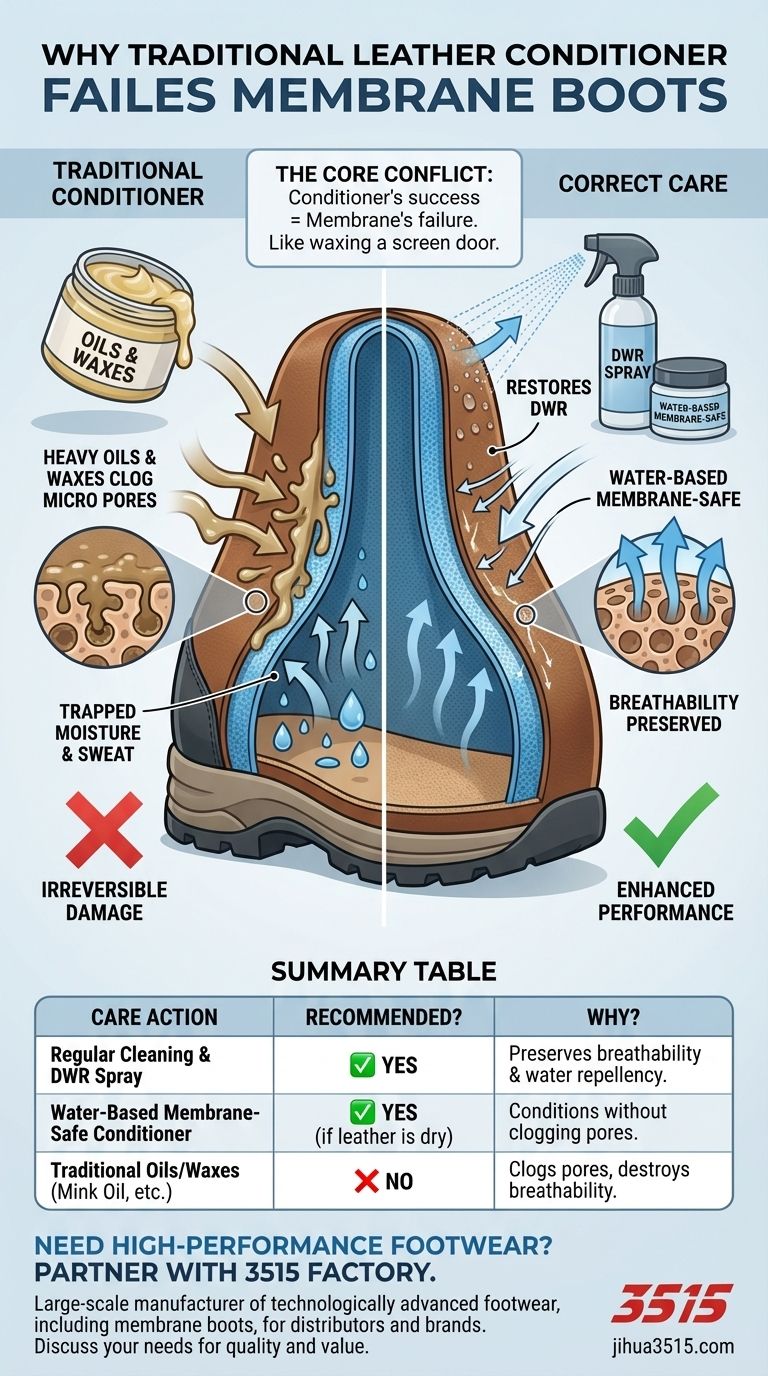
At its core, using a traditional leather conditioner on boots with a waterproof, breathable membrane is not recommended because its heavy oils and waxes will clog the membrane's microscopic pores. This permanently destroys the boot's ability to breathe, trapping sweat and moisture inside.
The central conflict is simple: a traditional conditioner's job is to deeply penetrate and saturate leather, while a high-tech membrane's job is to breathe through microscopic pores. The conditioner's success means the membrane's failure, effectively turning your breathable boot into a plastic bag.
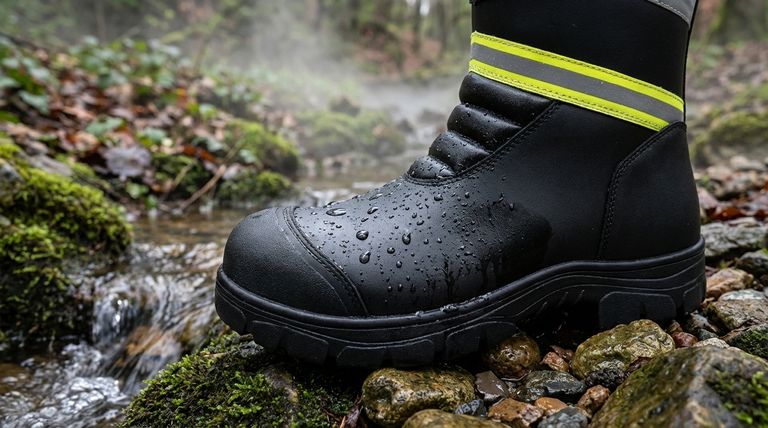
How Your "Waterproof" Boots Actually Work
To understand the problem, you first need to understand that your boots rely on a two-part system to keep your feet dry and comfortable.
The Outer Leather
The leather exterior provides structure, durability, and the first line of defense against the elements. While it has natural water resistance, it is not the primary waterproofing component in this type of footwear.
The High-Tech Membrane
Tucked just inside the leather is a high-tech liner, like Gore-Tex or a similar proprietary membrane. This material is engineered with billions of microscopic pores per square inch.
These pores are small enough to block liquid water from getting in, but large enough to allow water vapor (sweat) to escape from the inside.
The Importance of Breathability
This ability to let sweat vapor out is called breathability. It's the critical feature that prevents your feet from becoming clammy and wet from their own perspiration, which is essential for comfort and blister prevention.
Why Traditional Conditioner Creates a Failure
Applying the wrong product directly compromises the boot's most advanced feature. The goal is to care for the leather without harming the sensitive membrane beneath it.
The "Waxing a Screen Door" Effect
The reference's analogy is perfect. A waterproof-breathable membrane functions like a screen door, letting air (vapor) pass through while keeping larger things (liquid water) out.
Traditional leather conditioners, which are typically heavy with oils, greases, or waxes, are like smearing a thick layer of wax over that screen door. They fill and permanently clog the membrane's pores.
The Result: Trapped Moisture
Once the membrane's pores are clogged, the boot can no longer breathe. Sweat vapor from your foot is now trapped, and the inside of your boot becomes damp and uncomfortable. Your expensive breathable boots will now feel no different than cheap rubber boots.
This Damage is Often Irreversible
Once heavy oils or waxes have migrated through the leather and clogged the membrane, it is nearly impossible to remove them. The boot's breathability is permanently compromised.
Understanding the Correct Approach to Care
Proper maintenance enhances the performance of both the leather and the membrane without creating a conflict between them.
Step 1: Regular Cleaning
The most important step is simply keeping your boots clean. Use a brush and water to remove mud and dirt, as caked-on grime can also inhibit breathability and wear down the leather.
Step 2: Reapply a DWR Treatment
Modern boots come with a Durable Water Repellent (DWR) finish on the leather. This coating makes water bead up and roll off. When this wears out, use a spray-on or wash-in treatment specifically designed for membrane footwear to restore it.
Step 3: Condition Only When Necessary
If the leather becomes dry and shows signs of cracking, it needs conditioning. However, you must use a product specifically formulated to be safe for waterproof-breathable membranes. These are typically water-based and will not clog the pores.
Making the Right Choice for Your Boots
- If your primary focus is maximizing performance and breathability: Stick to regular cleaning and reapplying a DWR spray treatment. This is the correct maintenance for 95% of situations.
- If your leather is visibly dry and at risk of cracking: Use a modern, water-based conditioning product specifically labeled as "safe for Gore-Tex" or other membranes. Apply it sparingly.
- If you want to avoid irreversible damage: Never use traditional products like mink oil, sno-seal, or other heavy greases and waxes on boots with a breathable membrane.
Proper care preserves the advanced technology you paid for, ensuring your boots keep your feet dry from both the elements outside and your own sweat inside.
Summary Table:
| Care Action | Recommended For Membrane Boots? | Why? |
|---|---|---|
| Regular Cleaning & DWR Spray | ✅ Yes | Preserves membrane breathability and water repellency. |
| Water-Based Membrane-Safe Conditioner | ✅ Yes (if leather is dry) | Conditions leather without clogging pores. |
| Traditional Oils/Waxes (Mink Oil, etc.) | ❌ No | Clogs membrane pores, permanently destroying breathability. |
Need High-Performance Footwear? Partner with 3515 Factory.
As a large-scale manufacturer, 3515 produces a comprehensive range of durable and technologically advanced footwear for distributors, brand owners, and bulk clients. Our production capabilities encompass all types of shoes and boots, including those designed with specialized membranes for optimal performance.
Let's discuss your specific needs and how we can deliver quality and value.
Contact our team today for a consultation
Visual Guide
Related Products
- High Performance Fire-Retardant Waterproof Safety Boots
- Premium Wholesale Waterproof Safety Boots High Performance Protection for Industrial Markets
- Premium Flame-Retardant Waterproof Safety Boots and Shoes
- Wholesale Waterproof Tactical Boots Custom Suede & High-Traction Soles
- Durable Waterproof Rain Boots | Custom Manufacturer for Wholesale & Brands
People Also Ask
- Why are waterproof safety boots recommended for certain work environments? Essential Protection for Wet & Hazardous Jobs
- What roles do 3D vision systems and industrial robots play in the manufacturing of fire safety boots? Smart Automation
- What materials make waterproof boots durable? The Ultimate Guide to Long-Lasting Footwear
- How can you ensure your feet stay dry during winter walks? A Two-Part Defense System for Total Comfort
- How should you maintain waterproof boots? A Simple 3-Step Guide to Long-Lasting Performance