
Keeping your walking boot clean and dry is a non-negotiable part of your recovery. This simple act of hygiene is critical for preventing the buildup of dirt, sweat, and bacteria. Failing to do so can lead directly to skin irritation, persistent odors, and even infections that complicate the healing process.
The condition of your walking boot directly impacts your skin health and overall comfort. Neglecting its hygiene introduces preventable complications that can irritate your skin and potentially slow down your recovery.
The Core Risks of a Neglected Boot
A walking boot creates a warm, enclosed environment around your foot and ankle. While necessary for stabilization, this environment requires diligent management to prevent it from causing secondary problems.
Bacterial and Fungal Growth
A dark, warm, and moist space is the ideal breeding ground for bacteria and fungi. Constant sweat and lack of airflow can encourage the growth of microbes that cause conditions like athlete's foot.
Skin Irritation and Breakdown
Prolonged exposure to moisture softens the skin, a process known as maceration. This makes your skin fragile, weak, and highly susceptible to chafing, blisters, and pressure sores from the boot's liner.
Compromising the Injury Site
For those recovering from surgery or an open wound, a skin infection is a serious risk. Bacteria thriving in a dirty boot liner can easily infect an incision site, creating a significant setback to your healing.
Unpleasant Odor
The noticeable odor from a well-worn boot is a direct result of bacteria breaking down the sweat and dead skin cells trapped inside. While not a medical risk, it is a significant quality-of-life issue.
Practical Steps for Maintaining Hygiene
Simple, consistent habits are all that is required to keep your boot clean and your skin healthy.
Manage Moisture at the Source
Wear a clean, high-quality moisture-wicking sock every day. These fabrics pull sweat away from your skin, keeping it drier. A light dusting of foot powder can also help absorb excess moisture.
Clean the Removable Liner
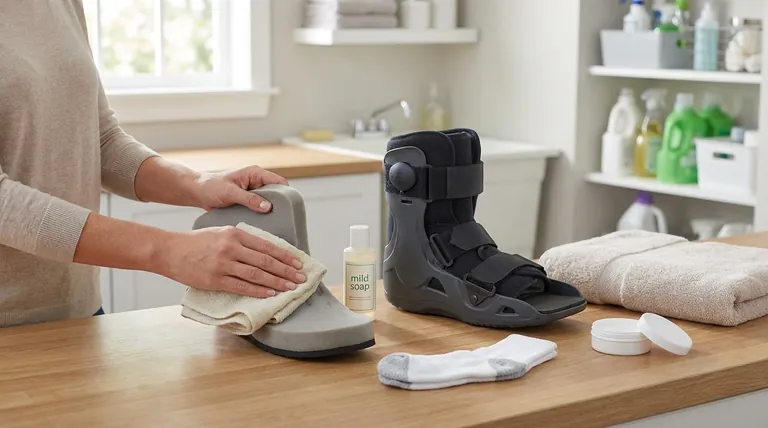
Most walking boots have a soft liner that can be removed. Gently wipe it down with a damp cloth and mild soap, then allow it to air dry completely before reinserting it. Never put a damp liner back in the boot.
Wipe Down the Outer Shell
The hard plastic shell can be easily cleaned with a simple wipe to remove any external dirt or grime.
Common Pitfalls to Avoid
Improper cleaning can damage the boot or fail to solve the underlying problem. Be mindful of these common mistakes.
Never Submerge the Boot
Do not soak the entire boot or liner in water. This can damage the materials and make it exceptionally difficult to dry thoroughly, which only worsens the moisture problem.
Avoid Harsh Chemicals
Do not use bleach, harsh detergents, or abrasive cleaners on the boot liner. These can degrade the foam and fabric materials and leave behind chemical residues that severely irritate your skin.
Do Not Use Direct Heat to Dry
Never use a hairdryer, place the boot on a radiator, or put it in a clothes dryer. High heat can warp the boot's plastic shell and permanently damage the supportive foam liner. Always let it air dry.
Making the Right Choice for Your Goal
Follow these guidelines to ensure your boot supports, rather than hinders, your healing.
- If your primary focus is preventing infection (especially post-surgery): Prioritize keeping the area completely dry and inspect your skin daily for any signs of redness or irritation.
- If your primary focus is managing daily sweat and odor: Change into a fresh, moisture-wicking sock daily and consider using an antifungal foot powder.
- If your primary focus is long-term comfort and skin health: Make a habit of removing the liner to air out overnight and wipe it down every few days.
Ultimately, maintaining your walking boot is an essential part of taking control of your own recovery.
Summary Table:
| Risk of a Dirty Boot | Consequence | Prevention Tip |
|---|---|---|
| Bacterial/Fungal Growth | Athlete's foot, infections | Use moisture-wicking socks & foot powder |
| Skin Irritation | Blisters, chafing, pressure sores | Keep liner dry; inspect skin daily |
| Compromised Healing | Infection of surgical sites/ wounds | Prioritize dryness; avoid harsh chemicals |
| Persistent Odor | Reduced comfort & quality of life | Clean removable liner regularly with mild soap |
Ensure a comfortable and hygienic recovery with the right footwear. As a large-scale manufacturer, 3515 produces a comprehensive range of high-quality medical and recovery footwear for distributors, brand owners, and bulk clients. Our expertise ensures products that support patient comfort and healing. Contact our team today to discuss your footwear needs and how we can support your business with reliable, hygienic solutions.
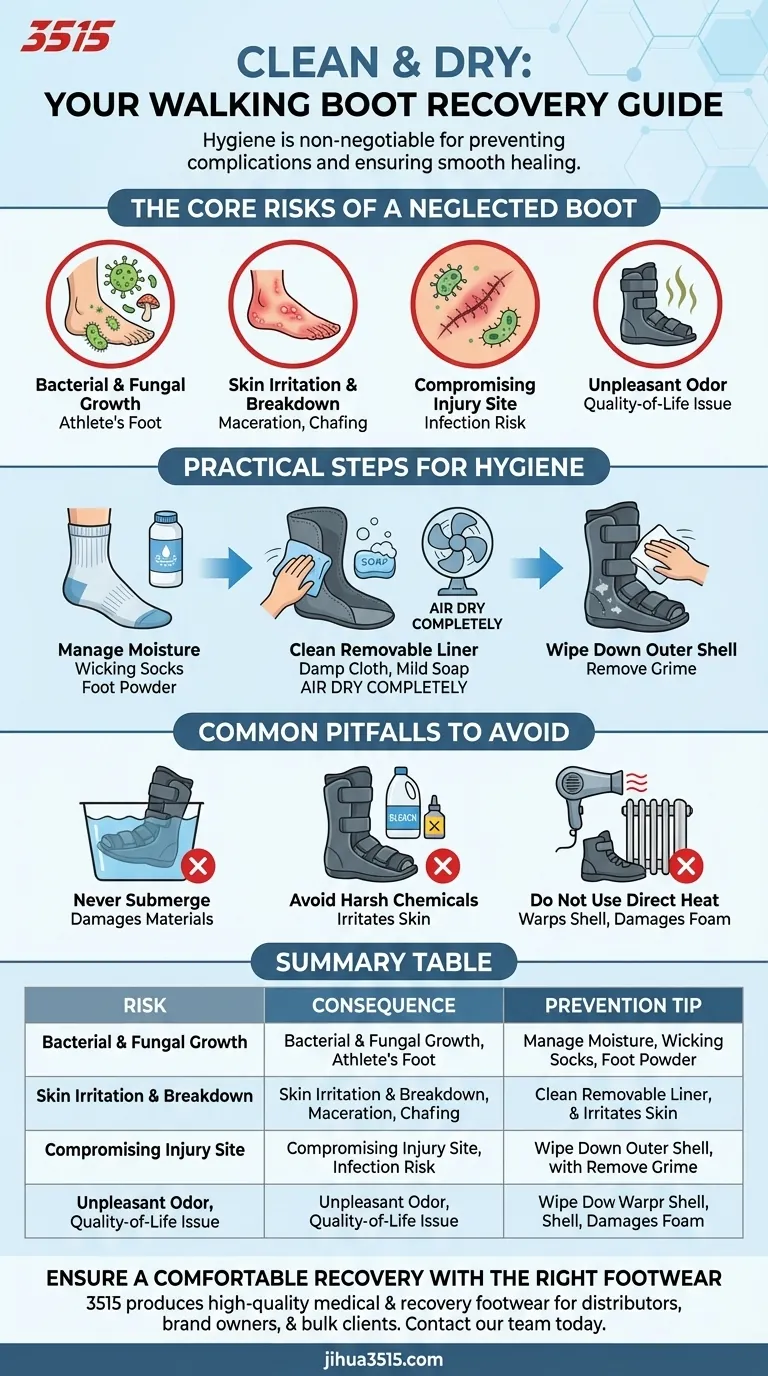
Visual Guide
Related Products
- Wholesale Durable Camouflage Canvas Shoes with High-Traction Cleated Rubber Sole
- Durable Rubber Sole Outdoor Shoes Wholesale & Custom Manufacturing
- Durable Goodyear Welt Leather Work Boots for Wholesale & Private Label
- Wholesale High-Traction Camo Boots - Custom Manufacturer for Brands
- Heavy-Duty Waterproof Nubuck Safety Boots Safety Shoes for Bulk Supply
People Also Ask
- Why is the selection of high-strength fabric materials necessary in the production of canvas shoes and training shoes?
- What are the properties of canvas as a shoe material? A Guide to Lightweight Comfort & Style
- Can canvas shoes be worn in rainy conditions? The Truth About Water Resistance
- What are some examples of vulcanized shoes? Discover the Flexibility and Board Feel of Classic Sneakers
- What are the characteristics of canvas as a shoe material? A Guide to Lightweight, Breathable Footwear



















