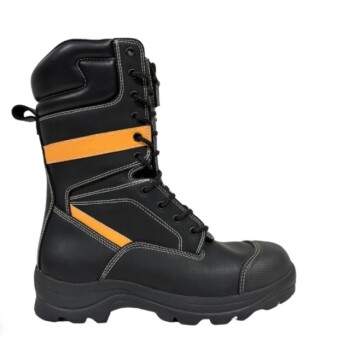
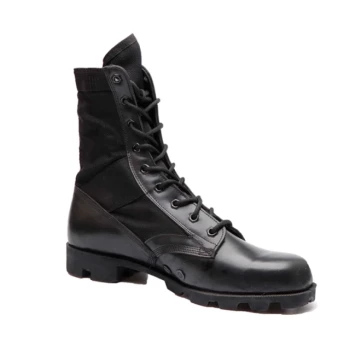
For a wildland firefighter, the right boot is not just equipment; it's a critical lifeline. Choosing the correct footwear is essential for safety, mobility, and performance on the fireline. The right pair protects against extreme temperatures, sharp objects, and treacherous terrain, while the wrong pair can directly impede movement in an emergency and lead to career-ending injuries.
The core challenge is not simply finding a protective boot, but selecting one that provides this protection without compromising the endurance and long-term health of the firefighter. This choice directly influences safety, efficiency, and the ability to perform under grueling conditions.
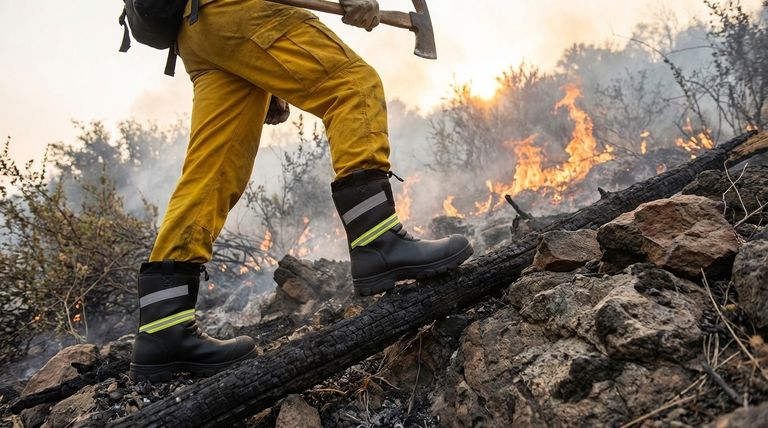
The Foundation: Why Foot Integrity is Mission-Critical
A Complex Anatomical System
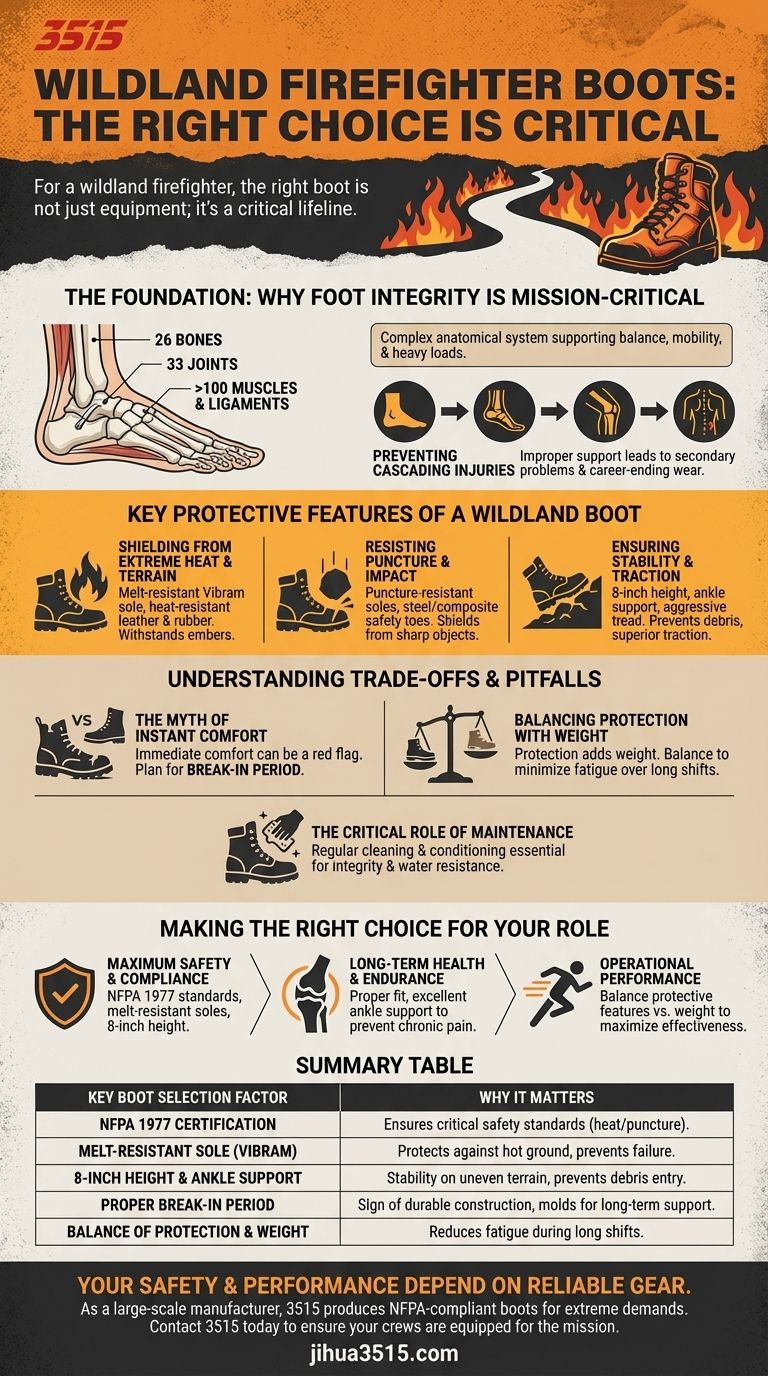
The human foot is a complex structure, containing 26 bones, 33 joints, and over 100 muscles and ligaments. This system is the foundation for your balance, mobility, and ability to carry heavy loads over uneven ground.
Protecting this foundation is a primary concern. The demands of wildland firefighting place immense and prolonged stress on the feet.
Preventing Cascading Injuries
An injury to the foot doesn't stay in the foot. Improper support or an acute injury can lead to secondary problems in the ankles, knees, hips, and back.
Well-designed boots provide the necessary support to maintain proper body mechanics, preventing the kind of long-term wear and tear that can shorten a career.
Key Protective Features of a Wildland Boot
Shielding from Extreme Heat and Terrain
The most immediate threats on the fireline are environmental. Wildland boots are built with highly durable and heat-resistant materials like specialized leather and rubber.
A critical, non-negotiable feature is a melt-resistant sole, often made by Vibram, which can withstand contact with hot ground and embers without degrading.
Resisting Puncture and Impact
The forest floor is unpredictable, hiding sharp rocks, sticks, and other debris. High-quality boots feature puncture-resistant soles to protect the bottom of the foot from penetration.
Many designs also incorporate steel or composite safety toes to shield against impact from falling objects or equipment.
Ensuring Stability and Traction
Wildland firefighters constantly navigate steep, unstable, and slippery terrain. The right boots provide essential ankle support and aggressive tread patterns for superior traction.
A standard requirement is an 8-inch height, which helps stabilize the ankle and prevents debris from entering the boot.
Understanding the Trade-offs and Common Pitfalls
The Myth of "Instant Comfort"
A common mistake is choosing a boot that feels perfectly comfortable right out of the box. For a heavy-duty wildland boot, immediate comfort can be a red flag for insufficient durability and support.
These boots require a break-in period to mold to your feet. You should plan to acquire new boots well before your old ones are completely worn out to allow for this.
Balancing Protection with Weight
While protection is paramount, it often comes at the cost of weight. An overly heavy boot can significantly increase fatigue over a long shift or multi-day assignment.
The ideal choice strikes a careful balance, providing all necessary safety features without adding unnecessary weight that saps energy and reduces efficiency.
The Critical Role of Maintenance
Even the most expensive, well-built boots will fail if not properly cared for. Regular cleaning and conditioning of the leather are essential to maintain its integrity and water resistance.
Neglecting maintenance compromises the boot's protective qualities and drastically shortens its lifespan.
Making the Right Choice for Your Role
When selecting your boots, the decision must be guided by standards, design, and your specific needs. Look for boots that meet or exceed NFPA 1977, the standard for wildland firefighting protective clothing and equipment. Designs like lace-to-toe boots are popular because they offer superior control over fit and support, which is invaluable on long treks.
- If your primary focus is maximum safety and compliance: Ensure your boots are explicitly certified to NFPA 1977 standards with melt-resistant soles and the required 8-inch height.
- If your primary focus is long-term health and endurance: Prioritize a proper fit with excellent ankle support to prevent the chronic joint pain that can result from instability.
- If your primary focus is operational performance: Carefully balance the boot's protective features against its overall weight to minimize fatigue and maximize your effectiveness on the fireline.
Ultimately, investing in the right footwear is an investment in your safety, effectiveness, and longevity on the fireline.
Summary Table:
| Key Boot Selection Factor | Why It Matters |
|---|---|
| NFPA 1977 Certification | Ensures the boot meets critical safety standards for heat and puncture resistance. |
| Melt-Resistant Sole (e.g., Vibram) | Protects against hot embers and ground, preventing sole failure. |
| 8-Inch Height & Ankle Support | Provides stability on uneven terrain and prevents debris entry. |
| Proper Break-In Period | A sign of durable construction that will mold to your foot for long-term support. |
| Balance of Protection & Weight | Reduces fatigue during long shifts without compromising safety. |
Your safety and performance depend on reliable gear. As a large-scale manufacturer, 3515 produces NFPA-compliant wildland firefighting boots designed for the extreme demands faced by distributors, brand owners, and bulk clients. Our comprehensive range of footwear is built to protect your team. Contact 3515 today to discuss your specific needs and ensure your crews are equipped for the mission.
Visual Guide
Related Products
- High Performance Fire-Retardant Waterproof Safety Boots
- Premium Flame-Retardant Waterproof Safety Boots and Shoes
- Wholesale Lightweight Tactical Boots Custom Manufacturer for Desert & Combat Use
- Durable Leather Tactical Boots Wholesale & Custom Manufacturing for Brands
- Durable Military Combat Boots with Water Drainage for Wholesale & OEM
People Also Ask
- Why are waterproof safety boots recommended for certain work environments? Essential Protection for Wet & Hazardous Jobs
- What roles do 3D vision systems and industrial robots play in the manufacturing of fire safety boots? Smart Automation
- What should you look for to ensure boots are fully waterproof? The Essential 2-Part System
- What materials make waterproof boots durable? The Ultimate Guide to Long-Lasting Footwear
- How does boot construction affect waterproofing? The Science Behind Truly Dry Feet