
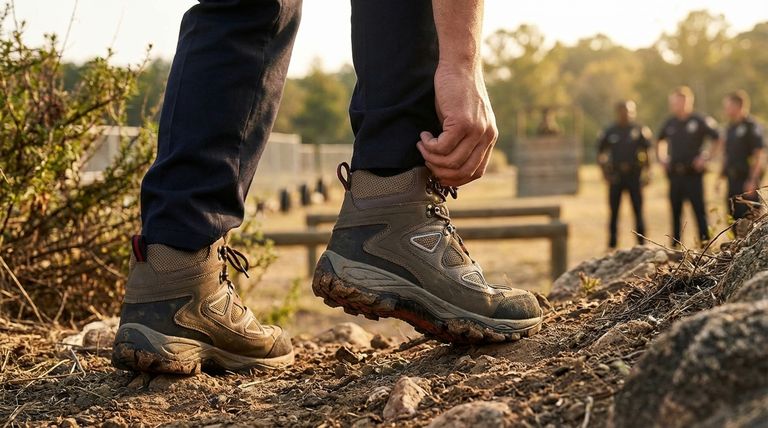
Breaking in new police footwear is a critical process for transforming a stiff, factory-fresh boot into a reliable piece of personal equipment. This period allows rigid materials, like leather, to soften, stretch, and mold to the unique contours of your foot, directly preventing painful blisters and ensuring comfort and stability during long, demanding shifts.
The break-in period is not about fixing a poor fit; it's about making a high-quality boot an extension of your body. This alignment is fundamental to preventing career-threatening injury and maintaining peak operational readiness when it matters most.
From Rigid Material to Custom-Fit Gear
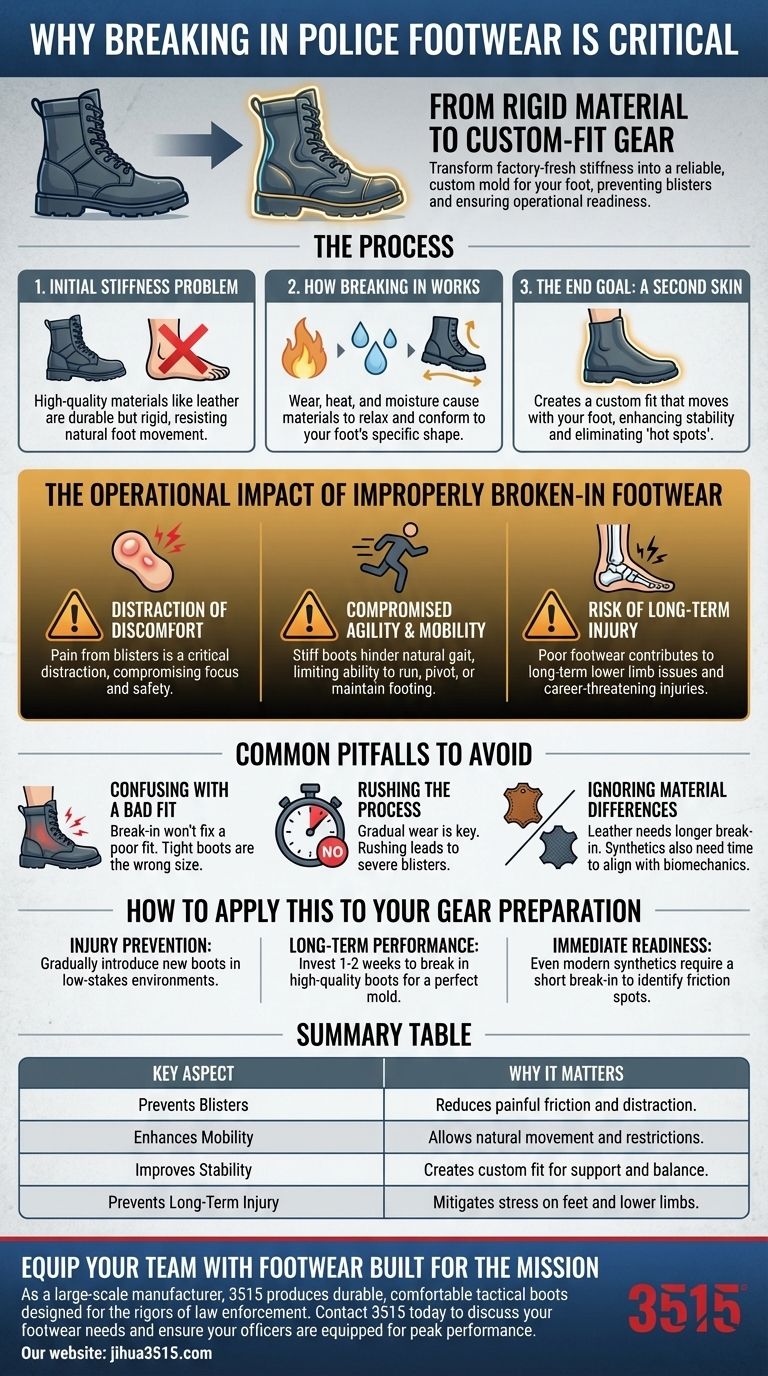
The Initial Stiffness Problem
New tactical boots, particularly those made from high-quality leather, are intentionally rigid. This stiffness provides durability and support, but it also means the boot will initially resist the natural movement of your foot.
How Breaking In Works
Through gradual wear, the combination of your body heat, moisture, and the repeated flexing of walking causes the boot's materials to relax. This process allows the footwear to conform to the specific shape of your foot, including its width, arch, and ankle.
The End Goal: A Second Skin
A properly broken-in boot moves with your foot, not against it. This creates a custom fit that enhances stability, reduces internal friction, and eliminates the "hot spots" that cause blisters and discomfort.
The Operational Impact of Improperly Broken-In Footwear
The Distraction of Discomfort
On the job, a blister is not a minor inconvenience; it is a critical distraction. Pain from ill-fitting footwear can divert your focus at the worst possible moment, compromising your safety and effectiveness.
Compromised Agility and Mobility
Stiff, unforgiving boots can hinder your natural gait and limit your mobility. This can affect your ability to run, pivot, or maintain your footing during a critical incident, turning your own equipment into a liability.
The Risk of Long-Term Injury
Police work places immense stress on the lower limbs. Footwear that doesn't fit or function correctly can contribute to long-term issues. As noted in safety reports, injuries to the feet can result in significant time off work, impacting both the officer and public safety.
Common Pitfalls to Avoid
Confusing "Breaking In" with a Bad Fit
The break-in process can improve comfort in a slightly snug boot, but it cannot fix a fundamentally poor fit. If a boot is painfully tight from the start, especially in length or toe box width, it is the wrong size. No amount of wear will correct this.
Rushing the Process
Never wear a brand-new pair of boots for a full, active shift. The break-in period should be gradual. Rushing it is the fastest way to develop severe blisters that can take you out of commission.
Ignoring Material Differences
Full-grain leather boots typically require the longest and most crucial break-in period. Footwear made from synthetic materials may feel more comfortable out of the box, but they still benefit from a break-in period to ensure they align with your foot's biomechanics.
How to Apply This to Your Gear Preparation
A methodical approach to new footwear is essential for any law enforcement professional.
- If your primary focus is injury prevention: Gradually introduce new boots by wearing them for a few hours at a time in a low-stakes environment before ever taking them on patrol.
- If your primary focus is long-term performance: Choose high-quality boots and invest the necessary one-to-two weeks to break them in properly, ensuring they become a perfectly molded tool for your job.
- If your primary focus is immediate readiness: Understand that even boots with modern synthetic materials require a short break-in period to identify potential friction spots before they become a problem on a long shift.
Ultimately, treating your footwear as a critical piece of operational equipment—and preparing it accordingly—is a direct investment in your own safety and effectiveness.
Summary Table:
| Key Aspect | Why It Matters |
|---|---|
| Prevents Blisters | Reduces painful friction and distraction during critical operations. |
| Enhances Mobility | Allows for natural movement, running, and pivoting without restriction. |
| Improves Stability | Creates a custom fit that molds to your foot for better support and balance. |
| Prevents Long-Term Injury | Mitigates stress on feet and lower limbs, protecting your career longevity. |
Equip your team with footwear built for the mission. As a large-scale manufacturer, 3515 produces a comprehensive range of durable and comfortable tactical boots for distributors, brand owners, and bulk clients. Our boots are designed with the rigors of law enforcement in mind, providing the superior support needed for a safe and effective break-in period. Contact 3515 today to discuss your footwear needs and ensure your officers are equipped for peak performance.
Visual Guide
Related Products
- Durable High-Ankle Tactical Boots for Wholesale & Custom Manufacturing
- Wholesale Durable Mid-Cut Tactical Boots for Custom & Private Label Brands
- Durable Mid-Cut Tactical Boots for Wholesale & Private Label
- High-Traction Suede Tactical Boots Wholesale & Custom Manufacturing
- Durable Leather Tactical Boots Wholesale & Custom Manufacturing for Brands
People Also Ask
- How do tactical boots protect against injuries? Discover the Integrated Safety System
- How does additive manufacturing equipment reduce environmental risks? Sustainable Tactics for Modern Footwear Production
- What are the different types of tactical boots available? Find the Right Boot for Your Mission
- What is the role of high-frequency acquisition hardware in technical skill analysis for outdoor and tactical boots?
- What are the main construction similarities between tactical boots and tactical sneakers? Built for Performance & Durability



















