
In any tactical operation, your footwear is your foundation. Tactical footwear is critically important because it provides the essential triad of protection from environmental hazards, structural support to prevent injury and reduce fatigue, and enhanced performance to ensure mobility and endurance. It is not an accessory but a core component of an operator's equipment that directly influences mission effectiveness.
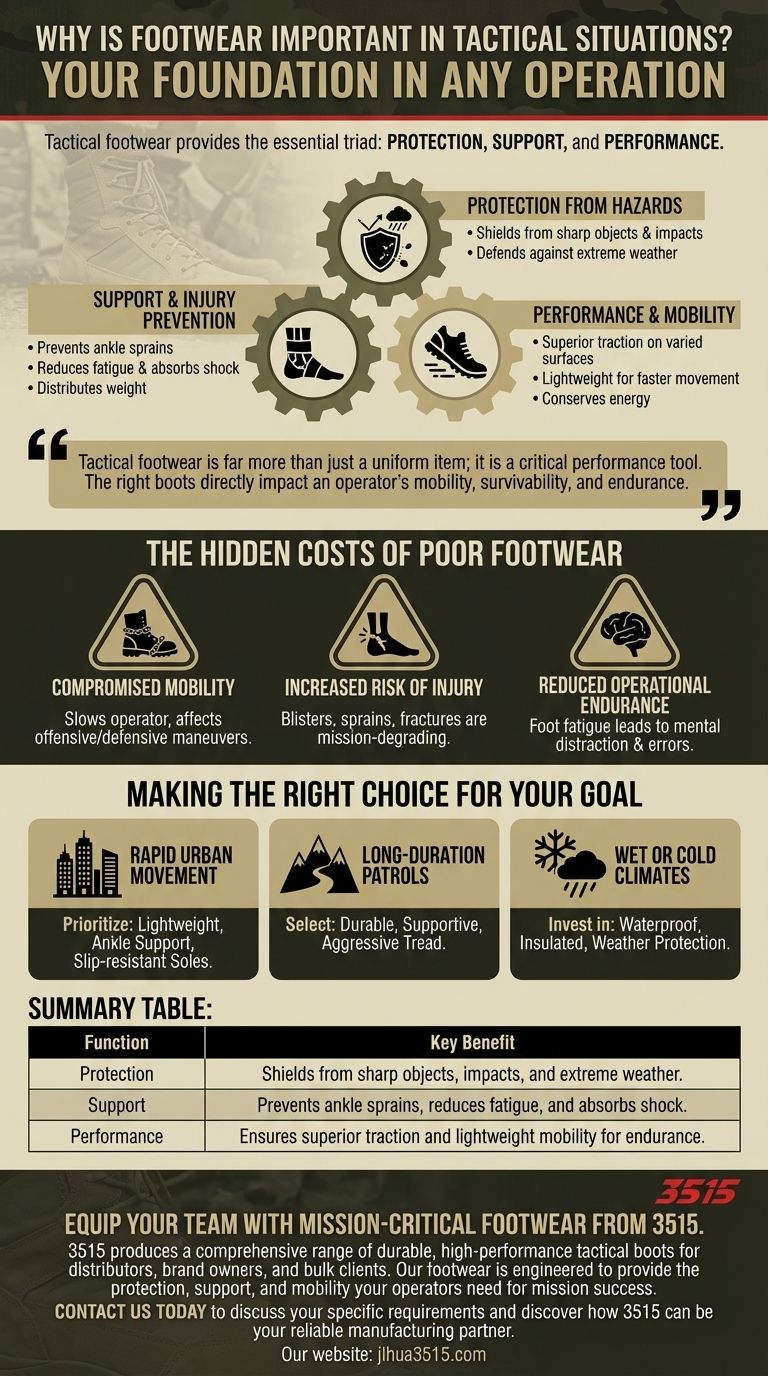
Tactical footwear is far more than just a uniform item; it is a critical performance tool. The right boots directly impact an operator's mobility, survivability, and endurance, making the choice a foundational element of mission success.
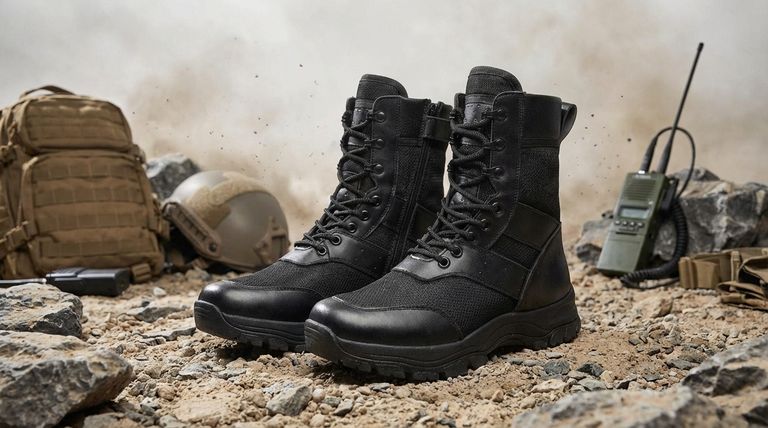
The Core Functions of Tactical Footwear
To understand the importance of tactical footwear, we must break down its role into three distinct, mission-critical functions. Each one addresses a specific challenge an operator will face in the field.
Protection from Environmental Hazards
An operator's feet are in constant contact with unpredictable terrain. The right boots act as a primary layer of defense.
This includes protection from sharp objects on the ground, falling debris in urban settings, and impacts from rough terrain. It also shields the user from extreme temperatures and moisture.
Proper protection prevents immediate injuries that could compromise a mission and ensures the operator can move through a hostile environment with confidence.
Support and Injury Prevention
Tactical operations often involve carrying heavy loads for long distances over uneven ground. This places immense stress on the feet, ankles, and lower back.
High-quality tactical boots are engineered with robust ankle support to prevent sprains and twists, which are common and debilitating injuries.
The sole and insole construction is designed to absorb shock and distribute weight evenly, significantly reducing fatigue over time and lowering the risk of stress-related injuries.
Performance and Mobility
Ultimately, an operator's effectiveness depends on their ability to move. Footwear is the direct interface between the operator and the ground.
The outsole's tread pattern and material composition are designed for superior traction on surfaces ranging from wet concrete to loose gravel or mud.
Modern boots are also engineered to be as lightweight as possible without sacrificing support, enabling faster movement and conserving an operator's energy.
The Hidden Costs of Poor Footwear
Choosing the wrong footwear, or failing to maintain it, carries significant consequences that extend beyond simple discomfort. These pitfalls can directly threaten mission success.
Compromised Mobility
Footwear that is too heavy, fits poorly, or has inadequate tread will immediately slow an operator down.
This loss of speed and agility can be a critical liability in a dynamic situation, affecting both offensive maneuvers and defensive reactions.
Increased Risk of Injury
Blisters, sprains, and stress fractures are not minor inconveniences in a tactical context. They are mission-degrading injuries.
An operator whose movement is impeded by foot pain becomes a weak link in a team, and a severe injury can take them out of the fight entirely.
Reduced Operational Endurance
Foot fatigue directly translates to mental fatigue. Constant pain or discomfort is a major distraction that drains cognitive resources.
An operator who is focused on their aching feet is not fully focused on their surroundings, which can lead to critical errors in judgment.
Making the Right Choice for Your Goal
Your choice should be dictated by a clear assessment of your most likely operational environment and mission requirements.
- If your primary focus is rapid movement in urban environments: Prioritize lightweight boots with excellent ankle support and slip-resistant soles designed for hard surfaces.
- If your primary focus is long-duration patrols over varied terrain: Select a durable, supportive boot with aggressive tread designed to manage heavy loads and prevent fatigue.
- If your primary focus is operations in wet or cold climates: Invest in waterproof, and potentially insulated, footwear to protect against the elements and prevent non-combat injuries.
Ultimately, treating your footwear as a critical piece of mission-essential equipment is the first step toward building a reliable tactical foundation.
Summary Table:
| Function | Key Benefit |
|---|---|
| Protection | Shields from sharp objects, impacts, and extreme weather. |
| Support | Prevents ankle sprains, reduces fatigue, and absorbs shock. |
| Performance | Ensures superior traction and lightweight mobility for endurance. |
Equip your team with mission-critical footwear from 3515.
As a large-scale manufacturer, 3515 produces a comprehensive range of durable, high-performance tactical boots for distributors, brand owners, and bulk clients. Our footwear is engineered to provide the protection, support, and mobility your operators need for mission success.
Contact us today to discuss your specific requirements and discover how 3515 can be your reliable manufacturing partner.
Visual Guide
Related Products
- Durable Leather Tactical Boots Wholesale & Custom Manufacturing for Brands
- High-Traction Suede Tactical Boots Wholesale & Custom Manufacturing
- Durable Leather High-Ankle Tactical Boots for Wholesale & Custom Manufacturing
- Durable Mid-Cut Tactical Boots for Wholesale & Private Label
- Wholesale Waterproof Tactical Boots Custom Suede & High-Traction Soles
People Also Ask
- What specialized protections do tactical boots offer? Maximize Endurance with High-Performance Footwear
- What features should law enforcement officers look for in tactical boots? Essential Guide for Safety & Performance
- Importance of Professional Tactical Boots in Loess Gully Regions: Ensure Safety and Precision for Field Monitoring
- What is rucking, and why are tactical boots suitable for it? Discover the Ultimate Footwear for Heavy Loads
- What makes the traction of tactical boots superior? Unlock the Science of Unbeatable Grip















