
Finding the correct boot size is the single most critical factor for ensuring long-term comfort, safety, and the durability of your footwear. A proper fit is not a luxury; it is the foundation that prevents chronic foot issues, minimizes the risk of injury, and ensures the boot can withstand its intended use, directly impacting your health and productivity.
A boot that fits correctly is more than just comfortable; it is a piece of technical equipment that works with your body. An improper fit compromises this system, leading to immediate pain, long-term injury, and accelerated wear on both you and your gear.
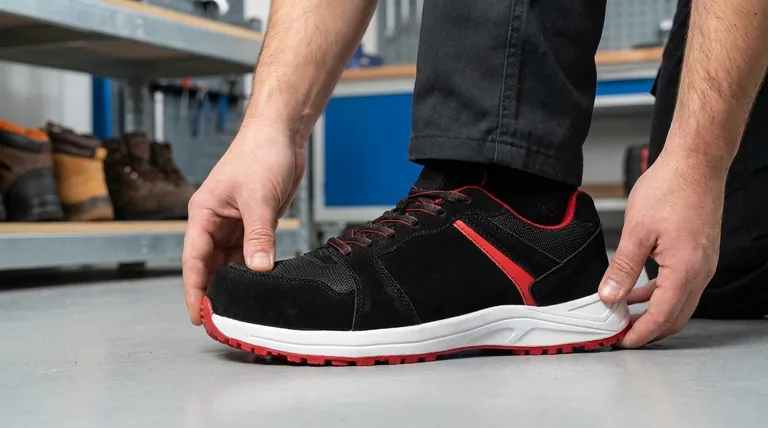
The Biomechanical Impact of an Improper Fit
Your boot is the interface between your body and the ground. When that interface is flawed, the negative effects cascade through your entire kinetic chain, from your feet to your back.
The Problem with 'Too Loose'
A boot that is too large allows your foot to slide internally. This constant micro-movement is a primary cause of friction.
That friction leads directly to painful blisters and hot spots. More importantly, it causes heel lift, which compromises stability and can lead to ankle rolls and inefficient energy transfer with every step.
The Danger of 'Too Tight'
Conversely, a boot that is too tight creates constant, damaging pressure points. This can compress nerves, restrict blood flow, and cause numbness or tingling.
Over the long term, a constrictive fit can contribute to chronic conditions like bunions, hammertoes, and ingrown toenails, creating problems that persist long after the boots are off.
Arch and Volume Mismatch
Proper sizing goes beyond simple length. A boot's internal volume and arch must align with your foot's unique anatomy.
If the boot's arch is in the wrong place, it fails to support your foot, leading to plantar fasciitis and general fatigue. A volume mismatch creates either pressure on the top of the foot or a sloppy, unsupportive fit.
How Fit Determines Boot Longevity
An incorrect fit doesn't just damage your feet; it systematically destroys the boot itself by forcing it to operate outside its design parameters.
Preventing Material Failure
A well-fitted boot distributes your weight and flexing forces evenly across its structure.
An improper fit concentrates stress on specific areas, like the seams around the widest part of your foot or the heel counter. This concentrated stress is the leading cause of premature seam blowouts and material fatigue.
The Impact of Incorrect Flex Points
Boots are engineered to bend at a specific point—the ball of your foot. This is their natural flex point.
When a boot is too long or too short, it is forced to crease and bend in areas not reinforced for that movement. This leads to deep, damaging cracks in leather and can cause the sole to separate from the upper.
Accelerated Interior Wear
A loose-fitting boot allows your heel and toes to constantly rub against the interior lining. This friction quickly wears through the lining, exposing the rougher, less comfortable structural materials underneath and ruining the boot's interior.
Common Pitfalls in the Sizing Process
Achieving the right fit requires avoiding several common but critical mistakes that can lead you to select the wrong size.
Ignoring Foot Swell
Your feet naturally swell throughout the day and during periods of activity. A boot that feels perfect in the morning can become painfully tight by late afternoon.
Always try on boots at the end of the day or after being on your feet for several hours to get the most accurate measurement.
Overlooking Sock Thickness
The socks you wear can easily change your boot size by a half-size or more.
Always perform a fitting with the exact type of sock you intend to wear with the boots. A thin dress sock and a thick wool sock create two entirely different fits within the same boot.
Trusting Brand Sizing Blindly
Sizing is not standardized across manufacturers. A size 10 in one brand can fit like a 10.5 in another due to differences in the "last," the foot-shaped model a boot is built around.
Never assume your size. Always refer to a specific brand's sizing guide and, whenever possible, try the boot on in person.
Making the Right Choice for Your Goal
To avoid these issues, adopt a methodical approach when selecting your next pair of boots based on your primary objective.
- If your primary focus is performance and safety (work/hiking/motorcycle): Prioritize a snug fit with no heel lift while ensuring you have enough room to wiggle your toes, and always size with your intended socks.
- If your primary focus is all-day comfort (casual/office wear): Measure your feet later in the day when they are slightly swollen and ensure the boot's flex point aligns perfectly with the ball of your foot.
- If your primary focus is longevity and investment: Confirm that the fit is precise to prevent uneven stress on seams and materials, which is the leading cause of premature boot failure.
Investing the time to find the right fit is the most effective way to protect both your feet and your gear for the long run.
Summary Table:
| Issue | Impact of Poor Fit | Impact of Correct Fit |
|---|---|---|
| Comfort & Safety | Blisters, heel lift, instability, nerve compression | Stable, pain-free movement, all-day comfort |
| Foot Health | Bunions, plantar fasciitis, chronic pain | Proper arch support, prevents long-term damage |
| Boot Durability | Prematerial failure, cracked leather, sole separation | Even stress distribution, maximizes boot lifespan |
| Performance | Inefficient energy transfer, fatigue | Optimal power transfer, enhanced endurance |
Get the Perfect Fit for Your Customers
As a large-scale manufacturer, 3515 produces a comprehensive range of high-performance and casual footwear for distributors, brand owners, and bulk clients. Our expertise ensures every pair is built on lasts designed for superior comfort and durability.
Partner with us to offer your customers:
- Precision Sizing: Boots engineered to fit correctly from the start.
- Enhanced Longevity: Quality construction that withstands long-term use.
- Unmatched Comfort: Designs that support foot health and performance.
Ready to provide your market with boots that fit perfectly and last longer? Contact our team today to discuss your manufacturing needs and see how we can support your business.
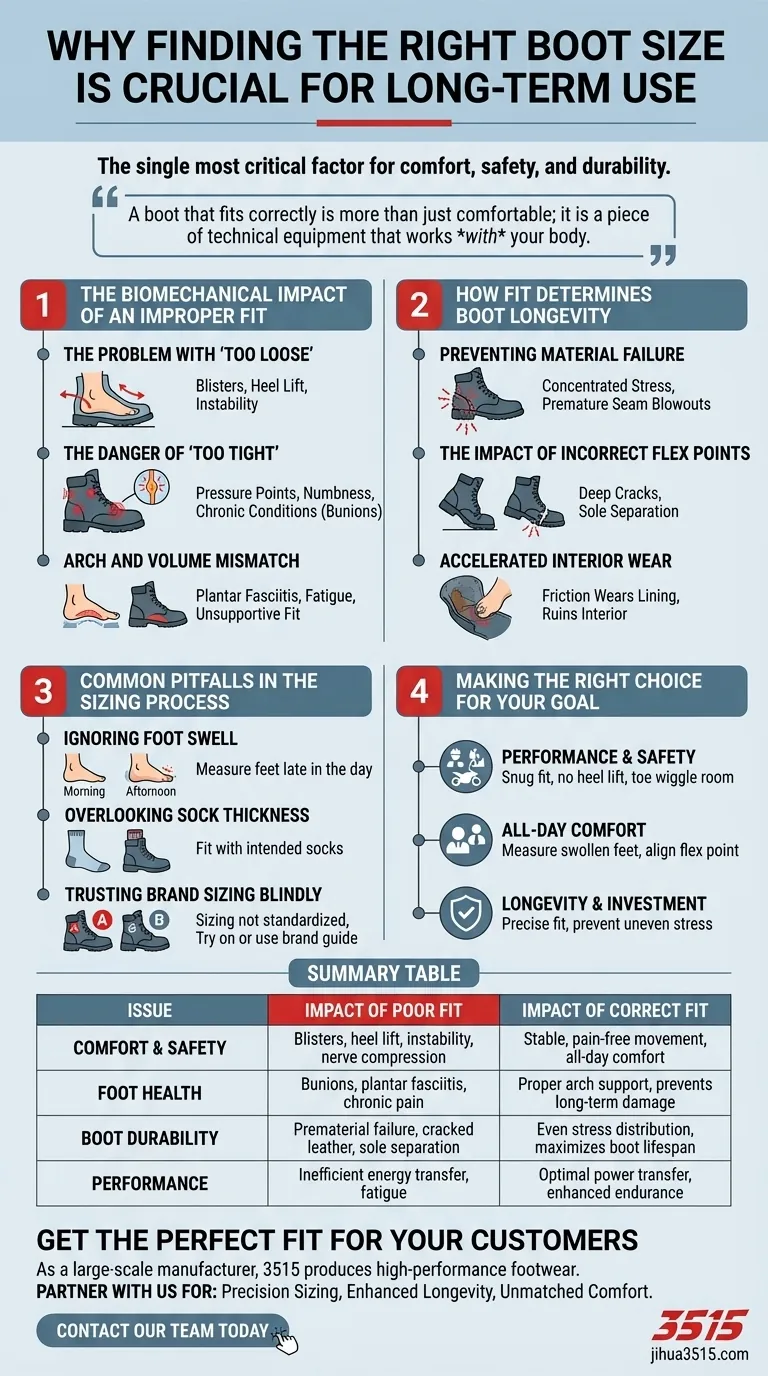
Visual Guide
Related Products
- Premium Wholesale Tactical Style Safety Shoes Boots with Quick Lacing
- High Performance Fire-Retardant Waterproof Safety Boots
- Premium Waterproof High-Cut Industrial Safety Boots for Wholesale and Bulk Orders
- Durable Leather Work Boots for Wholesale & Custom Manufacturing
- Durable Leather Work Boots for Wholesale & Custom OEM Manufacturing
People Also Ask
- How are gait analysis research findings applied to the functional design of safety shoes and tactical boots?
- How does anthropomorphic design influence material selection? Enhance Footwear Performance through Biological Alignment
- How can specialized footwear mitigate safety risks? High-Volume OEM/ODM Solutions since 1951
- How do quality certification standards for safety shoes reduce perceived risk? Buy Online with Technical Certainty
- Why is the synchronization of craftsmanship and UX development emphasized for bulk customization of safety shoes?



















