
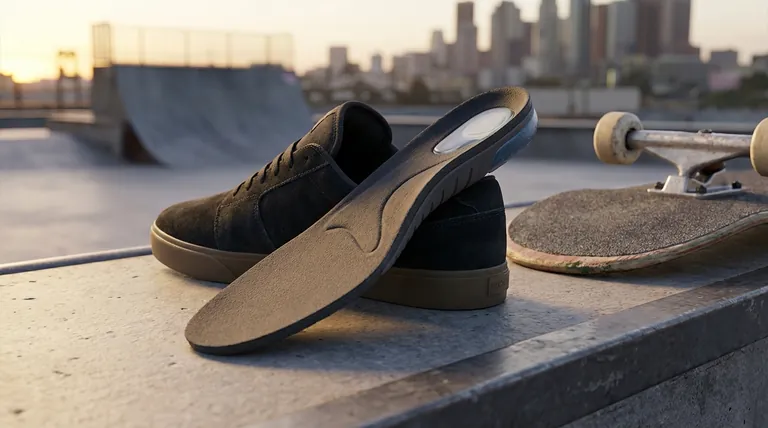
To put it simply, the insole is the most critical component for determining a skate shoe's comfort, protection, and board feel. It acts as the direct interface between your foot and your board, and inspecting its thickness, material, and shape tells you exactly how the shoe will perform under pressure.
The insole is where the fundamental skate shoe trade-off happens: you are balancing impact protection against board feel. Understanding the insole allows you to choose which of these two critical features you want to prioritize.
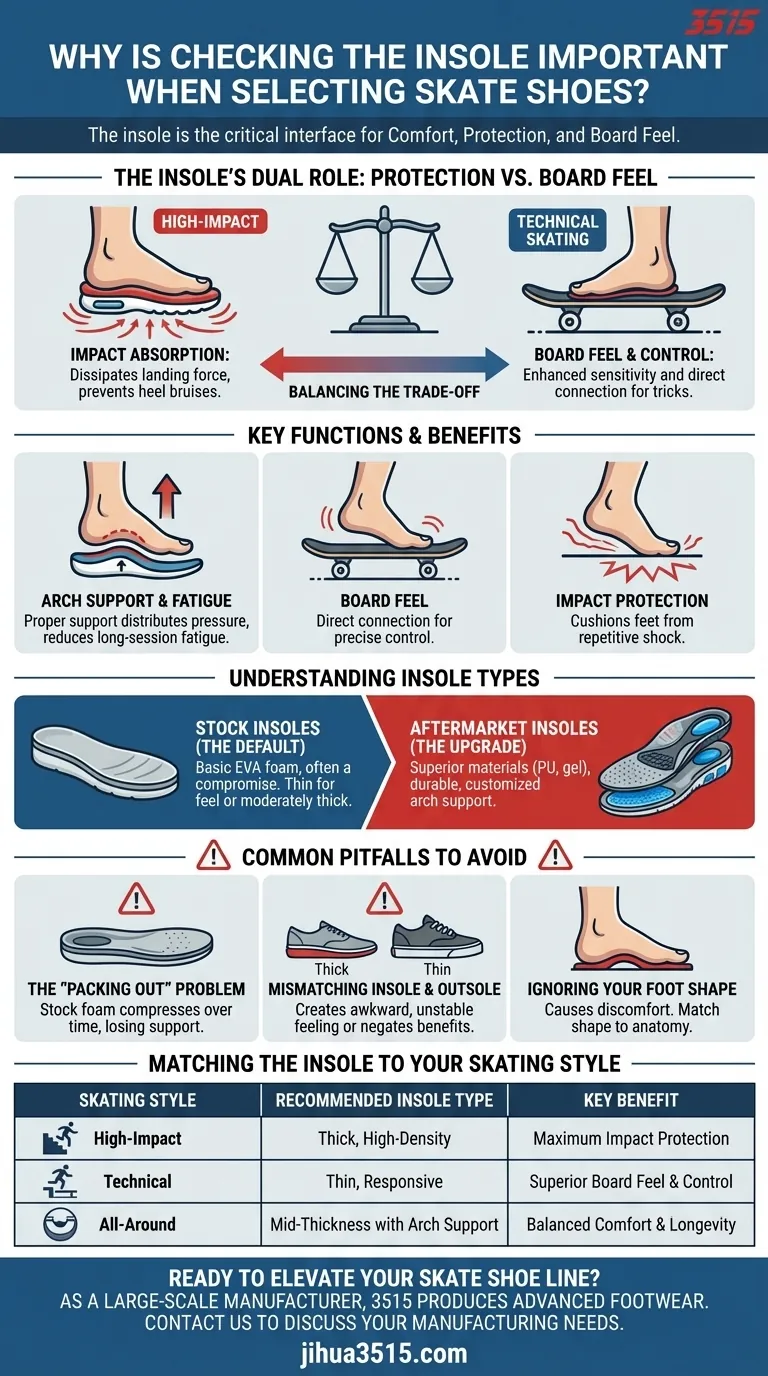
The Insole's Dual Role: Protection vs. Board Feel
A skate shoe insole is constantly trying to solve two opposing problems. How it's designed dictates its performance.
Impact Absorption
The primary job of a thicker, denser insole is to absorb and dissipate the force from landing. This is what protects you from the dreaded heel bruise.
High-quality insoles use materials designed to cushion your feet from the repeated, high-impact shock of landing on concrete.
Board Feel and Control
Conversely, a thinner insole places your foot closer to the board. This proximity provides a more direct connection and a sensitive feel for the deck's concave and edges.
This enhanced "board feel" is crucial for technical skating, where subtle foot movements are necessary to control flip tricks and grinds.
Arch Support and Fatigue
The shape, or contour, of the insole provides arch support. Proper support helps distribute pressure evenly across your foot.
Without it, skaters often experience foot fatigue during long sessions and risk developing chronic issues like plantar fasciitis.
Understanding Insole Types
Not all insoles are created equal. The difference between a stock insole and a specialized aftermarket one is significant.
Stock Insoles (The Default)
Most skate shoes come with a basic foam insole, typically made from a material like EVA (ethylene vinyl acetate).
These are functional but often represent a compromise. They might be very thin to maximize board feel out of the box or moderately thick for general use.
Aftermarket Insoles (The Upgrade)
Many experienced skaters immediately replace their stock insoles with specialized aftermarket options.
These use superior materials like polyurethane (PU) or gel combinations that offer better impact resistance and durability. They also come in various shapes to provide customized arch support. This is why many skaters transfer a favorite pair of insoles from one shoe to the next.
Common Pitfalls to Avoid
Paying attention to the insole helps you avoid common issues that can hinder your skating.
The "Packing Out" Problem
Low-density stock foam insoles compress over time, a phenomenon known as "packing out."
When an insole packs out, it loses its cushioning and support, becoming a flat, hard layer that offers little to no protection.
Mismatching the Insole and Outsole
The insole works as part of a system with the shoe's outsole (the rubber bottom).
Placing an ultra-thick, protective insole into a thin vulcanized shoe can create an awkward, unstable feeling. Conversely, a paper-thin insole in a heavy-duty cupsole shoe negates the benefits of its protective construction.
Ignoring Your Foot Shape
An insole with an aggressive arch might be perfect for one person but painful for someone with flat feet. Checking the shape ensures it matches your anatomy for genuine comfort.
Matching the Insole to Your Skating Style
Use the insole as your guide to finding the right shoe for your needs.
- If your primary focus is high-impact skating (stairs, gaps): Look for shoes with thick, high-density insoles or plan to buy aftermarket ones designed for maximum protection.
- If your primary focus is technical skating (ledges, flatground): Prioritize shoes with thinner, more responsive insoles that provide excellent board feel and control.
- If your primary focus is all-around performance and longevity: Seek a mid-thickness insole with good arch support to balance comfort, protection, and board feel for long sessions.
Ultimately, viewing the insole not as an afterthought but as a crucial piece of technical equipment is the key to enhancing your performance and protecting your feet.
Summary Table:
| Skating Style | Recommended Insole Type | Key Benefit |
|---|---|---|
| High-Impact (Stairs, Gaps) | Thick, High-Density | Maximum Impact Protection |
| Technical (Ledges, Flatground) | Thin, Responsive | Superior Board Feel & Control |
| All-Around Performance | Mid-Thickness with Arch Support | Balanced Comfort & Longevity |
Ready to elevate your skate shoe line with the perfect balance of protection and performance?
As a large-scale manufacturer, 3515 produces a comprehensive range of footwear for distributors, brand owners, and bulk clients. Our production capabilities encompass all types of shoes and boots, including high-performance skate shoes engineered with advanced insole technology.
We can help you develop skate shoes that meet the specific demands of your target market, ensuring optimal comfort, durability, and board feel. Contact our experts today to discuss your manufacturing needs and bring superior skate footwear to your customers.
Visual Guide
Related Products
- Durable Rubber Sole Outdoor Shoes Wholesale & Custom Manufacturing
- Wholesale Durable Camouflage Canvas Shoes with High-Traction Cleated Rubber Sole
- Wholesale Breathable Training Shoes Custom Athletic Footwear Manufacturer
- Wholesale Breathable Perforated Leather Derby Shoes with Modern Comfort Sole
- Premium Suede Sport Safety Shoes for Wholesale & Bulk Orders
People Also Ask
- What is the function of the sole in outdoor shoes? Find the Perfect Grip and Support
- What role do outdoor shoes and sneakers play in navigating external terrains? Engineered Stability for Every Surface
- How is AI utilized in the design of outdoor and safety footwear? Harnessing Big Data for Market-Driven Shoe Innovation
- Why is durability important when selecting outdoor shoes? A Guide to Safety & Long-Term Value
- What are the key components of outdoor shoes that affect comfort and sturdiness? A Guide to Durable, High-Performance Footwear




