
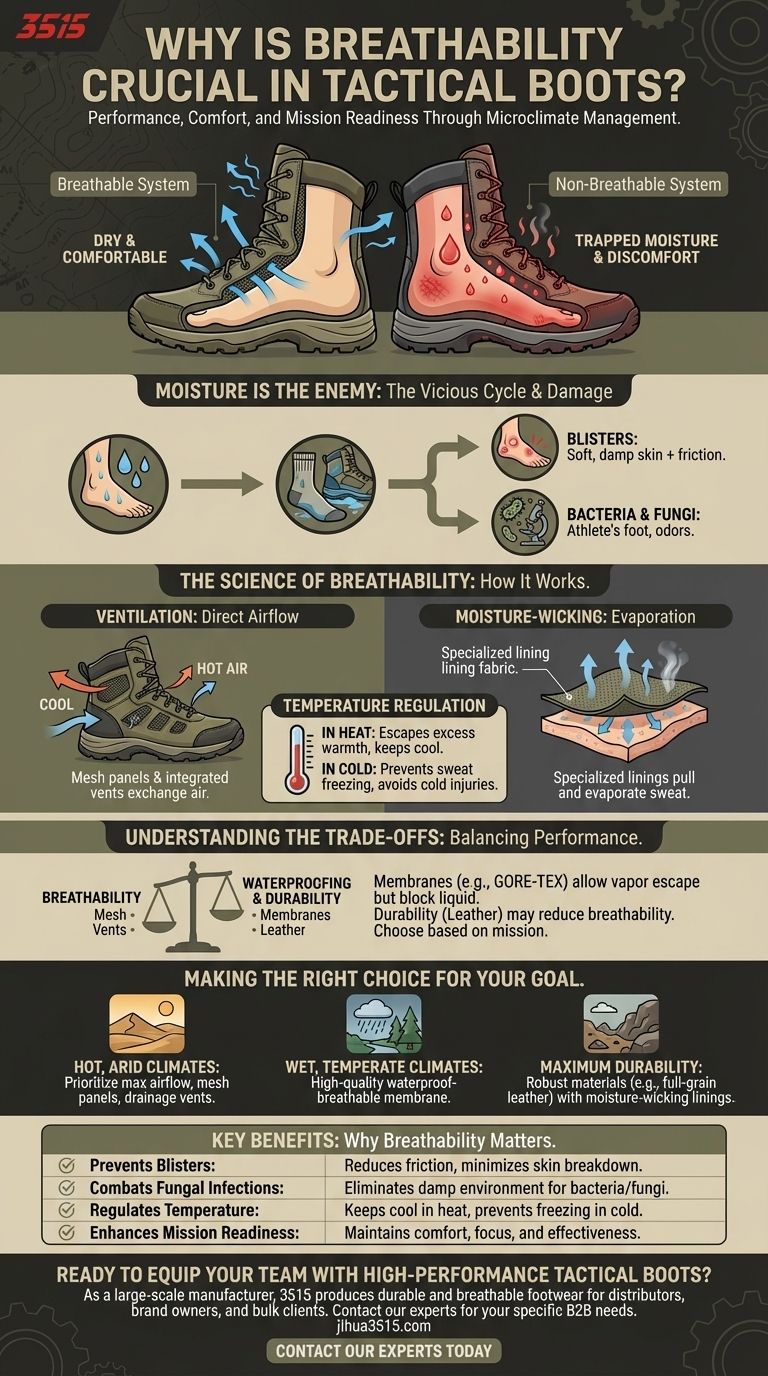
In tactical boots, breathability is crucial because it allows sweat and heat to escape, keeping your feet dry, comfortable, and healthy. This constant air exchange prevents moisture buildup, which is the primary cause of blisters, fungal infections, and extreme discomfort during demanding activities.
The core function of breathability isn't just about comfort—it's about performance and mission readiness. By managing the microclimate inside your boot, breathability directly prevents the foot-related issues that can compromise your focus, mobility, and overall effectiveness in the field.

Why Moisture is the Enemy
The Vicious Cycle of Sweat
Your feet produce a significant amount of sweat, especially under physical exertion. Without an escape route, this moisture gets trapped.
Trapped sweat saturates your socks and the inside of your boot, creating a humid environment. This leads directly to skin breakdown and friction.
From Dampness to Damage
The most immediate consequence of trapped moisture is blisters. Soft, damp skin is far more susceptible to damage from the friction of walking, running, or rucking.
Beyond blisters, a persistently damp environment is an ideal breeding ground for bacteria and fungi, leading to conditions like athlete's foot and unpleasant odors.
The Science of Breathability
How It Works: Ventilation and Wicking
Breathability in tactical boots is achieved through two primary mechanisms: ventilation and moisture-wicking.
Ventilation involves features that promote direct airflow. This includes materials like nylon mesh panels or small, integrated vents that allow hot, moist air to be pushed out and cooler, dry air to be pulled in with each step.
Moisture-wicking relies on specialized lining materials. These fabrics pull sweat away from your skin and spread it across a larger surface area on the boot's interior, where it can evaporate more quickly and escape as vapor.
The Role of Temperature Regulation
Breathability is not just for hot weather. It's a critical component of temperature regulation in all conditions.
In the heat, it allows excess warmth to escape, keeping your feet cool. In the cold, it prevents sweat from accumulating and freezing, which can dangerously lower your foot temperature and lead to cold-weather injuries.
Understanding the Trade-offs
Breathability vs. Waterproofing
The most significant trade-off is often between breathability and waterproofing. A completely waterproof membrane, designed to block external water, can also trap internal moisture.
Modern waterproof-breathable membranes (like GORE-TEX) are engineered to allow tiny water vapor molecules (sweat) to escape while blocking larger liquid water molecules (rain, puddles). However, even the best membranes will be less breathable than a non-waterproof, highly ventilated boot.
Durability Concerns
Materials that enhance breathability, such as mesh panels, may be less resistant to abrasion and punctures than solid leather or thick synthetic uppers.
Choosing a boot requires balancing the need for ventilation with the demands of the environment you will be operating in.
Making the Right Choice for Your Goal
Ultimately, the right boot depends on your specific mission and environment.
- If your primary focus is hot, arid climates: Prioritize boots with extensive mesh panels and drainage vents for maximum airflow.
- If your primary focus is wet, temperate climates: A high-quality waterproof-breathable membrane is essential to balance keeping water out with letting sweat escape.
- If your primary focus is maximum durability: You may need to accept slightly less breathability in favor of robust materials like full-grain leather, but still look for moisture-wicking linings.
Your footwear is a critical piece of gear that directly impacts your ability to perform.
Summary Table:
| Key Benefit | Why It Matters |
|---|---|
| Prevents Blisters | Reduces friction by keeping feet dry, minimizing skin breakdown. |
| Combats Fungal Infections | Eliminates the damp environment where bacteria and fungi thrive. |
| Regulates Temperature | Keeps feet cool in heat and prevents sweat from freezing in cold. |
| Enhances Mission Readiness | Maintains comfort and focus by preventing foot-related issues. |
Ready to equip your team with high-performance tactical boots?
As a large-scale manufacturer, 3515 produces a comprehensive range of durable and breathable footwear for distributors, brand owners, and bulk clients. Our production capabilities encompass all types of tactical boots engineered for superior comfort and performance in any environment.
Let's discuss your specific needs: Contact our experts today to find the perfect tactical footwear solution for your operations.
Visual Guide
Related Products
- Durable Leather Tactical Boots Wholesale & Custom Manufacturing for Brands
- High-Traction Suede Tactical Boots Wholesale & Custom Manufacturing
- Durable Leather High-Ankle Tactical Boots for Wholesale & Custom Manufacturing
- Durable Mid-Cut Tactical Boots for Wholesale & Private Label
- Wholesale Waterproof Tactical Boots Custom Suede & High-Traction Soles
People Also Ask
- What specialized protections do tactical boots offer? Maximize Endurance with High-Performance Footwear
- What features should law enforcement officers look for in tactical boots? Essential Guide for Safety & Performance
- Importance of Professional Tactical Boots in Loess Gully Regions: Ensure Safety and Precision for Field Monitoring
- What is rucking, and why are tactical boots suitable for it? Discover the Ultimate Footwear for Heavy Loads
- What makes the traction of tactical boots superior? Unlock the Science of Unbeatable Grip















