At its core, breathability in outdoor shoes is the critical mechanism for moisture management. Its primary job is to allow sweat vapor to escape from inside your shoe, preventing moisture buildup that leads directly to discomfort, blisters, and other foot-related problems during any extended activity.
Breathability is not a luxury feature for comfort; it is a fundamental performance system. It directly dictates the health of your feet by managing the shoe's internal environment, which is the root cause of most common hiking ailments like blisters and overheating.

The Core Function: How Breathability Works
To understand its importance, you first need to understand the mechanics. A breathable shoe is actively working to vent the hot, humid air your foot creates.
Evacuating Sweat Vapor
Your feet produce a significant amount of sweat, especially during exertion. Breathable materials have microscopic pores large enough for water vapor molecules to pass through but small enough to block larger liquid water droplets from entering.
Promoting Air Circulation
This process of venting moisture also encourages air circulation. As warm, moist air escapes, it helps pull cooler, drier air into the shoe, creating a more stable and comfortable internal climate.
Preventing Overheating
Trapped moisture and heat create a feedback loop. By allowing both to escape, breathability plays a direct role in regulating the temperature of your feet, preventing the "swamp foot" feeling on long days.
The Critical Consequences of Poor Breathability
Failing to manage internal moisture has a cascade of negative effects that can ruin an outing. The consequences go far beyond simply feeling sweaty.
The Blister Feedback Loop
This is the most significant risk. Trapped sweat softens the skin, making it far more susceptible to damage. This softened skin, combined with the increased friction from a humid environment, is the primary cause of painful blisters.
The Growth of Odor-Causing Bacteria
A warm, damp environment is the ideal breeding ground for bacteria. Poor breathability traps the moisture that these microbes need to thrive, leading to persistent and unpleasant shoe odor.
Reduced Overall Comfort
Even without blisters, wearing a non-breathable shoe for 8-10 hours of activity is deeply uncomfortable. The feeling of wet socks and clammy feet creates a major distraction and diminishes the enjoyment of your activity.
Understanding the Trade-offs: Breathability vs. Waterproofing
The most common challenge in shoe design is balancing the need to keep water out with the need to let sweat vapor escape. This is where material science becomes crucial.
The Role of Waterproof Membranes
Modern waterproof shoes often use a membrane like GORE-TEX, which is engineered to be waterproof yet breathable. However, this membrane is just one part of a larger system.
When Outer Materials Get Saturated
The outer fabric of the shoe is the first line of defense. If this material becomes saturated with water (a phenomenon known as "wetting out"), it clogs the path for sweat vapor to escape. Even if the internal membrane is working perfectly, the trapped layer of water on the outside effectively suffocates the shoe, killing its breathability.
Material Choices Matter
Different materials have inherently different levels of breathability. Full-grain leather is durable but is naturally less breathable than synthetic fabric mesh, which allows for much greater air and moisture transfer. The choice of material represents a direct trade-off between durability, water resistance, and ventilation.
Making the Right Choice for Your Activity
Your ideal level of breathability depends entirely on your intended use case and environment.
- If your primary focus is hot, dry conditions: Prioritize non-waterproof shoes with extensive mesh panels for maximum ventilation.
- If your primary focus is wet, cool conditions: A waterproof-breathable membrane is essential, but ensure the shoe has a quality outer fabric with a durable water-repellent (DWR) finish to prevent it from saturating.
- If your primary focus is versatile, all-day trekking: Seek a balance between a reliable waterproof-breathable system and durable synthetic materials that resist saturation better than heavy leathers.
Ultimately, choosing the right footwear is about protecting your feet, and effective breathability is your first line of defense.
Summary Table:
| Key Aspect | Why It Matters |
|---|---|
| Moisture Management | Prevents sweat buildup, the primary cause of blisters. |
| Temperature Regulation | Allows heat to escape, preventing overheating and discomfort. |
| Foot Health | Reduces the risk of blisters and bacterial growth that causes odor. |
| Activity Performance | Enhances overall comfort and enjoyment during long outdoor activities. |
Need high-performance, breathable outdoor footwear for your business?
As a large-scale manufacturer, 3515 produces a comprehensive range of hiking shoes, trekking boots, and outdoor footwear designed with advanced breathability and moisture management systems. We help distributors, brand owners, and bulk clients deliver superior comfort and foot health to their customers.
Contact our experts today to discuss your production needs and get a quote!
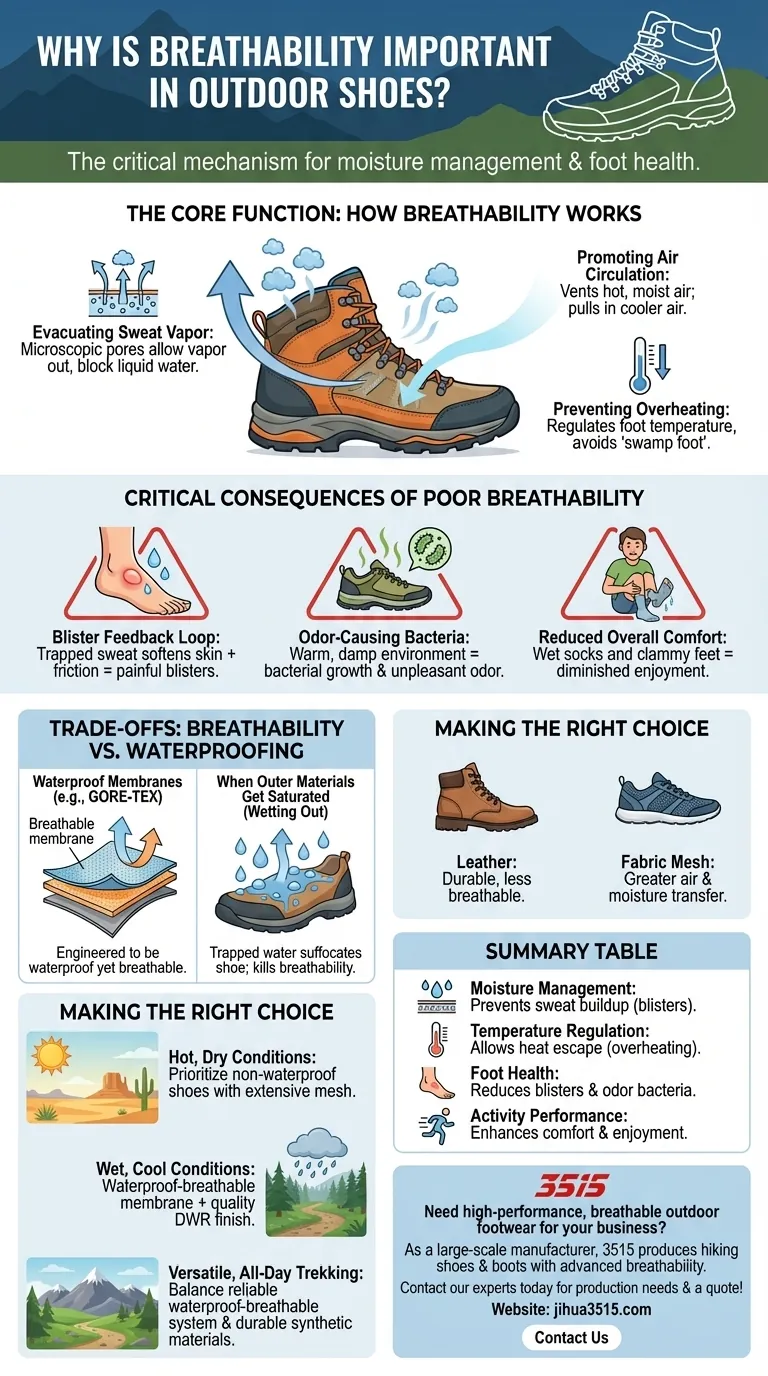
Visual Guide
Related Products
- Durable Rubber Sole Outdoor Shoes Wholesale & Custom Manufacturing
- Wholesale Durable Camouflage Canvas Shoes with High-Traction Cleated Rubber Sole
- Wholesale Waterproof Tactical Boots Custom Suede & High-Traction Soles
- Premium Suede Sport Safety Shoes for Wholesale & Bulk Orders
- Lightweight Breathable Sneakers with Wet-Traction Grip for Wholesale & Private Label
People Also Ask
- What is the function of the sole in outdoor shoes? Find the Perfect Grip and Support
- What role do outdoor shoes and sneakers play in navigating external terrains? Engineered Stability for Every Surface
- How is AI utilized in the design of outdoor and safety footwear? Harnessing Big Data for Market-Driven Shoe Innovation
- Why is durability important when selecting outdoor shoes? A Guide to Safety & Long-Term Value
- What are the key components of outdoor shoes that affect comfort and sturdiness? A Guide to Durable, High-Performance Footwear