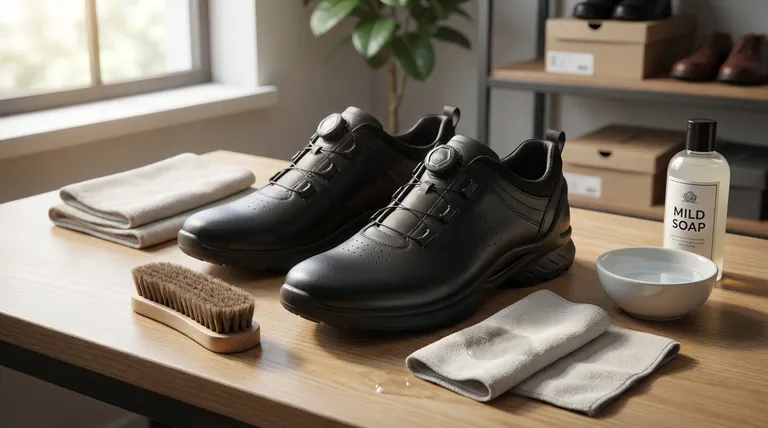
For footwear made of leather, PU, or PVC, the cleaning process is fundamentally the same. The correct method involves using a soft brush or cloth with lukewarm water to gently remove dirt and debris. If necessary, a small amount of mild soap can be used, but you must ensure all soap residue is thoroughly wiped away with a separate damp cloth afterward.
The core principle is gentle, consistent care. While the basic cleaning technique applies to leather, PU, and PVC, understanding their distinct properties and the specific demands of safety footwear is crucial for long-term durability and performance.
The Universal Cleaning Method
This simple, three-step process is safe and effective for the exterior of leather, Polyurethane (PU), and Polyvinyl Chloride (PVC) footwear.
Step 1: Gather Your Materials
You only need two soft cloths or a soft-bristled brush, lukewarm water, and a small amount of mild soap. Avoid harsh detergents or abrasive tools that can damage the material's surface.
Step 2: Perform the Surface Clean
Begin by using a dry cloth or brush to remove any loose dirt. Then, dampen a cloth with lukewarm water and gently wipe down the entire shoe. For more stubborn grime, add a drop of mild soap to the water.
Step 3: Remove All Soap Residue
This step is critical. Use a second, clean damp cloth to wipe away any remaining soap from the footwear's surface. Leftover residue can attract more dirt or degrade the material over time.
Caring for the Interior: Insoles and Laces
Proper care extends beyond what is visible. The inside of your footwear requires its own maintenance routine to ensure hygiene and comfort.
Tackling Insoles and Odor
Clean removable insoles using a damp cloth and mild soap. To combat odors, you can sprinkle baking soda directly onto the insoles, let them sit for a few hours, and then brush the powder off completely.
How to Wash Laces
Laces can be easily cleaned by removing them from the footwear. Wash them by hand in a small basin of soapy water or place them inside a mesh laundry bag and run them through a washing machine cycle.
Understanding the Trade-offs: Leather vs. Synthetics
While the cleaning method is consistent, the materials themselves have different needs and vulnerabilities, especially regarding long-term care.
Leather's Vulnerability
Leather is a natural, porous material. While durable, it can dry out and crack if not properly conditioned after cleaning. Its protective qualities can also be compromised over time.
The Limits of PU and PVC
PU and PVC are synthetic materials valued for their water resistance and durability. However, they lack the breathability of leather and can be prone to scuffing or tearing, which can compromise their protective layer.
Special Considerations for Safety Footwear
If your footwear serves a protective function, maintenance is not just about appearance—it's about safety compliance and personal protection.
Applying a Protective Coating
For any footwear used in wet environments, especially safety boots, applying a water-resistant protective coating is a vital step after cleaning. This helps maintain the integrity of the material.
Regular Inspection is Crucial
Frequently inspect your footwear for any signs of damage, such as cracks, punctures, or excessive wear on the soles. Damaged safety footwear may no longer provide its intended level of protection and should be repaired or replaced.
A Warning on Electrical Resistance
Be aware that the electric shock resistance of safety footwear is significantly reduced in wet conditions or as the footwear wears down. Never assume full protection if the boots are wet or damaged.
Making the Right Choice for Your Goal
Your maintenance routine should be guided by how you use your footwear.
- If your primary focus is routine appearance: A simple wipe-down with a damp cloth after each use is the most effective habit.
- If your primary focus is deep cleaning and odor removal: Set aside time to properly clean the exterior, wash the laces, and treat the insoles with baking soda.
- If your primary focus is safety and compliance: Your priority must be regular inspections for wear and tear and the reapplication of protective coatings.
Ultimately, consistent care is the key to maximizing the life and performance of your footwear.
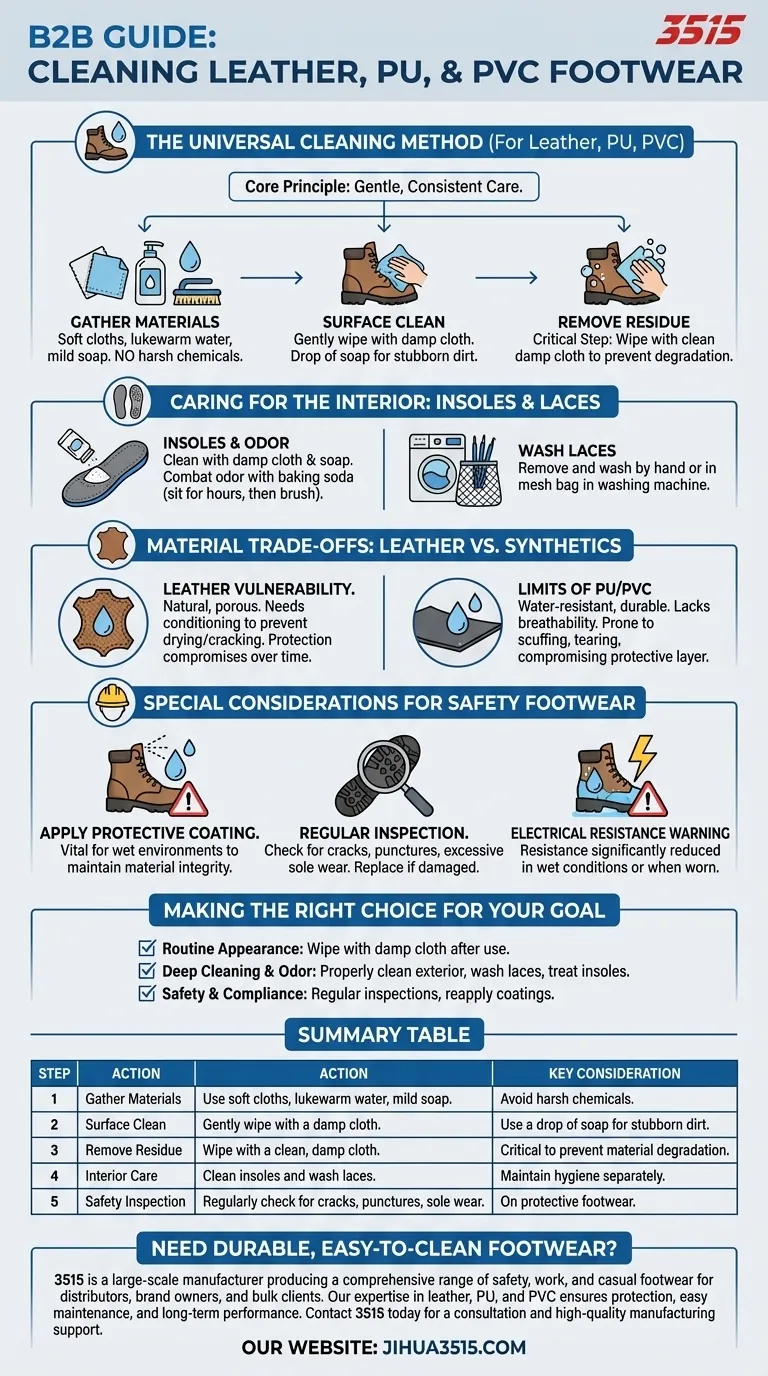
Summary Table:
| Step | Action | Key Consideration |
|---|---|---|
| 1 | Gather Materials | Use soft cloths, lukewarm water, and mild soap. Avoid harsh chemicals. |
| 2 | Surface Clean | Gently wipe with a damp cloth. Use a drop of soap for stubborn dirt. |
| 3 | Remove Residue | Critical step: Wipe with a clean, damp cloth to prevent material degradation. |
| 4 | Interior Care | Clean removable insoles and wash laces separately to maintain hygiene. |
| 5 | Safety Inspection | Regularly check for cracks, punctures, and sole wear on protective footwear. |
Need durable, easy-to-clean footwear for your business?
As a large-scale manufacturer, 3515 produces a comprehensive range of safety, work, and casual footwear for distributors, brand owners, and bulk clients. Our expertise in materials like leather, PU, and PVC ensures your footwear is not only protective but also designed for easy maintenance and long-term performance.
Let us help you source reliable footwear that meets your specific needs. Contact 3515 today for a consultation and discover how we can support your business with high-quality manufacturing.
Visual Guide
Related Products
- Durable Leather Tactical Boots Wholesale & Custom Manufacturing for Brands
- Durable Leather High-Ankle Tactical Boots for Wholesale & Custom Manufacturing
- Durable Leather Work Boots for Wholesale & Custom Manufacturing
- Custom Breathable Perforated Leather Derby Shoes for Wholesale & Brands
- Durable Leather Work Boots for Wholesale & Custom OEM Manufacturing
People Also Ask
- How should tactical boots be stored to maintain their condition? Protect Your Gear Investment
- Importance of Professional Tactical Boots in Loess Gully Regions: Ensure Safety and Precision for Field Monitoring
- What other professions or activities can benefit from tactical boots? Essential Footwear for Demanding Lifestyles
- What three angles should be considered when searching for the right tactical boots? Find Your Perfect Match
- What are the general characteristics of tactical boots? Lightweight, Agile Footwear for Professionals