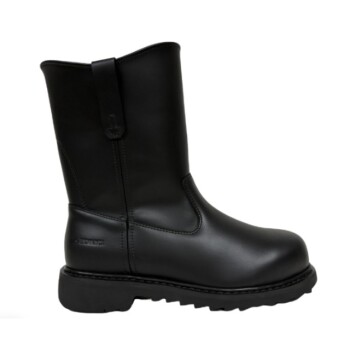
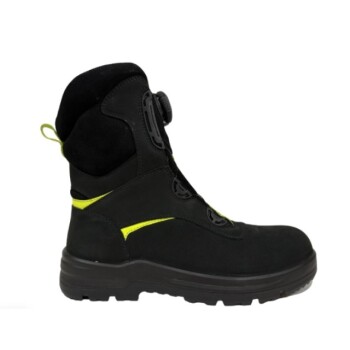
To ensure experimental validity, a rigid cast boot is employed to completely immobilize a subject's biological ankle joint. This prevents the wearer from actively generating force or making postural adjustments that would skew the data. By neutralizing the natural joint, the device forces the ankle-foot prosthesis simulator to become the sole source of power and the only adjustable variable in the experiment.
By transforming a non-amputee’s biomechanical state into a simulated amputation, the rigid cast boot isolates the prosthesis. This ensures that metrics like gait symmetry and metabolic efficiency are the result of the control algorithm, not the subject's biological compensation.
Achieving True Variable Isolation
The Necessity of Immobilization
In standard walking, the human ankle is a complex engine that adjusts posture and generates significant propulsive force.
To test a prosthesis accurately, this biological contribution must be eliminated. The rigid cast boot creates a physical barrier that completely immobilizes the joint, preventing any active contribution from the user's calf muscles.
Creating a "Simulated Amputation" State
The goal of the experiment is to mimic the biomechanics of an amputation without requiring an amputee subject pool for early-stage testing.
The boot effectively transforms the biomechanical state of a healthy participant. It replicates the loss of ankle control, creating a controlled environment where the user must rely entirely on the attached hardware.
Precision in Algorithmic Testing
Establishing the Sole Source of Power
For researchers to understand the capabilities of a prosthetic device, they must be certain where the energy is coming from.
Because the boot prevents the biological ankle from pushing off, the ankle-foot prosthesis simulator becomes the sole source of power. This clarity is vital for measuring the device's actual output capability.
Measuring Efficiency and Symmetry
The ultimate objective is often to evaluate how specific control algorithms influence the user's movement.
With the human variable neutralized, researchers can precisely test how software changes impact gait symmetry and metabolic efficiency. Any improvement or deficit in walking economy can be directly attributed to the prosthesis, not the user "learning" to cheat the system.
Understanding the Experimental Constraints
The Limits of Simulation
While this method provides excellent mechanical isolation, it remains a simulation of disability rather than a clinical reality.
The rigid boot effectively removes the ankle's motion, but the subject still possesses intact sensory pathways and muscle mass that a true amputee might not. This setup is a powerful tool for testing hardware and software logic, but it strictly prioritizes mechanical isolation over long-term clinical adaptation.
Strategic Application for Research
- If your primary focus is testing control algorithms: The rigid boot is essential to isolate the code's impact on power and symmetry without biological interference.
- If your primary focus is measuring metabolic cost: The boot ensures that energy expenditure data reflects the efficiency of the prosthesis, not the subject's ability to compensate.
By removing the human ankle from the equation, you transform a variable-rich environment into a precise laboratory for biomechanical engineering.
Summary Table:
| Feature | Impact on Experiment | Purpose |
|---|---|---|
| Joint Immobilization | Eliminates biological force generation | Prevents postural compensation |
| Variable Isolation | Makes prosthesis the sole power source | Ensures data reflects hardware/code only |
| Biomechanic Simulation | Replicates amputation state in healthy users | Enables rapid, controlled prosthetic testing |
| Metric Accuracy | Direct correlation to control algorithms | Precise measurement of metabolic efficiency |
Partner with 3515 for High-Performance Footwear Solutions
As a large-scale manufacturer serving distributors and brand owners, 3515 offers comprehensive production capabilities for all footwear types, anchored by our flagship Safety Shoes series. Whether you require specialized boots for biomechanical research or durable solutions for industrial use, our extensive portfolio covers work and tactical boots, outdoor shoes, training shoes, and sneakers, as well as Dress & Formal shoes to meet diverse bulk requirements.
Elevate your product line with our engineering expertise and manufacturing scale. Contact us today to discuss your bulk production needs!
References
- Michael S. Jacobson, Myunghee Kim. Foot contact forces can be used to personalize a wearable robot during human walking. DOI: 10.1038/s41598-022-14776-9
This article is also based on technical information from 3515 Knowledge Base .
Related Products
- Heavy-Duty Goodyear Welted Pull-On Safety Rigger Boot
- Durable Steel Toe Safety Boots Wholesale & Custom Manufacturing
- Wholesale Durable Safety Boots | Custom Steel Toe & Puncture-Resistant Manufacturing
- Wholesale Customizable Safety Boots Durable & Protective Footwear Manufacturing
- Durable Leather Tactical Boots Wholesale & Custom Manufacturing for Brands
People Also Ask
- What are the key elements of quality boot construction? Ensure Longevity & Performance
- Are Goodyear welted boots worth it? The Ultimate Guide to Lifelong Footwear
- What is a Goodyear welt on a boot? The Secret to Durable, Repairable Footwear
- What makes Goodyear Welt boots suitable for harsh environments? Unmatched Durability & Repairability
- What additional high-quality materials are used in Goodyear Welt boots? A Guide to Advanced Components