The defining reason dirtbike boots have smooth soles is to allow a rider's foot to slide, not stick, when navigating corners at speed. This design intentionally sacrifices walking traction for a specific, high-performance riding technique that is fundamental to the sport.
A dirtbike boot's smooth sole is not a design flaw; it is a specialized feature for controlled sliding. The boot prioritizes protection and compatibility with aggressive cornering techniques over the static grip you would find in a hiking or work boot.
The Physics of High-Speed Riding
To understand the smooth sole, you must first understand the unique physical demands of riding a dirtbike. Unlike street riding, off-road riding involves constant body movement and interaction with unpredictable terrain.
The "Leg Out" Cornering Technique
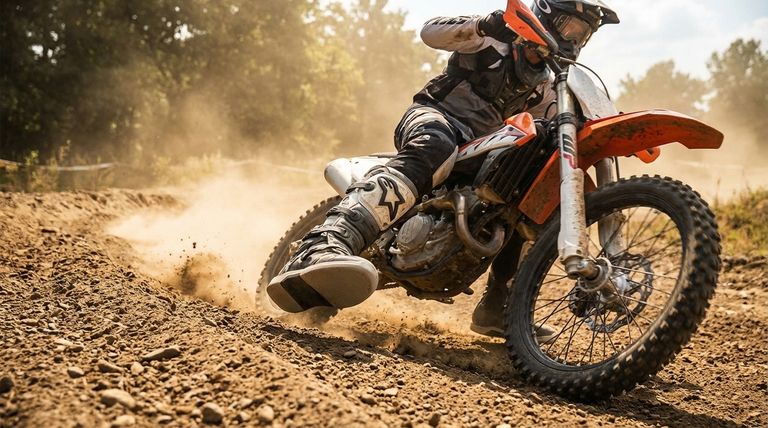
In motocross and flat-track racing, riders take corners at very high speeds. To maintain balance and control, they extend their inside leg forward and down, using it as an outrigger or a "third point of contact" that skims along the ground.
Slide, Don't Grip
If the boot's sole had aggressive lugs like a hiking boot, it would instantly dig into the dirt. This would violently jerk the rider's leg back, causing a loss of balance, a serious knee or ankle injury, or a crash. The smooth sole allows the boot to glide effortlessly across the surface.
The Footpeg is the Anchor
A rider's primary source of grip and control is not the sole of their boot on the ground, but the interface between the boot's arch and the bike's sharp metal footpegs. The stiff sole is designed to press firmly onto these pegs, transferring the rider's inputs to the machine.
A Purpose-Built System of Protection
The smooth sole is just one component of a highly specialized protective system. The boot's design choices are all interconnected, prioritizing rider safety above all else.
Rigidity Over Flexibility
The boot is engineered to be extremely rigid to prevent the ankle and foot from twisting, hyperextending, or breaking during a crash. This rigidity is achieved with heavy plastic armor, complex ankle hinge systems, and reinforced shanks. A flexible, grippy sole would fundamentally compromise this structural integrity.
Steel Shank for Impact Absorption
Inside the sole is a steel or composite shank. This critical feature prevents the rider's foot from bending unnaturally over the footpeg on hard landings from jumps. It distributes the massive force of impact across the entire length of the foot.
Armor for Direct Hits
The stout shin plates and plastic armor that encase the boot are there for one reason: to defend against direct impacts. They protect the rider from flying rocks, branches, and direct hits from other bikes in the event of a crash.
Understanding the Trade-offs
Choosing a dirtbike boot means accepting a set of deliberate compromises. Understanding these limitations is key to using the equipment safely and effectively.
Zero Traction for Walking
The most obvious trade-off is that these boots are terrible for walking. Pushing your bike up a muddy hill or walking on wet grass can be treacherous. The sole offers virtually no grip on slippery surfaces when you are off the bike.
A Tool for a Specific Job
A dirtbike boot should be viewed as specialized sporting equipment, much like a ski boot. It is designed for one task—riding a dirtbike—and is not intended for walking any significant distance. Its performance characteristics are exclusively for when you are on the bike.
Making the Right Choice for Your Goal
Your boot choice should always align with your primary riding discipline.
- If your primary focus is motocross or track riding: A boot with a very smooth sole is essential. This design is non-negotiable for the cornering techniques required for speed and safety on the track.
- If your primary focus is trail or enduro riding: You will still need a very stiff, protective boot with a low-traction sole. Some enduro models may have a slightly more defined heel or texture, but the core principle of sliding, not gripping, remains paramount.
- If you expect to do significant hiking or pushing: You may consider a more hybrid "adventure" boot, but you must accept that it will offer significantly less impact and torsion protection than a dedicated off-road boot.
Understanding that your boot is a tool for sliding and protection—not for walking—is fundamental to confident and safe dirt riding.
Summary Table:
| Feature | Purpose | Benefit |
|---|---|---|
| Smooth Sole | Allows foot to slide on ground during cornering | Prevents leg-jerking injuries and crashes |
| Rigid Construction | Prevents ankle and foot twisting | Provides critical impact and torsion protection |
| Steel/Composite Shank | Distributes force from hard landings | Protects the foot from bending unnaturally over the footpeg |
| Leg Out Technique | High-speed cornering method | The smooth sole is essential for this fundamental riding skill |
Ready to Equip Riders with High-Performance Footwear?
As a large-scale manufacturer, 3515 produces a comprehensive range of professional and safety footwear for distributors, brand owners, and bulk clients. Our production capabilities encompass all types of boots, including specialized designs for motorsports that prioritize both protection and performance.
Partner with us to access:
- Expert Engineering: Boots designed with a deep understanding of user needs, like the smooth sole for dirtbike riding.
- High-Volume Production: Reliable supply to meet your market demands.
- Quality Assurance: Durable products built to perform in demanding conditions.
Contact us today to discuss your footwear manufacturing needs and how we can bring value to your business.
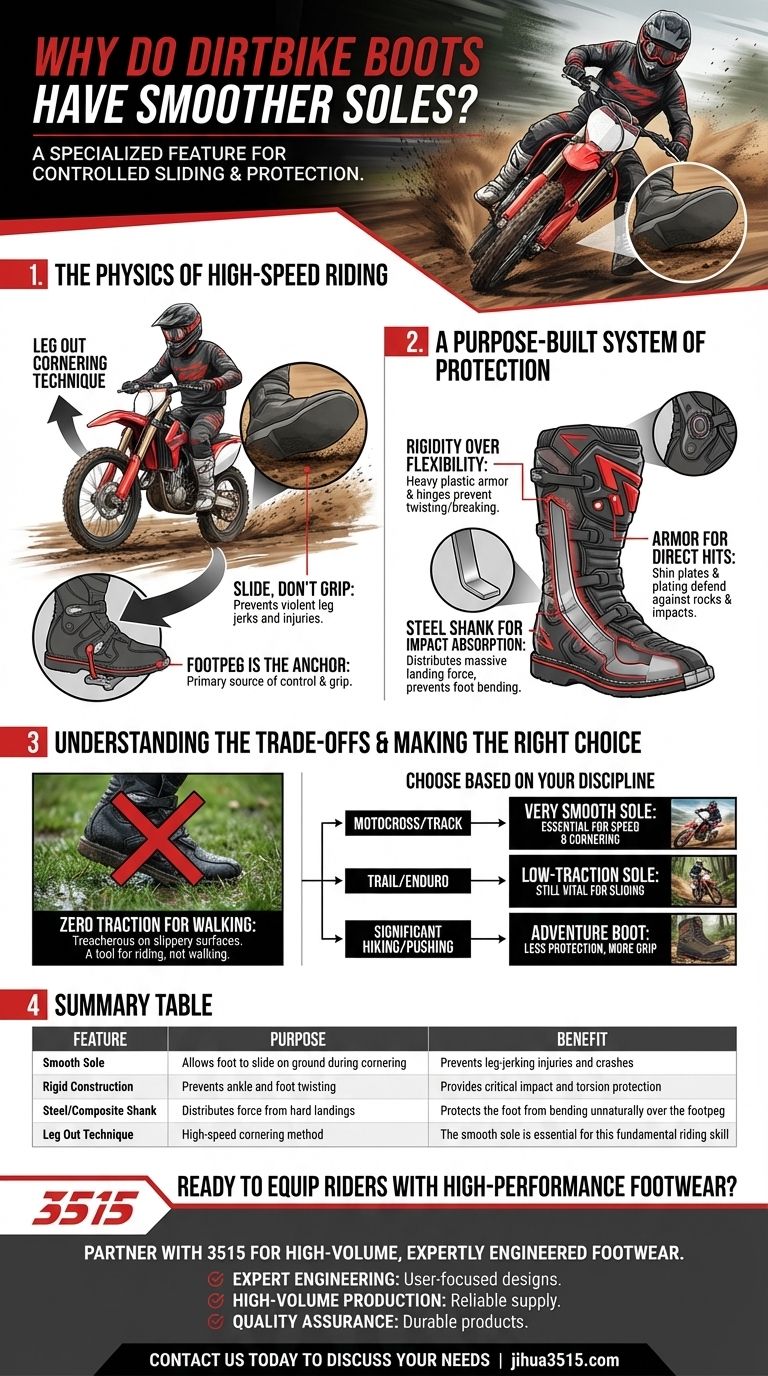
Visual Guide
Related Products
- Durable Goodyear Welt Leather Work Boots for Wholesale & Private Label
- Durable Spiked Camouflage Boots Wholesale & Factory Production
- Wholesale Tactical Boots High-Traction & Reflective for Bulk & Brand Orders
- Wholesale Lightweight Tactical Boots Custom Manufacturer for Desert & Combat Use
- Wholesale Lightweight Tactical Boots with Dial Closure OEM & Bulk Orders
People Also Ask
- What is the difference between full-grain and top-grain leather? Premium Material Guide for Boot Manufacturers
- What are the advantages of leather as an upper material for work boots? Unmatched Durability & Custom Comfort
- Why is it important to waterproof leather work boots? Protect Your Investment and Performance
- How should new leather work boots be broken in? A Guide to Comfort and Durability
- What are the advantages of leather uppers in work boots? Unmatched Durability & Protection