At its core, the rubber pressing operation for shoe soles is a two-stage process. First, raw rubber components are meticulously mixed together, and second, this compound is placed into a mold where heat and pressure are applied to permanently shape and strengthen it into a finished sole.
The entire operation is designed to achieve one critical outcome: transforming a soft, pliable rubber mixture into a durable, elastic, and perfectly formed shoe sole through a chemical process known as vulcanization.
The Two Foundational Stages of Sole Pressing
The production of a rubber sole is not merely a matter of shaping; it's a fundamental chemical transformation. Each stage serves a distinct and vital purpose in creating the final product's characteristics.
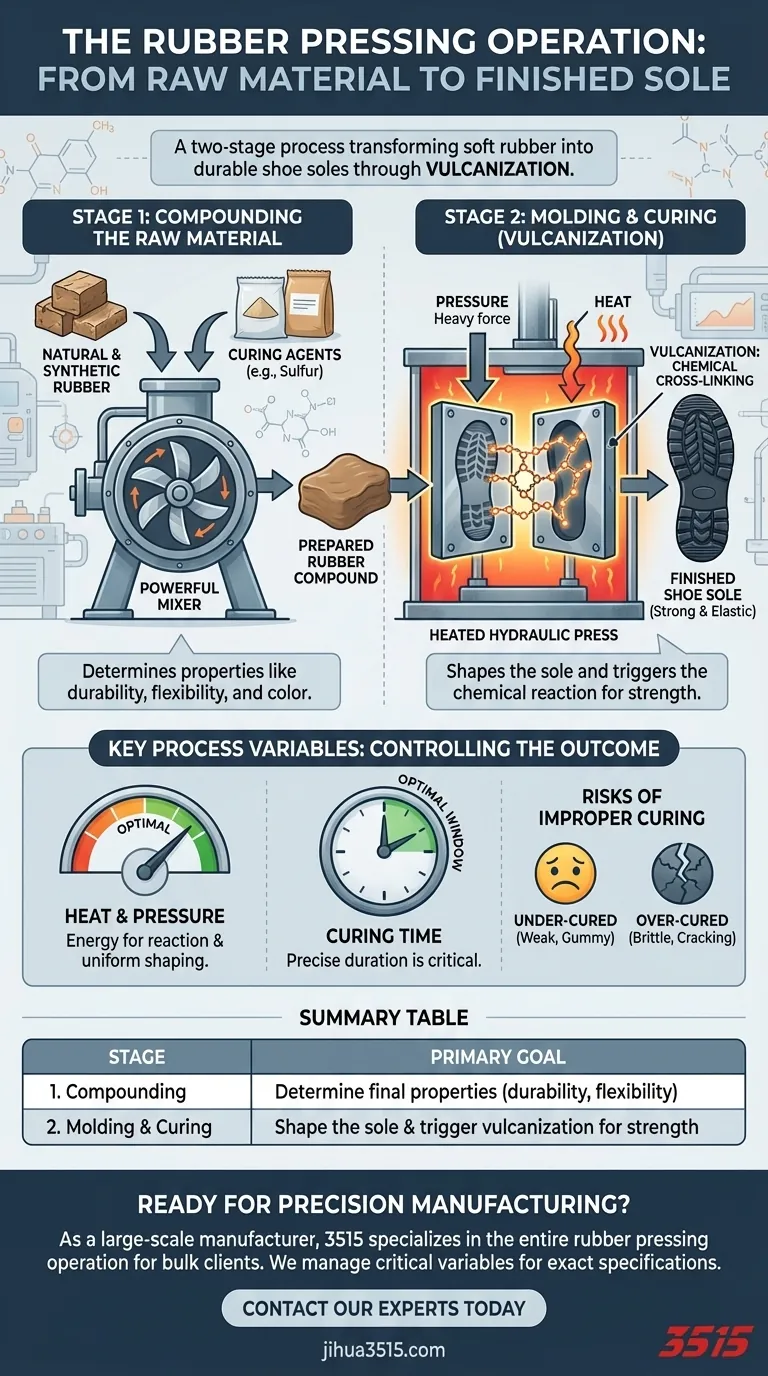
Stage 1: Compounding the Raw Material
Before any heat or pressure is applied, the base rubber must be prepared. This is the stage where the final sole's properties like durability, flexibility, and color are determined.
The process involves mixing base rubbers, which can be natural rubber, synthetic rubbers, or a blend of both, in powerful mixers.
To this base, crucial curing agents are added. These are typically sulfur or peroxide-based compounds that act as the catalyst for the chemical reaction in the next stage.
Stage 2: Molding and Curing (Vulcanization)
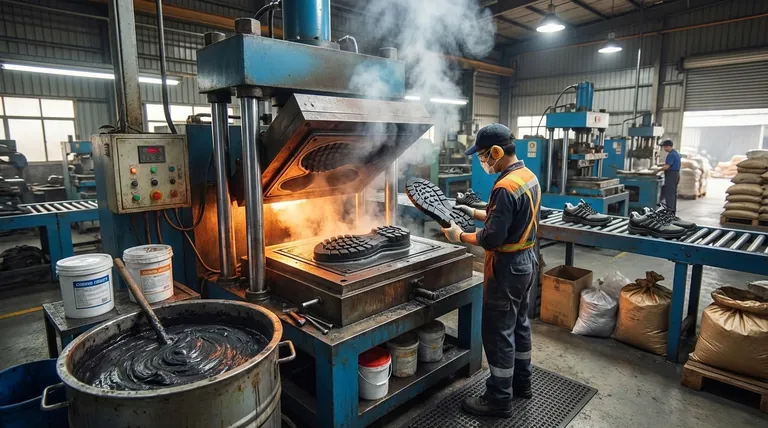
This is where the mixture takes its final shape and gains its strength. The prepared rubber compound is placed into a precisely machined mold, which is then set into a large heated hydraulic press.
The press serves two functions simultaneously. It applies immense pressure to ensure the rubber fills every detail of the mold, forming the tread and overall shape.
At the same time, it applies high heat, which initiates the curing process. The heat activates the curing agents (like sulfur), causing them to create chemical cross-links between the long polymer chains of the rubber.
This chemical reaction, known as vulcanization, is what converts the soft, weak rubber compound into a strong, stable, and elastic material suitable for a shoe sole.
Understanding the Key Process Variables
The success of the rubber pressing operation hinges on controlling a few critical factors. A failure to manage these variables results in a sole that is either weak and gummy or brittle and prone to cracking.
The Role of Heat and Pressure
Heat provides the necessary energy to kickstart the vulcanization reaction. Without sufficient heat, the sole will be under-cured and lack durability.
Pressure ensures the rubber compound maintains intimate contact with the heated mold surface, allowing for uniform heat transfer and preventing air bubbles or imperfections in the final shape.
The Importance of Curing Time
The duration for which the sole is held under heat and pressure is critical. There is a precise window for optimal curing.
An under-cured sole will not have formed enough chemical cross-links, resulting in a weak product that wears out quickly. Conversely, an over-cured sole can become too rigid and brittle, losing its necessary flexibility.
Applying This Knowledge to Your Goal
Understanding this process allows you to make more informed decisions, whether in design, material specification, or quality assessment.
- If your primary focus is on performance and durability: Pay close attention to the initial compounding stage, as the specific blend of rubbers and curing agents dictates the final material properties.
- If your primary focus is on aesthetic design and tread: The precision and quality of the mold are paramount, as it is the sole determinant of the final shape and surface detail.
- If your primary focus is on manufacturing quality control: The consistent application of heat, pressure, and time during the curing stage is the most critical factor to monitor.
Ultimately, mastering the interplay between material science in compounding and process control in molding is the key to producing a high-quality rubber shoe sole.
Summary Table:
| Stage | Key Process | Primary Goal |
|---|---|---|
| 1. Compounding | Mixing base rubbers with curing agents (e.g., sulfur) | Determine final properties like durability and flexibility |
| 2. Molding & Curing | Applying heat and pressure in a hydraulic press | Shape the sole and trigger vulcanization for strength and elasticity |
Ready to produce high-quality rubber soles with precision?
As a large-scale manufacturer, 3515 specializes in the entire rubber pressing operation for distributors, brand owners, and bulk clients. We manage the critical variables—from material compounding to precise vulcanization—ensuring your soles meet exact specifications for performance, design, and durability.
Our production capabilities encompass all types of shoes and boots. Contact our experts today to discuss your sole manufacturing needs and leverage our expertise for your next project.
Visual Guide
Related Products
- Durable Rubber Sole Outdoor Shoes Wholesale & Custom Manufacturing
- Durable Rubber-Soled Utility Shoes for Wholesale & Custom Brand Manufacturing
- Wholesale Durable Camo Canvas Shoes with High-Traction Rubber Soles
- Wholesale Durable Camouflage Canvas Shoes with High-Traction Cleated Rubber Sole
- Durable Canvas Work Shoes with Rubber Lug Sole | Wholesale Manufacturer
People Also Ask
- What is the function of the sole in outdoor shoes? Find the Perfect Grip and Support
- What role do outdoor shoes and sneakers play in navigating external terrains? Engineered Stability for Every Surface
- How is AI utilized in the design of outdoor and safety footwear? Harnessing Big Data for Market-Driven Shoe Innovation
- Why is durability important when selecting outdoor shoes? A Guide to Safety & Long-Term Value
- What are the key components of outdoor shoes that affect comfort and sturdiness? A Guide to Durable, High-Performance Footwear