I'll start by directly addressing the question: slip-resistant shoes are critical for custodial and janitorial workers because they are designed to prevent the most common hazard in their profession: slips and falls on wet or slippery surfaces. It's that simple, but we're going to dive much deeper.
Core Takeaway Box: These shoes aren't just about preventing falls; they're a carefully engineered system. They combine grip, comfort, and durability to mitigate the unique and constant environmental risks faced by janitorial professionals, which directly improves both safety and productivity.
The Main Body (Deep Dive):
I'll first address the unique challenges of custodial work. They face constant exposure to slippery surfaces—mopping, waxing, and cleaning spills are daily occurrences. It's not just water; cleaning chemicals, waxes, and oils significantly alter the friction of the floor. And, there's often that transition from a wet indoor environment to potentially icy or snowy outdoor areas, which is a significant, often overlooked, hazard.
Then, I'll explain how slip-resistant shoes provide protection, starting with the basics of traction. I'll describe the science simply—how soft rubber compounds and specialized tread patterns channel liquid away, enabling the sole to maintain contact with the floor. But the shoes are more than just grip: the ergonomics are crucial. Think about the long shifts, the resulting fatigue. Cushioned insoles and arch support reduce physical strain, which is directly linked to maintaining focus and reducing the risk of accidents.
Next, I'll highlight the limitations and trade-offs. It's crucial to acknowledge that "slip-resistant" doesn't mean "slip-proof". There's also the reality that not all shoes are created equal—ratings exist, and treads can wear down. I'll emphasize the importance of risk assessment and that not all shoe is the perfect shoe. Proper fit and maintenance are also essential; a poorly fitting shoe is a hazard. Keeping the treads clean will maximize their effectiveness.
Concluding Section (Actionable Advice):
I'll conclude with actionable recommendations, keeping the bullets in mind for clarity. For standard indoor environments, focus on shoes with excellent water-channeling treads and cushioning designed for concrete floors. If chemical or oil resistance is primary, choose shoes made from materials resistant to degradation. And for all-weather, indoor/outdoor work, look for hybrid treads for both smooth and rough surfaces, like ice or snow.
The final sentence will drive home the message: investing in safety is an investment in the foundation of your professional work. The short answer is that slip-resistant shoes are an essential piece of Personal Protective Equipment (PPE) for custodial and janitorial workers because their jobs involve constant exposure to slippery surfaces. These professionals routinely work with water, cleaning chemicals, floor wax, and must respond to unexpected spills, making slips and falls the most predictable and common hazard they face.
The true role of slip-resistant footwear extends beyond simply preventing a fall. For custodial professionals, it is a foundational tool that mitigates the constant, specific risks of their work environment, directly supporting not only their physical safety but also their comfort and focus over long, demanding shifts.
The Unique Risk Profile of Custodial Work
To understand the necessity of this specific footwear, we must first analyze the unique environmental hazards inherent to custodial and janitorial roles. Unlike many other professions, the risk is not occasional; it is a constant operational reality.
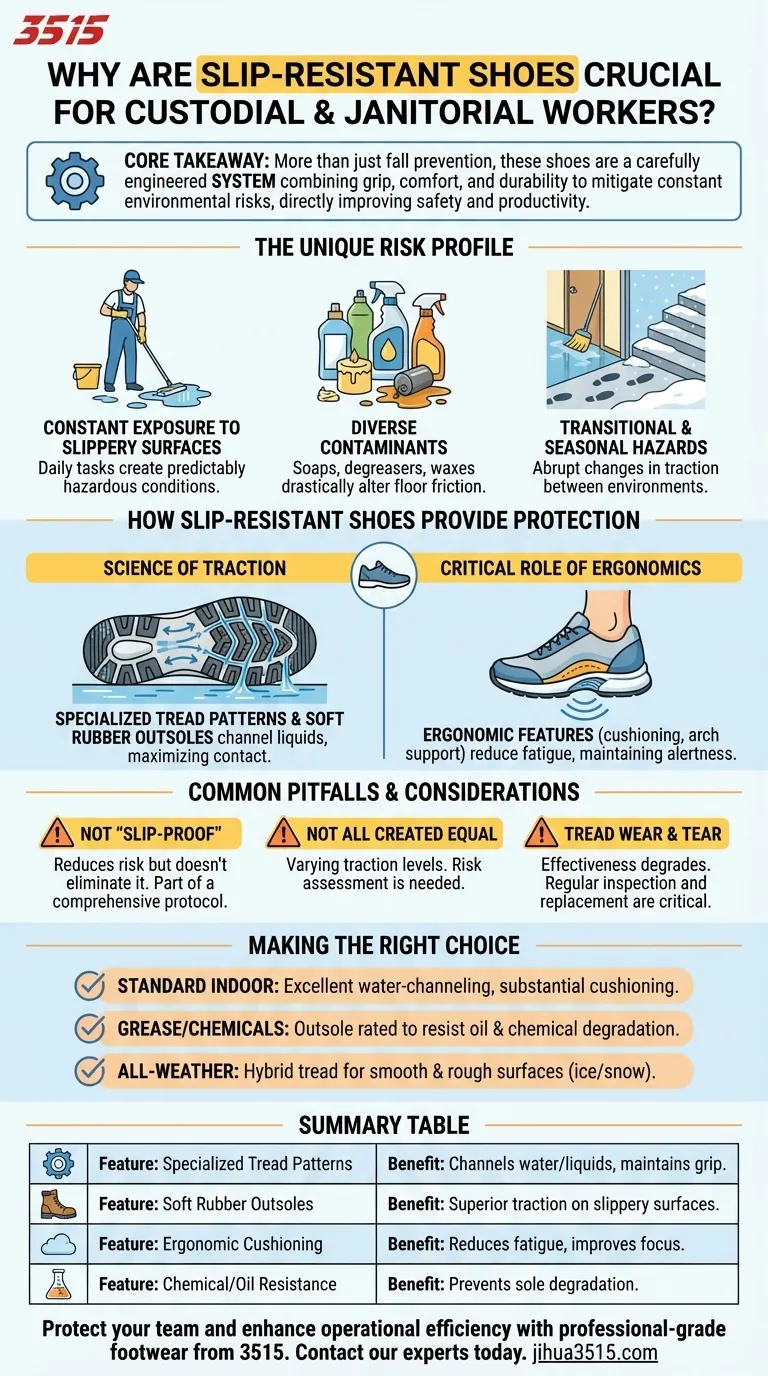
Constant Exposure to Slippery Surfaces
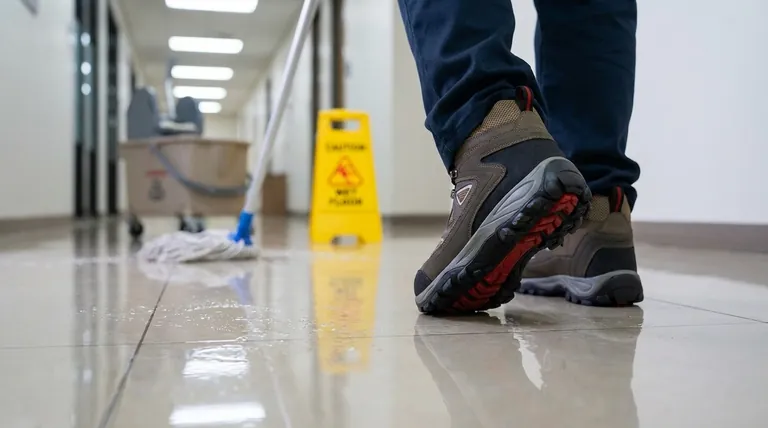
The core tasks of custodial work involve making floors wet. Daily activities like mopping, waxing, and buffing floors create predictably hazardous conditions that persist for significant periods.
Diverse and Unpredictable Contaminants
The risk is not just from water. Custodial staff handle a wide range of substances, including soaps, degreasers, waxes, and other cleaning chemicals. Each of these can drastically alter the slipperiness of a floor surface in different ways.
Transitional and Seasonal Hazards
Janitorial duties often require moving between different environments. This includes walking from a freshly mopped interior floor directly to an outside area that may be affected by rain, snow, or ice, creating an abrupt change in traction.
How Slip-Resistant Shoes Provide Protection
Properly designed footwear directly counters these risks through specialized design and materials. It's a combination of superior grip and ergonomic support that creates a comprehensive safety system.
The Science of Traction
The effectiveness of a slip-resistant shoe comes from its outsole. These soles are typically made of a softer rubber compound that offers better grip. More importantly, they feature intricate, open-tread patterns designed to channel water and other liquids out from under the shoe, maximizing contact between the sole and the floor.
The Critical Role of Ergonomics
Safety is not just about grip. Custodial work requires being on your feet for long shifts. Quality slip-resistant shoes incorporate ergonomic features like cushioned insoles and proper arch support. This reduces physical fatigue, which is crucial for maintaining alertness and preventing accidents caused by exhaustion.
Common Pitfalls and Considerations
While essential, simply mandating "slip-resistant shoes" is not enough. To truly enhance safety, one must understand their limitations and the factors that influence their effectiveness.
"Slip-Resistant" is Not "Slip-Proof"
This footwear significantly reduces risk but does not eliminate it entirely. It is one part of a comprehensive safety protocol that should also include "Wet Floor" signs, proper spill-cleaning procedures, and situational awareness.
Not All Shoes Are Created Equal
The term "slip-resistant" is not standardized. Different shoes offer varying levels of traction. A risk assessment of the specific work environment is necessary. If slips continue to occur, upgrading to footwear with a higher traction rating is a logical next step.
Tread Wear and Tear
The effectiveness of a slip-resistant shoe degrades over time as the tread pattern wears down. Regular inspection of footwear is critical, and shoes must be replaced once the outsole becomes smooth.
Making the Right Choice for Your Goal
Selecting the correct footwear depends on the specific demands of the job. Use this framework to guide your decision-making process for procuring equipment for yourself or your team.
- If your primary focus is standard indoor environments: Prioritize shoes with excellent water-channeling treads and substantial cushioning for long hours on hard surfaces like tile or concrete.
- If your primary focus is kitchens or areas with grease: You must select shoes with an outsole specifically rated to resist oils and chemicals, which can cause standard rubber to degrade and lose its grip.
- If your primary focus is all-weather, indoor/outdoor work: Look for a hybrid tread design that can manage both smooth, wet floors and the more uneven, unpredictable surfaces found outdoors.
Ultimately, investing in the right slip-resistant footwear is a direct investment in the well-being and effectiveness of professional custodial staff.
Summary Table:
| Feature | Benefit for Custodial Workers |
|---|---|
| Specialized Tread Patterns | Channels water and liquids away, maintaining grip on wet floors. |
| Soft Rubber Outsoles | Provides superior traction on slippery surfaces like tile and concrete. |
| Ergonomic Cushioning | Reduces fatigue during long shifts, improving focus and safety. |
| Chemical/Oil Resistance | Prevents sole degradation from common cleaning agents and spills. |
Protect your team and enhance operational efficiency with professional-grade footwear from 3515.
As a large-scale manufacturer, we produce a comprehensive range of slip-resistant shoes and boots specifically designed for the demanding environments faced by custodial and janitorial professionals. Our footwear combines advanced safety features with all-day comfort to reduce workplace accidents and improve productivity.
We are the trusted partner for distributors, brand owners, and bulk clients seeking reliable, high-volume production of all types of safety footwear.
Ready to equip your team with the best? Contact our experts today to discuss your specific needs and receive a customized solution.
Visual Guide
Related Products
- Heavy-Duty Waterproof Nubuck Safety Boots Safety Shoes for Bulk Supply
- Premium Suede Sport Safety Shoes for Wholesale & Bulk Orders
- Durable Leather Moc Toe Work Boots for Wholesale & Custom Manufacturing
- Durable High-Traction Canvas Sneakers Wholesale & Custom Manufacturing
- Advanced KPU Athletic Safety Shoe with Steel Toe Cap Anti-Slip Rotary Lacing System
People Also Ask
- What primary protective functions do professional safety boots provide in urban solid waste recovery and waste picking processes? Discover Dual-Layer Protection.
- How do safety boots reduce cutting hazards? Essential Protection for Your Workforce
- Which organizations develop safety standards for work boots? Ensure Compliance & Worker Safety
- What are the common types of safety boots and their primary uses? A Guide to Industrial Footwear
- Why is ankle and arch support important in safety footwear? Prevent Injury & Fatigue