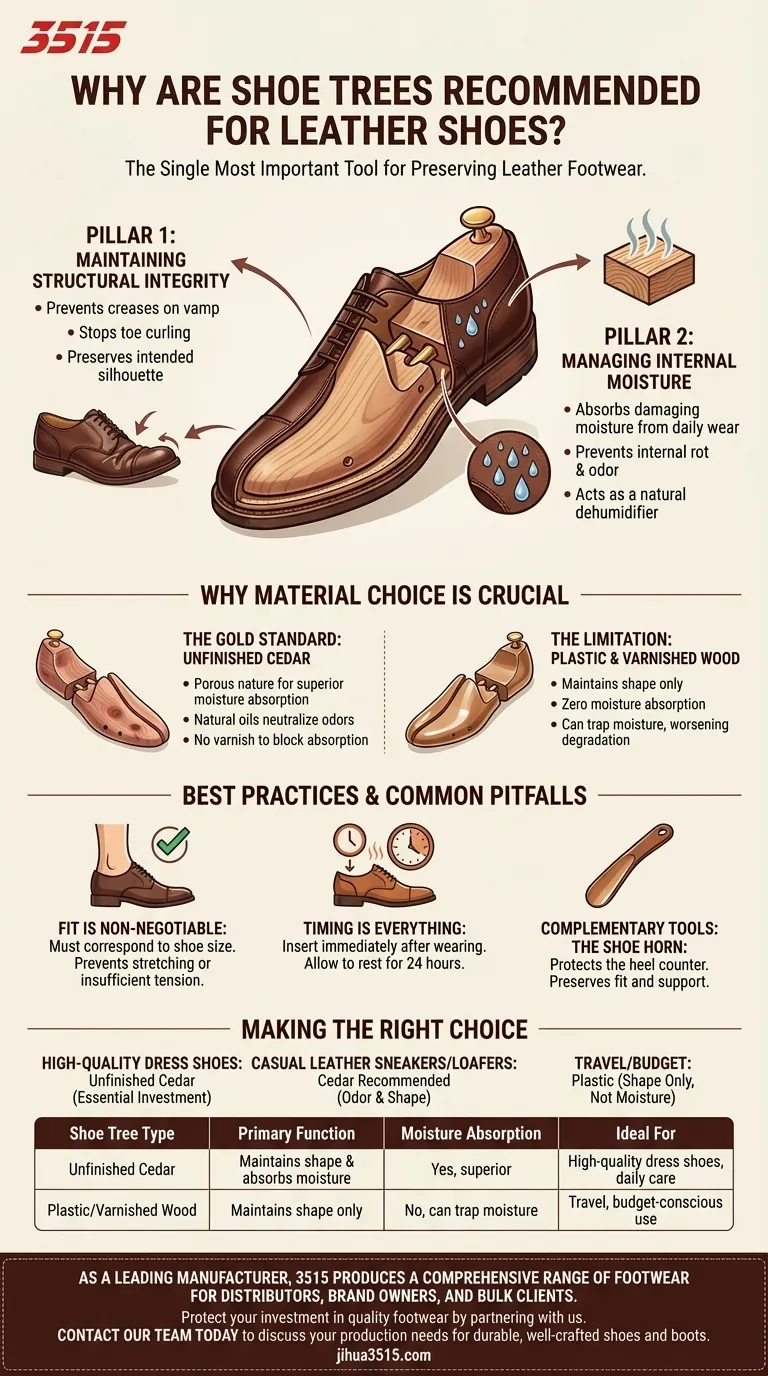
At their core, shoe trees are the single most important tool for preserving leather footwear. They serve two critical functions: they provide the internal structure needed to maintain the shoe's original shape, and they absorb the damaging moisture and odor that accumulate from daily wear. This dual-action approach is essential for extending the life of your shoes.
Your feet release a significant amount of moisture throughout the day, which porous leather readily absorbs. Without intervention, this moisture can warp the leather, degrade its fibers, and cause foul odors. A quality shoe tree is the most effective tool for combating this internal decay.
The Two Pillars of Shoe Preservation
A shoe tree’s value comes from its ability to solve two distinct problems simultaneously: the loss of physical shape and the buildup of internal moisture.
Pillar 1: Maintaining Structural Integrity
When you walk, your shoe flexes, creating creases across the vamp (the top part of the shoe). When you take the shoe off, the warm, pliable leather begins to cool and set in this stressed state.
A shoe tree applies gentle, even pressure from within, smoothing out these creases. It also prevents the toe from curling upwards, a common issue as leather dries and contracts over time. This preserves the shoe’s intended silhouette.
Pillar 2: Managing Internal Moisture
Leather is a natural skin; it is porous and highly absorbent. This is why it's so comfortable and breathable, but it's also a vulnerability.
The moisture released from your feet gets absorbed directly into the shoe's leather lining. If left unchecked, this moisture weakens the leather fibers from the inside out and creates a breeding ground for odor-causing bacteria.
A shoe tree made from unfinished wood, particularly cedar, acts as a natural dehumidifier. The wood is hygroscopic, meaning it actively draws moisture out of the leather, allowing the shoe to dry out completely and correctly.
Why Material Choice is Crucial
Not all shoe trees are created equal. The material they are made from directly impacts their effectiveness.
The Gold Standard: Unfinished Cedar
Unfinished cedar is the ideal material for a shoe tree. Its porous nature provides superior moisture absorption, and it contains natural oils that neutralize odors, leaving a clean, pleasant scent.
Because it is unfinished, there is no layer of varnish or lacquer to block the wood's ability to absorb moisture from the leather.
The Limitation: Plastic and Varnished Wood
Plastic shoe trees can help maintain the shoe's shape, which is better than using nothing at all. However, they provide zero moisture absorption.
In fact, a plastic tree can trap moisture inside the shoe, potentially worsening the conditions that lead to leather degradation and odor. Varnished wood trees suffer from the same limitation.
Best Practices and Common Pitfalls
To get the most out of your shoe trees, proper usage is key.
Fit is Non-Negotiable
A shoe tree must fit correctly. One that is too large can stretch the leather, while one that is too small won't provide enough tension to smooth out creases. Always buy shoe trees that correspond to your shoe size.
Timing is Everything
Insert shoe trees as soon as you take your shoes off. This is when the leather is at its most warm, moist, and pliable, making it the ideal time to reshape it and begin the drying process.
For best results, allow shoes to rest with trees inside for at least 24 hours. This gives the leather enough time to fully dry and set in its correct shape.
Complementary Tools: The Shoe Horn
Just as a shoe tree protects the shoe's internal structure, a shoe horn protects its external structure. Using one prevents you from crushing the heel counter, which is the rigid piece that cups your heel, preserving the shoe's fit and support.
Making the Right Choice for Your Footwear
Use this guide to determine the best course of action for your specific needs.
- If you own high-quality leather dress shoes: Unfinished cedar shoe trees are a non-negotiable investment to protect their lifespan and appearance.
- If you own casual leather sneakers or loafers: Cedar shoe trees are still highly recommended to prevent odor and toe curling, preserving their comfort and shape.
- If your primary concern is travel or budget: Plastic shoe trees are a lightweight, affordable option for maintaining shape, but they do not solve the critical moisture problem.
Properly using shoe trees is the most effective step you can take to preserve the integrity and extend the life of your quality footwear.
Summary Table:
| Shoe Tree Type | Primary Function | Moisture Absorption | Ideal For |
|---|---|---|---|
| Unfinished Cedar | Maintains shape & absorbs moisture | Yes, superior | High-quality dress shoes, daily care |
| Plastic/Varnished Wood | Maintains shape only | No, can trap moisture | Travel, budget-conscious use |
As a leading manufacturer, 3515 produces a comprehensive range of footwear for distributors, brand owners, and bulk clients. Protect your investment in quality footwear by partnering with us. Contact our team today to discuss your production needs for durable, well-crafted shoes and boots.
Visual Guide
Related Products
- Wholesale Leather Apron Toe Derby Shoes Custom Factory Production
- Wholesale Comfort Leather Business Shoes with Dial Lacing System
- Classic Leather Derby Dress Shoes Wholesale & Custom Manufacturing
- Wholesale Women's Leather Derby Shoes Custom Factory Production
- Factory Direct Wholesale Leather Comfort Shoes with Dial Closure
People Also Ask
- What historical figure is associated with the Derby shoe? The Earl of Derby's Comfort Revolution
- What are the features and appropriate occasions for wearing derby shoes? A Guide to Versatile Style
- What is the main difference between Derby Shoes and Oxford Shoes? It's All in the Lacing.
- How do Derby shoes fit into business casual attire? Master the Perfect Balance of Professional Style
- What are Derbies and how do they differ from Oxfords? A Guide to Lacing and Formality