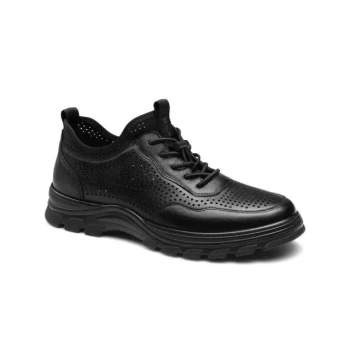
Professional training shoes are essential in high-altitude cold climates because they specifically manage the conflict between external freezing temperatures and the internal heat generated by intense exertion. Unlike standard winter boots, these shoes are engineered to balance thermal insulation with breathability, ensuring your feet do not overheat while remaining protected from the elements. Furthermore, they provide the specific grip and structural impact protection required for safe movement on difficult terrain.
High-intensity activity drastically shifts your body's thermal comfort thresholds. Professional footwear optimizes performance by aligning thermal regulation with this elevated metabolic rate, ensuring you remain comfortable and protected without overheating or freezing.
Managing Metabolic Heat in Freezing Conditions
The Shift in Thermal Comfort
High-intensity physical activities significantly raise your metabolic rate. This physiological change shifts the thresholds of your "Physiological Equivalent Temperature" (PET).
Because your body is generating more heat, your requirements for warmth change. Gear designed solely for static warmth will lead to overheating during intense exercise.
Balancing Breathability and Insulation
Professional footwear addresses this shift through a calculated design balance. These shoes offer necessary thermal insulation to protect against the high-altitude cold.
Simultaneously, they prioritize breathability. This allows for the dissipation of the excess heat generated by your workout, preventing moisture buildup that could freeze once you stop moving.
Adapting to Environmental Data
These shoe series are not designed in a vacuum; they are engineered based on environmental data. They adapt to high-strength movement scenarios to optimize foot thermal comfort specifically for the unique conditions of high altitudes.
Structural Support and Physical Protection
Mitigating Impact Forces
Beyond temperature management, high-altitude terrain can be physically demanding. Professional shoes utilize high-performance cushioning materials and optimized structural designs.
These features are engineered to mitigate the impact forces generated during running. This absorption significantly reduces the risk of sports-related injuries, which can be more dangerous in remote, cold environments.
Essential Grip and Stability
Safety in these environments relies heavily on traction. Professional training shoes provide essential grip designed for the unpredictability of outdoor terrain.
This ensures stability during high-strength movements. Reliable traction allows you to focus on performance rather than worrying about slipping or losing your footing.
Understanding the Trade-offs
The limit of "Active" Insulation
It is critical to understand that these shoes are optimized for high metabolic output. Their design favors heat dissipation over maximum heat retention.
Inactivity Risks
Because they are breathable, they may not provide sufficient warmth during periods of inactivity. If you stop moving for long periods in a high-altitude cold climate, the lack of heavy insulation could lead to rapid cooling.
Making the Right Choice for Your Goal
To select the best footwear for your needs, consider your specific activity level:
- If your primary focus is high-intensity training: Prioritize shoes that balance thermal insulation with breathability to manage the heat generated by your elevated metabolic rate.
- If your primary focus is long-term joint health: Look for footwear with optimized structural design and cushioning to mitigate impact forces and reduce injury risk.
- If your primary focus is safety on variable terrain: Ensure the footwear offers professional-grade grip suitable for high-strength movement scenarios.
By selecting footwear that aligns with your physiological output, you remove barriers to activity and ensure safe, consistent performance in challenging environments.
Summary Table:
| Key Feature | Functional Benefit | Why It Matters in Cold Climates |
|---|---|---|
| Thermal Regulation | Balances insulation & breathability | Prevents moisture buildup and overheating during high metabolic output. |
| Structural Support | High-performance cushioning | Mitigates impact forces on hard, frozen terrain to reduce injury risk. |
| Traction System | Professional-grade grip | Provides essential stability on unpredictable outdoor surfaces and ice. |
| Data-Driven Design | Optimized for high-intensity | Ensures footwear performance aligns with physiological changes in extreme cold. |
Partner with 3515 for High-Performance Footwear Solutions
As a leading large-scale manufacturer dedicated to serving distributors and brand owners, 3515 delivers the engineering excellence required for extreme environments. Our flagship Safety Shoes series sets the standard for protection, while our comprehensive production capabilities extend to training shoes, tactical boots, outdoor footwear, and sneakers designed for peak physical activity.
Whether you need robust footwear for high-altitude climates or sophisticated Dress & Formal shoes for bulk requirements, we provide the scale and expertise to elevate your brand.
Ready to scale your inventory with professional-grade footwear? Contact us today to discuss your bulk requirements!
References
- Yingzi Zhang, Xinxing Liu. Study on the outdoor thermal comfort of college students under different activity intensities in a high-altitude climate zone. DOI: 10.3389/fpubh.2024.1365470
This article is also based on technical information from 3515 Knowledge Base .
Related Products
- Lightweight Breathable Training Shoes for Wholesale & Custom OEM Manufacturing
- Custom OEM Training Shoes Wholesale Manufacturer Durable & Breathable
- Wholesale Breathable & Cushioned Training Shoes Custom Factory Production
- Wholesale Durable & Breathable Training Shoes for Custom Brands
- Wholesale Breathable Training Shoes Custom Athletic Footwear Manufacturer
People Also Ask
- Why are lightweight training shoes often preferred over professional hiking boots in urban walking? Maximize City Comfort
- What is the primary role of specialized training or orthopedic shoes? Enhance Safety in Elderly Balance Training
- Why are professional-grade training shoes essential for physical therapy? Ensure Patient Safety and Gait Stability
- Why are the slip-resistance and stability performance of training shoes critical in gait analysis? Ensure Data Accuracy
- Why is the use of flat-soled or professional training shoes essential for WBV? Maximize Vibration Energy Transfer