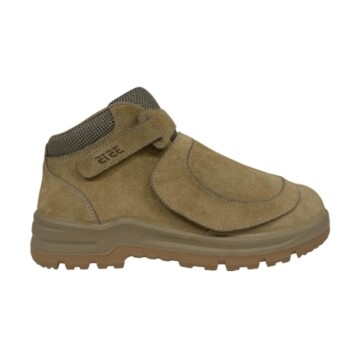
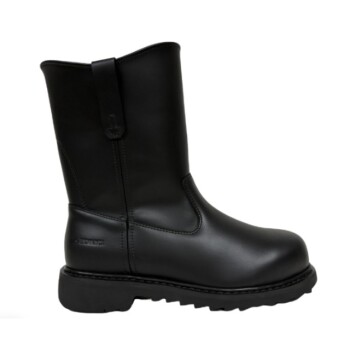
High-performance midsole cushioning is the primary mechanical barrier between an athlete's skeletal system and the extreme forces of impact. In professional training environments, the ankle joint must withstand ground reaction forces that often exceed six times a person’s total body weight. These specialized materials are designed to absorb and dissipate this kinetic energy, preventing it from reaching the delicate structures of the distal tibia and the talar dome.
Core Takeaway: Midsole cushioning serves as a critical energy management system that reduces mechanical load on the ankle. By mitigating peak impact forces, it prevents the chronic bone remodeling and cartilage degradation that lead to long-term joint failure.
The Biomechanics of Extreme Impact
Managing Intense Ground Reaction Forces
During high-impact movements, the human body encounters ground reaction forces (GRF) that far exceed the stresses of daily activity.
Biomechanical studies indicate that professional training can subject the ankle to forces reaching more than six times the athlete's body weight.
Without high-performance cushioning, this energy is transmitted directly into the musculoskeletal system with minimal attenuation.
Protecting the Distal Tibia and Talar Dome
The distal tibia (the bottom of the shin bone) and the talar dome (the top of the ankle bone) are the primary load-bearing surfaces of the ankle joint.
Midsole materials act as a functional buffer, dissipating impact energy before it reaches these critical skeletal points.
By slowing the rate of loading, the cushioning reduces the instantaneous mechanical stress that would otherwise cause micro-trauma to these bone surfaces.
Long-Term Physiological Protection
Preventing Pathological Bone Remodeling
Consistent exposure to high-velocity impact without adequate protection triggers pathological bone remodeling.
When the rate of mechanical stress exceeds the body’s ability to repair itself, the bone structure can become compromised or abnormally dense.
High-performance midsoles maintain stress levels within a physiological window that encourages healthy adaptation rather than injury.
Preservation of Articular Cartilage
Cartilage in the ankle joint has a limited capacity for self-repair and is highly sensitive to repetitive mechanical overload.
Effective energy dissipation prevents the high-peak loads that lead to cartilage thinning and fragmentation.
Maintaining the integrity of this tissue is essential for ensuring smooth joint articulation and preventing the onset of early-stage osteoarthritis.
Understanding the Trade-offs
Balancing Cushioning and Stability
While maximal cushioning provides superior impact protection, it can sometimes lead to a reduction in proprioceptive feedback, or the "feel" of the ground.
Excessively soft midsoles may introduce lateral instability, increasing the risk of acute ligament strains or "rolling" the ankle.
Professional-grade materials must strike a precise balance between energy absorption for protection and structural firmness for joint support.
Applying This to Your Training Goals
Selecting the right footwear requires aligning the midsole technology with the specific demands of your movement patterns.
- If your primary focus is high-intensity plyometrics: Prioritize high-performance midsoles with maximum energy dissipation to protect your joints during repeated explosive landings.
- If your primary focus is heavy weightlifting: Look for a firmer, high-density midsole that offers stability under load while still providing enough compression to manage minor impact.
- If your primary focus is agility and multi-directional speed: Choose a responsive cushioning material that offers a balance of impact protection and "court feel" to ensure stability during rapid transitions.
Superior midsole technology is not a luxury, but a fundamental requirement for preserving the structural integrity of the professional athlete’s ankle.
Summary Table:
| Feature | Impact on Ankle Health | Performance Benefit |
|---|---|---|
| Energy Dissipation | Protects distal tibia and talar dome | Reduces micro-trauma from Ground Reaction Forces |
| Load Management | Prevents pathological bone remodeling | Keeps mechanical stress within physiological windows |
| Cartilage Defense | Reduces thinning and fragmentation | Extends joint longevity and prevents early osteoarthritis |
| Balanced Density | Enhances lateral stability | Minimizes risk of ligament strains and ankle rolls |
Elevate Your Footwear Line with 3515 High-Performance Engineering
As a large-scale manufacturer serving distributors and brand owners, 3515 offers comprehensive production capabilities for all footwear types, anchored by our flagship Safety Shoes series. Our expertise extends to high-performance professional training shoes, sneakers, and tactical boots designed to withstand extreme mechanical stress.
Partner with us to leverage cutting-edge midsole technology that protects your customers and enhances athletic performance. Our extensive portfolio also covers outdoor shoes, training shoes, and Dress & Formal shoes to meet your diverse bulk requirements.
Ready to manufacture superior footwear? Contact us today to discuss your project!
References
- Guanghua Xu, Lifu Zhang. Characterization of Changes in Subchondral Bone Tissue Density of the Ankle Joint in Taekwondo Players. DOI: 10.3389/fbioe.2022.872258
This article is also based on technical information from 3515 Knowledge Base .
Related Products
- High Performance Fire-Retardant Waterproof Safety Boots
- Premium Wholesale Waterproof Safety Boots High Performance Protection for Industrial Markets
- Premium Suede Metatarsal Guard Safety Boots Work Shoes
- Premium Waterproof High-Cut Industrial Safety Boots for Wholesale and Bulk Orders
- Heavy-Duty Goodyear Welted Pull-On Safety Rigger Boot
People Also Ask
- Why are waterproof safety boots recommended for certain work environments? Essential Protection for Wet & Hazardous Jobs
- What roles do 3D vision systems and industrial robots play in the manufacturing of fire safety boots? Smart Automation
- What's the difference between waterproof and water-resistant boots? Choose the Right Footwear for Your Environment
- What are the drawbacks of waterproof boots? The Breathability vs. Protection Trade-Off
- What should you look for to ensure boots are fully waterproof? The Essential 2-Part System