
The primary advantage of lightweight work boots is their direct and significant reduction in physical fatigue. By using modern materials and construction techniques, these boots minimize the energy you expend with every step, which enhances agility, increases all-day comfort, and improves overall performance without compromising core protective features.
The decision to choose lightweight work boots is about prioritizing mobility and energy conservation for your specific job. While they excel in roles requiring speed and long hours on your feet, this benefit must be weighed against the unique demands of your work environment, such as extreme weather or the need for maximum rigidity.
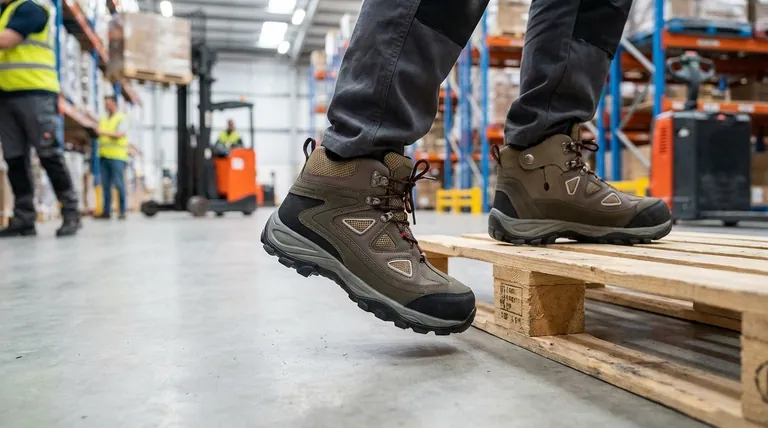
The Core Benefits of Reduced Weight
The most significant impact of a lightweight boot is felt cumulatively over a full workday. Shaving even a few ounces off each boot translates into lifting thousands of fewer pounds over the course of a day, leading to tangible benefits.
Minimized Physical Fatigue
Every step requires you to lift your feet. A lighter boot demands less muscular effort, which directly reduces strain on your legs, back, and joints. This conservation of energy helps you stay more focused and productive throughout your shift.
Enhanced Agility and Speed
Less weight allows for quicker, more natural movement. This is critical in jobs that require navigating tight spaces, climbing, or reacting swiftly. Lightweight boots provide a feeling of freedom and nimbleness that heavier, more cumbersome boots cannot match.
Increased All-Day Comfort
Modern lightweight boots are often engineered with breathable materials like nylon and mesh. This improves airflow, keeping your feet cooler and drier during fast-paced work or in warm conditions, which is a key component of overall comfort.
What Defines a "Lightweight" Boot?
The term "lightweight" isn't just about the final number on a scale; it's a result of a specific design philosophy that leverages modern technology and materials.
The Role of Advanced Materials
Traditional heavy boots often rely on thick leather and steel. Lightweight models reduce weight by incorporating durable synthetic materials, advanced foam midsoles, and composite safety toes, which provide certified protection without the thermal conductivity or weight of steel.
A Focus on Efficient Construction
Engineers design lightweight boots to strip away unnecessary bulk while maintaining structural integrity and support. This means optimizing the thickness of the sole, the pattern of the upper, and the overall profile of the boot to be as efficient as possible.
Understanding the Trade-offs
No single boot is perfect for every situation. Being a trusted advisor means acknowledging the areas where a lightweight boot might not be the optimal choice.
Durability in Extreme Environments
While high-quality synthetics are very durable, they may not withstand the extreme abrasion, chemical exposure, or constant punishment that thick, heavy-duty leather can endure on some job sites, such as heavy industrial or demolition work.
Ankle Support and Rigidity
Heavier boots often feature a more rigid chassis and thicker materials, which can provide superior ankle stability on highly uneven and treacherous terrain. Some lightweight boots sacrifice a degree of this rigidity to maximize flexibility and reduce weight.
Insulation for Severe Cold
The very features that make many lightweight boots breathable can be a disadvantage in extreme cold. While insulated lightweight models exist, dedicated cold-weather boots are typically heavier by necessity to accommodate the thick layers of insulation required to protect your feet.
Making the Right Choice for Your Work
To select the best boot, you must honestly assess the primary demands of your job.
- If your primary focus is speed and covering long distances: A lightweight boot made with synthetic uppers is the ideal choice to minimize fatigue and maximize your mobility.
- If your primary focus is working in extreme cold or wet weather: Prioritize a dedicated insulated and waterproof boot, which will almost certainly be heavier than a standard model.
- If your primary focus is maximum protection on a hazardous, uneven job site: A more traditional, heavier-duty boot may offer superior stability and ruggedness, justifying the extra weight.
Ultimately, selecting the right work boot is about aligning the tool with the task to ensure your safety, comfort, and effectiveness on the job.
Summary Table:
| Benefit | Key Feature | Ideal For |
|---|---|---|
| Minimized Fatigue | Less energy per step, reduces strain on legs and back | Long shifts, extensive walking |
| Enhanced Agility | Quicker, more natural movement for better speed | Climbing, navigating tight spaces |
| All-Day Comfort | Breathable materials like mesh for cooler feet | Fast-paced work, warm environments |
| Modern Protection | Composite safety toes (lightweight, non-metallic) | Jobs requiring certified toe protection without extra weight |
Ready to experience the difference that lightweight work boots can make for your team?
As a large-scale manufacturer, 3515 produces a comprehensive range of footwear for distributors, brand owners, and bulk clients. Our production capabilities encompass all types of shoes and boots, including advanced lightweight models designed to boost productivity and comfort.
We can help you select or customize the perfect lightweight work boot for your specific job demands. Contact our experts today to discuss your requirements and get a quote!
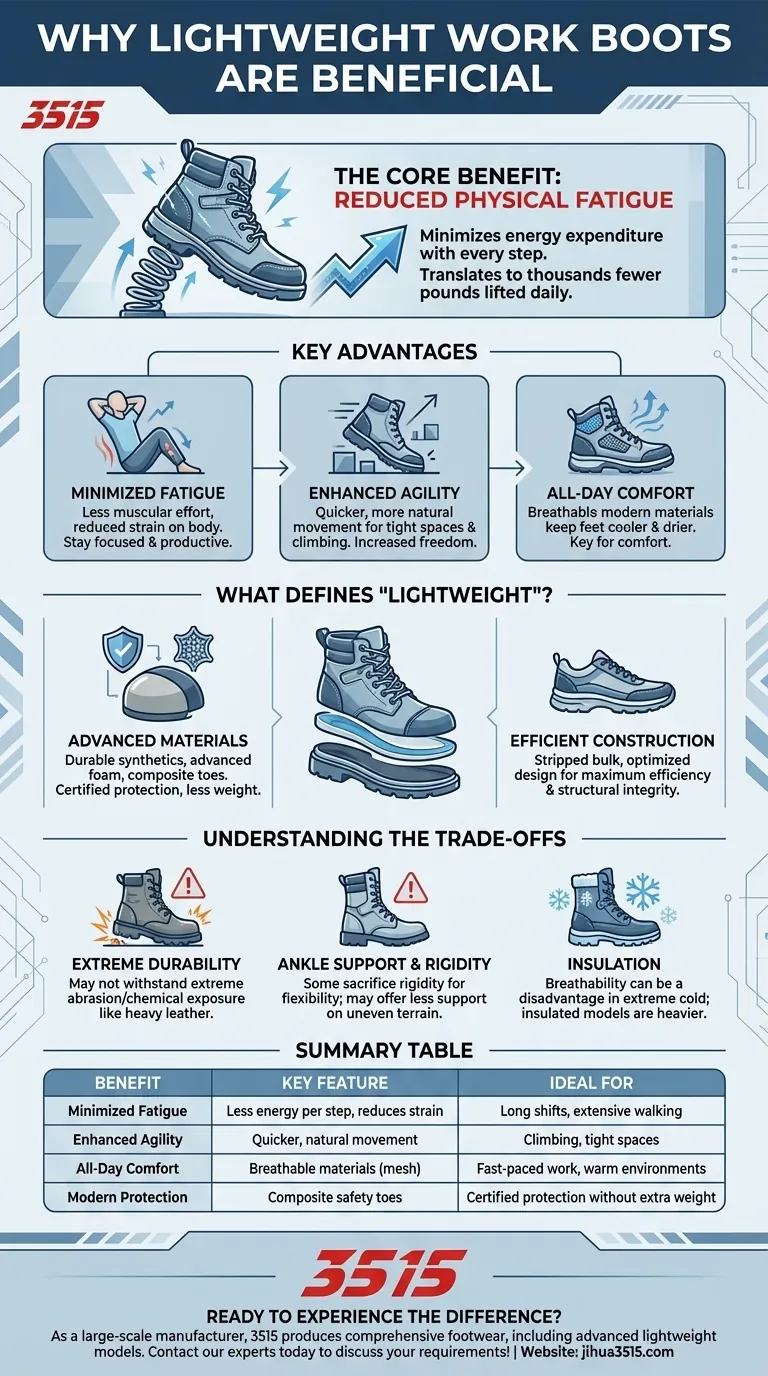
Visual Guide
Related Products
- Lightweight Breathable Training Shoes for Wholesale & Custom OEM Manufacturing
- Wholesale Lightweight Tactical Boots with Dial Closure OEM & Bulk Orders
- Wholesale Lightweight Tactical Boots Custom Manufacturer for Desert & Combat Use
- Durable Leather Moc Toe Work Boots for Wholesale & Custom Manufacturing
- Durable Moc-Toe Wedge Work Boots | Wholesale Manufacturing for Brands
People Also Ask
- Why are lightweight training shoes often preferred over professional hiking boots in urban walking? Maximize City Comfort
- What is the primary role of specialized training or orthopedic shoes? Enhance Safety in Elderly Balance Training
- Why are professional-grade training shoes essential for physical therapy? Ensure Patient Safety and Gait Stability
- Why are the slip-resistance and stability performance of training shoes critical in gait analysis? Ensure Data Accuracy
- Why is the use of flat-soled or professional training shoes essential for WBV? Maximize Vibration Energy Transfer















