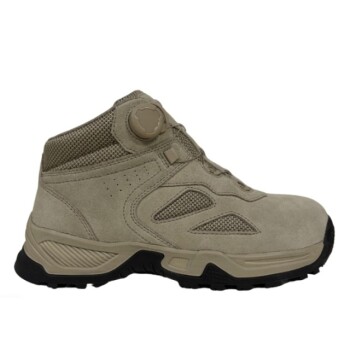
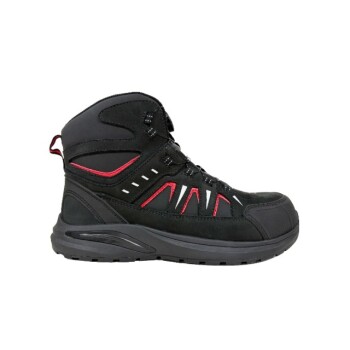
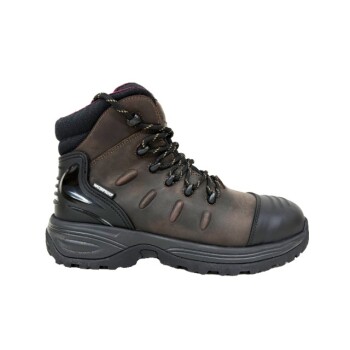
Industrial safety boots with high-grip outsoles are mandatory in these environments because they provide the necessary traction to navigate surfaces compromised by mineral oil and B3 hazardous waste. Without this specialized tread, the risk of severe injury from slips and falls increases exponentially, while the boot's material simultaneously serves as a critical barrier against chemical burns and corrosion.
Handling hazardous leaks involves more than just containment; it requires guaranteeing worker stability. High-grip safety boots serve a dual purpose: preventing mechanical accidents on slick, greasy surfaces and acting as a chemical shield against corrosive substances.
Ensuring Stability on Compromised Surfaces
Combating the "Grease Effect"
Mineral oil leaks create an exceptionally slick film on flooring that renders standard footwear useless.
High-grip outsoles are engineered to penetrate this viscous layer. They provide the friction required to walk safely without losing footing.
Navigating Wet and Treatment Areas
Facilities handling B3 waste, such as sewage treatment plant storage areas, often have surfaces that are permanently wet or damp.
Specialized treads channel liquids away from the point of contact. This ensures the sole connects with the floor rather than hydroplaning on the fluid.
Shielding Against Hazardous Agents
Resisting Chemical Corrosion
B3 hazardous waste often contains corrosive elements that can dissolve standard footwear materials.
Industrial safety boots are designed to resist this degradation. They protect the worker’s feet from direct contact with toxic agents that could cause chemical burns or long-term health issues.
Controlling Contamination Spread
Beyond immediate physical safety, hygiene is critical when handling hazardous waste.
Rubber boots are non-porous and easily cleaned. This allows workers to wash off contaminants effectively, preventing the spread of infections or hazardous chemicals to other parts of the facility.
Understanding Limitations and Trade-offs
Material Compatibility
Not every "industrial" boot resists every chemical.
A boot designed for oil resistance may fail when exposed to specific acids found in B3 waste. You must match the boot material to the specific chemical data sheet of the waste being handled.
Weight vs. Mobility
High-grip, chemically resistant boots are often heavier than standard workwear.
This added weight can lead to worker fatigue over long shifts. Reduced agility can essentially trade one safety risk (slipping) for another (tripping or slow reaction times).
Selecting the Right Footwear for the Job
To ensure maximum safety, align your equipment choice with the specific primary hazard of your environment:
- If your primary focus is working on slick, oily surfaces: Prioritize boots with deep, aggressive tread patterns and oil-resistant rubber compounds to maximize traction and prevent hydroplaning.
- If your primary focus is handling highly corrosive B3 waste: Ensure the boot material is specifically rated for the chemical class you are handling to prevent rapid degradation and exposure.
Proper footing is the foundation of industrial safety; without it, all other protective protocols are compromised.
Summary Table:
| Hazard Type | Footwear Requirement | Primary Benefit |
|---|---|---|
| Mineral Oil Leaks | High-Grip / Oil-Resistant Outsoles | Penetrates viscous films to prevent slips |
| B3 Hazardous Waste | Chemical-Resistant Materials | Protects against corrosion and chemical burns |
| Wet/Damp Surfaces | Specialized Liquid Channels | Prevents hydroplaning and ensures traction |
| Toxic Contaminants | Non-porous / Easy-clean Design | Enables effective decontamination and hygiene |
Partner with 3515 for High-Performance Safety Footwear
As a large-scale manufacturer serving distributors and brand owners, 3515 offers comprehensive production capabilities to meet your most demanding bulk requirements. Our flagship Safety Shoes series is specifically engineered to provide the high-grip traction and chemical resistance needed for handling hazardous mineral oil and B3 waste.
Our extensive portfolio goes beyond industrial safety, covering:
- Tactical & Work Boots
- Outdoor & Training Shoes
- Sneakers & Athletic Footwear
- Dress & Formal Shoes
Ensure your customers have the best protection and stability in the industry. Contact 3515 today to discuss your manufacturing needs and request a quote!
References
- Rio Ferdiand Saputra, Andung Jati Nugroho. ANALISIS RESIKO BAHAYA LIMBAH B3 MENGGUNAKAN METODE HIRARC PADA INSTALASI PEMBUANGAN AIR LIMBAH. DOI: 10.59024/jisi.v2i4.855
This article is also based on technical information from 3515 Knowledge Base .
Related Products
- Premium Waterproof High-Cut Industrial Safety Boots for Wholesale and Bulk Orders
- Puncture-Resistant Velcro Safety Boots for Wholesale & Custom Manufacturing
- Premium Wholesale Waterproof Safety Boots High Performance Protection for Industrial Markets
- Customizable Anti-Smash Safety Boots for Wholesale & Private Label Manufacturing
- Premium Wholesale Wheat Nubuck Safety Boot with Rapid Lacing System
People Also Ask
- Why are oil-resistant and anti-slip properties critical for industrial safety boots? Expert Outsole Engineering Guide
- What are the primary protective functions of industrial safety boots in oil palm plantations? Master Rough Terrain Safety
- What are the protective functions of industrial safety boots in sugar factory clarification stations? Thermal & Slip Experts
- Why is professional industrial-grade safety footwear a suitable carrier for diabetic rehabilitation insoles?
- How do industrial safety boots assist maintenance personnel working on high-level palm oil factory structures?