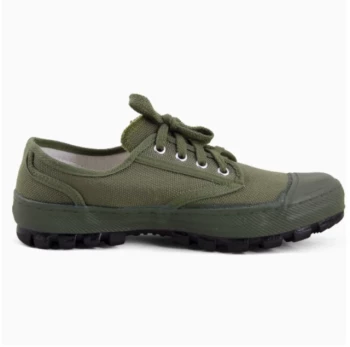
Industrial 3D printing serves as the primary accelerator in modern footwear innovation. It allows engineering teams to bypass the prohibitive costs and extensive lead times associated with traditional mold-making by directly translating complex digital designs into physical prototypes. This capability is critical for validating intricate midsole structures and customized safety features, compressing development cycles from months into days.
The core value of industrial 3D printing lies in its ability to decouple design complexity from manufacturing cost. It enables the rapid verification of high-performance geometries—such as lattice midsoles and traction patterns—that are often impossible or too expensive to produce via conventional machining during the prototyping phase.
Accelerating the Iteration Cycle
Eliminating the Tooling Bottleneck
In traditional manufacturing, validating a new shoe design requires creating metal molds. This process is expensive and time-consuming, often taking weeks to produce a single iteration.
Rapid Digital-to-Physical Translation
Industrial 3D printing removes this barrier by converting 3D digital designs directly into physical entities. This allows designers to hold a tangible model of their concept hours after finalizing the CAD file, rather than waiting for external vendors to machine tooling.
Cost-Efficient Verification
By avoiding hard tooling during the early stages, manufacturers can test multiple variations of a design simultaneously. This significantly lowers the financial risk of experimentation, encouraging more aggressive innovation in high-performance footwear.
Unlocking Geometric Complexity
Mastering Intricate Midsoles
High-performance sports and safety footwear often rely on complex internal structures for shock absorption and energy return.
Additive manufacturing creates these parts layer by layer, allowing for the creation of intricate lattice structures and hollow geometries. These shapes are essential for weight reduction and performance but are often impossible to manufacture using traditional subtractive (machining) methods.
Precision in Tread Patterns
For outsoles, grip and traction are paramount. High-precision 3D printing enables the rapid creation of exact mold patterns for sole treads.
This ensures high geometric consistency in critical dimensions such as tread depth, width, and tilt angles. It allows engineers to overcome the limitations of machining fine textures, providing a standardized foundation for evaluating material performance across different experimental samples.
Understanding the Trade-offs
Material Differences
While 3D printing excels at geometric validation, the materials used in printing often differ from the final production foams (like EVA or TPU) used in mass manufacturing.
Surface Finish Limitations
Although high-precision printing is capable of fine detail, printed prototypes may still require post-processing to match the surface smoothness of a molded product. Engineers must account for these minor variances when conducting aesthetic reviews or final fit testing.
Making the Right Choice for Your Goal
To maximize the value of industrial 3D printing in your footwear projects, align your usage with your specific development phase:
- If your primary focus is Geometric Validation: Utilize 3D printing to test intricate lattice structures and tread patterns that traditional machining cannot easily reproduce.
- If your primary focus is Speed to Market: Leverage the technology to bypass initial mold-making, allowing for multiple design iterations in the time it usually takes to tool a single prototype.
- If your primary focus is Cost Control: Use printed prototypes to verify fit and function early, ensuring you only cut expensive metal molds once the design is frozen.
Ultimately, industrial 3D printing transforms the prototype phase from a linear, expensive series of steps into a dynamic, agile process that prioritizes design performance.
Summary Table:
| Key Benefit | Impact on Footwear Prototyping |
|---|---|
| Accelerated Iteration | Eliminates tooling bottlenecks, rapid digital-to-physical design translation. |
| Cost-Efficient | Lowers financial risk of experimentation by avoiding expensive molds early. |
| Geometric Complexity | Enables intricate lattice midsoles, hollow geometries, and precise tread patterns. |
| Speed to Market | Compresses development cycles from months to days for new designs. |
| Design Agility | Facilitates multiple design variations and robust performance validation. |
Ready to revolutionize your footwear prototyping and production with unparalleled agility and precision?
As a large-scale manufacturer serving distributors and brand owners, 3515 offers comprehensive production capabilities for all footwear types. Our expertise is anchored by our flagship Safety Shoes series, complemented by an extensive portfolio covering work and tactical boots, outdoor shoes, training shoes, sneakers, and Dress & Formal shoes.
We specialize in meeting diverse bulk requirements and are equipped to bring your high-performance footwear designs to life with efficiency and excellence. Leverage our advanced manufacturing solutions to transform your innovative prototypes into market-ready products.
Contact us today to discuss your specific needs and how we can add value to your next project! Get Started Now
References
- Md Ferdous Alam, Faez Ahmed. From Automation to Augmentation: Redefining Engineering Design and Manufacturing in the Age of NextGen-AI. DOI: 10.21428/e4baedd9.e39b392d
This article is also based on technical information from 3515 Knowledge Base .
Related Products
- Wholesale Durable Safety Boots Manufacturer Customizable Steel Toe Work Boots
- Lightweight Breathable Training Shoes for Wholesale & Custom OEM Manufacturing
- Lightweight Breathable Sneakers with Wet-Traction Grip for Wholesale & Private Label
- Wholesale Comfortable Business Casual Shoes Custom Manufacturing
- Wholesale Modern Business Shoes with Dial Closure System for Bulk Orders
People Also Ask
- What are the pros and cons of steel toe work boots? A Guide to Maximum Protection vs. Comfort
- What are the different types of steel toe work boots? Choose the Right Boot for Your Job
- What is the history of steel toe work boots? From German Invention to Modern Safety Standard
- How much weight can steel toe work boots withstand? Unpacking the 3,372 lb. Safety Standard
- What are some common myths about steel toe work boots? Debunked for Modern Workers