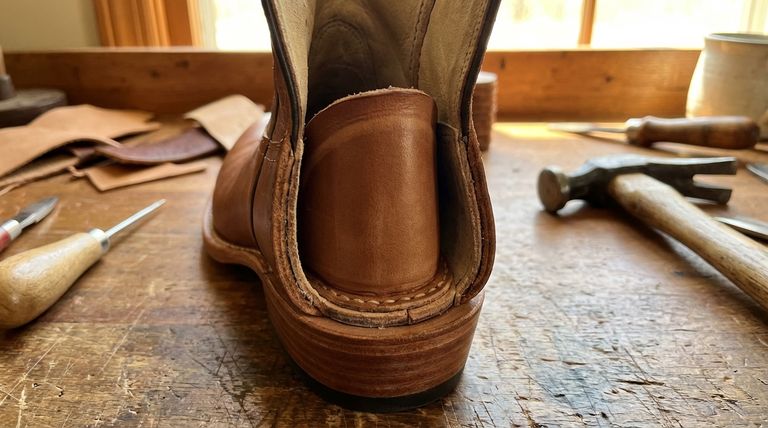
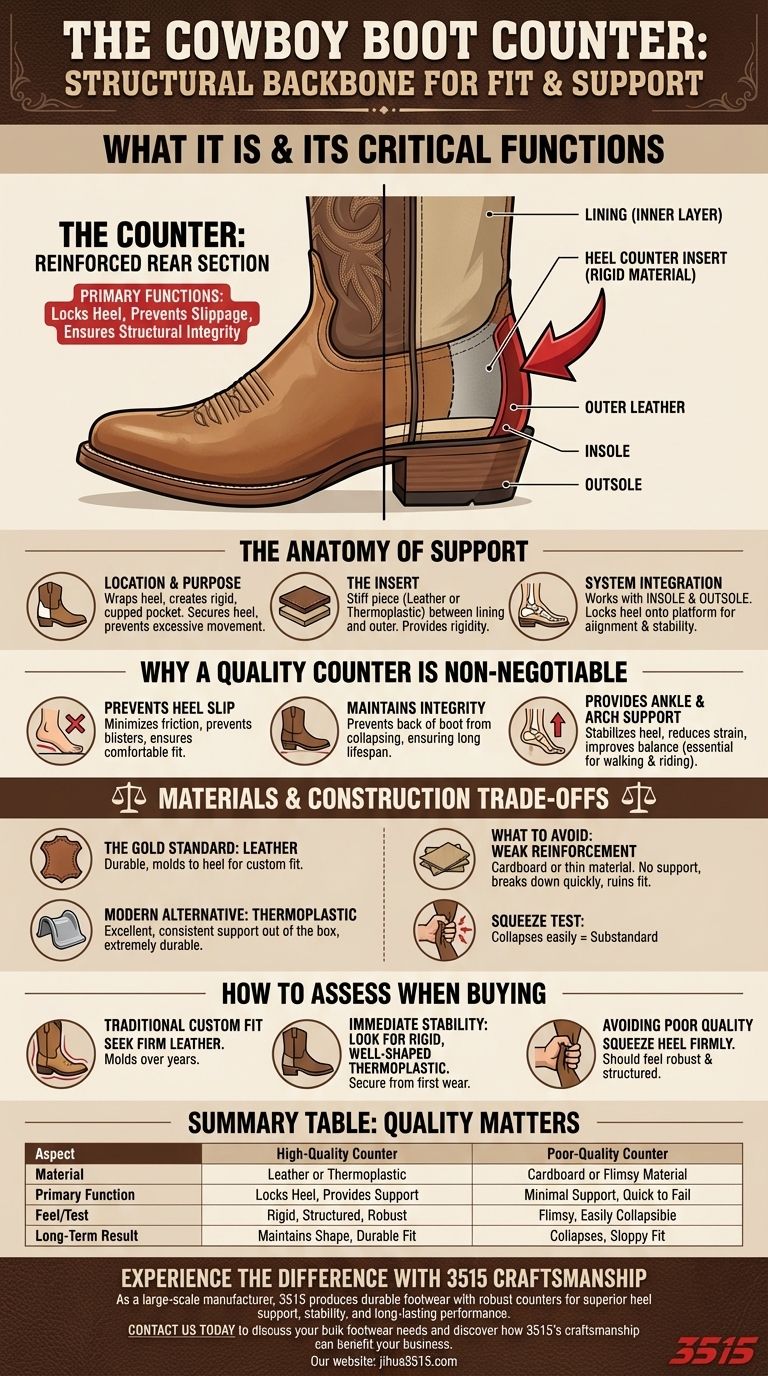
In a cowboy boot, the counter is the structural backbone of the heel. It is the reinforced rear section of the boot that cradles your heel, providing critical support and maintaining the boot's shape. Its primary functions are to lock your heel in place, prevent slippage, and ensure the long-term structural integrity of the entire boot.
While the style of the vamp or the height of the shaft often gets the attention, the quality of the hidden counter is what truly dictates a cowboy boot's fit, stability, and durability over its lifespan.
The Anatomy of Support: Deconstructing the Counter
A boot is a system of interconnected parts, and the counter serves as the anchor for the entire rear of the foot. Understanding its role is key to appreciating quality boot construction.
Location and Core Purpose
The counter is located at the very back of the boot, wrapping around the heel from one side to the other. Its core purpose is to create a rigid, cupped pocket that secures the heel and prevents it from moving excessively.
The Heel Counter Insert
This isn't just a single layer of leather. High-quality boots utilize a heel counter insert, a stiff piece of material sandwiched between the boot's lining and the outer leather. This insert provides the necessary rigidity.
How It Works with Other Components
The counter works directly with the insole and outsole to form the boot's foundation. By locking your heel onto this platform, it ensures your foot is properly aligned, providing stability with every step you take.
Why a Quality Counter is Non-Negotiable
A poorly constructed counter is one of the fastest ways for a boot to fail. It is a critical component for both immediate comfort and long-term performance.
Preventing Heel Slip
Heel slip is a common issue with new cowboy boots, but a well-designed counter minimizes this. Its firm, cupped shape locks the heel down, preventing the friction that leads to blisters and an uncomfortable fit.
Maintaining Structural Integrity
The counter is responsible for preventing the back of the boot from collapsing or misshaping over time. A weak counter will break down, leading to a sloppy fit, poor support, and a dramatically shortened lifespan for the boot.
Providing Ankle and Arch Support
By stabilizing the heel, a rigid counter provides foundational support that extends to the ankle. This reduces strain and improves balance, which is essential whether you are walking on uneven ground or in the stirrups.
Understanding the Trade-offs: Materials and Construction
The material used for the counter insert is a key indicator of a boot's overall quality and price point.
The Gold Standard: Leather
Traditionally, the finest boots use stacked leather or a heavy-duty leather board for the counter. Leather is incredibly durable and has the unique ability to gradually mold to the specific shape of your heel for a near-custom fit.
The Modern Alternative: Thermoplastic
Many modern, high-quality boots use thermoplastic or celastic counters. These inserts are heated and molded into a perfect, rigid shape during manufacturing. They provide excellent, consistent support right out of the box and are extremely durable.
What to Avoid: Weak Reinforcement
The cheapest boots cut costs by using little more than cardboard or thin, flimsy material as a counter. These provide almost no support and will break down quickly, ruining the fit and function of the boot. You can often identify them by squeezing the heel; if it collapses easily, the counter is substandard.
How to Assess the Counter When Buying Boots
When evaluating a pair of cowboy boots, the counter's quality is a direct signal of the manufacturer's commitment to craftsmanship.
- If your primary focus is a traditional, custom fit: Seek out boots with a firm leather counter that will mold to your heel over many years of wear.
- If your primary focus is immediate stability and comfort: Look for a boot with a rigid, well-shaped counter that securely cups your heel from the very first wear.
- If your primary focus is avoiding poor quality: Squeeze the back of the heel firmly; it should feel robust and structured, not flimsy or easily collapsible.
Paying attention to this unseen component empowers you to choose a boot that is truly built for stability, comfort, and a lifetime of wear.
Summary Table:
| Aspect | High-Quality Counter | Poor-Quality Counter |
|---|---|---|
| Material | Leather or Thermoplastic | Cardboard or Flimsy Material |
| Primary Function | Locks Heel, Provides Support | Minimal Support, Quick to Fail |
| Feel/Test | Rigid, Structured, Robust | Flimsy, Easily Collapsible |
| Long-Term Result | Maintains Shape, Durable Fit | Collapses, Sloppy Fit |
Ready to experience the difference a quality counter makes?
As a large-scale manufacturer, 3515 produces a comprehensive range of durable footwear for distributors, brand owners, and bulk clients. Our production capabilities ensure every pair of cowboy boots is built with a robust counter for superior heel support, stability, and long-lasting performance.
Contact us today to discuss your bulk footwear needs and discover how 3515's craftsmanship can benefit your business.
Visual Guide
Related Products
- Wholesale Durable Safety Boots Manufacturer Customizable Steel Toe Work Boots
- High-Traction Suede Tactical Boots Wholesale & Custom Manufacturing
- Durable High-Ankle Tactical Boots Wholesale Manufacturer for Custom & Bulk Orders
- Lightweight Breathable Sneakers with Wet-Traction Grip for Wholesale & Private Label
- Durable Leather Moc Toe Work Boots for Wholesale & Custom Manufacturing
People Also Ask
- What are the pros and cons of steel toe work boots? A Guide to Maximum Protection vs. Comfort
- What are the different types of steel toe work boots? Choose the Right Boot for Your Job
- What is the history of steel toe work boots? From German Invention to Modern Safety Standard
- How much weight can steel toe work boots withstand? Unpacking the 3,372 lb. Safety Standard
- What are some common myths about steel toe work boots? Debunked for Modern Workers