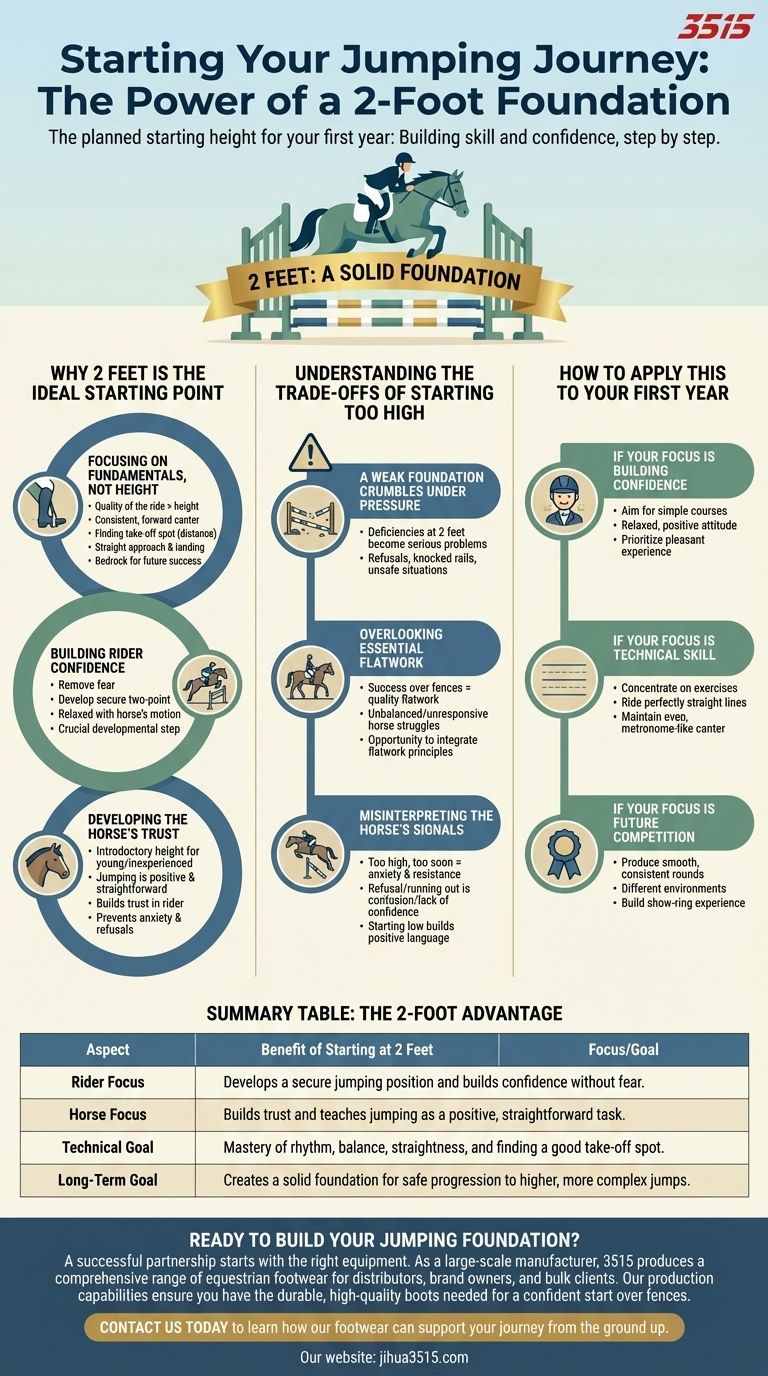
The planned starting height for the rider's first year in jumping is 2 feet. This height is a standard and highly effective entry point into the sport, designed to build a solid foundation of skill and confidence for both horse and rider.
Starting with 2-foot jumps is less about the height and more about establishing the fundamental principles of rhythm, balance, and trust. This foundational year is the most critical phase for a long-term, successful jumping partnership.
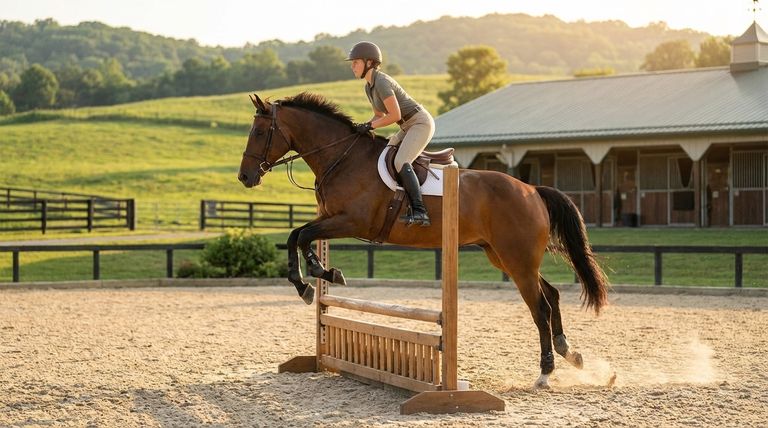
Why 2 Feet is the Ideal Starting Point
Beginning a jumping career at this height is a deliberate choice focused on mastering core competencies. The low-pressure environment allows for learning without the intimidation or physical demands of larger fences.
Focusing on Fundamentals, Not Height
At 2 feet, the primary goal is not simply to clear the obstacle. The focus is on the quality of the ride before, over, and after the fence.
Riders concentrate on maintaining a consistent, forward canter, finding an appropriate take-off spot (a "distance"), and keeping the horse perfectly straight on its approach and landing. These skills are the bedrock of all future success.
Building Rider Confidence
For the rider, 2-foot jumps are low enough to remove fear from the equation. This allows the rider to develop a secure and balanced jumping position, often called "two-point," without tensing up.
Getting comfortable with the horse's motion over the fence in a relaxed manner is a crucial developmental step.
Developing the Horse's Trust
For a young or inexperienced horse, this introductory height teaches them that jumping is a positive and straightforward task. It builds their trust in the rider's guidance and prevents them from becoming anxious or developing a habit of refusing fences.
Understanding the Trade-offs of Starting Too High
While it can be tempting to advance quickly, bypassing this foundational stage introduces significant risks and can stall long-term progress.
A Weak Foundation Crumbles Under Pressure
Jumping is a cumulative skill. Deficiencies in rhythm, straightness, or balance that are manageable at 2 feet become serious problems at higher levels, often resulting in refusals, knocked rails, or unsafe situations.
Overlooking Essential Flatwork
Success over fences is a direct result of quality training on the flat (riding without jumps). A horse that isn't balanced, responsive, and supple on the flat will always struggle over a course. The 2-foot level provides the perfect opportunity to integrate flatwork principles with jumping exercises.
Misinterpreting the Horse's Signals
Pushing a horse too high, too soon can create anxiety and resistance. What may seem like disobedience—such as a refusal or running out—is often the horse communicating confusion or a lack of confidence. Starting low builds a positive language between horse and rider.
How to Apply This to Your First Year
Your goal for this initial period should be centered on mastery of the basics, not on the height of the fences.
- If your primary focus is building confidence: Aim to complete simple courses with a relaxed and positive attitude, prioritizing a pleasant experience for you and your horse.
- If your primary focus is technical skill: Concentrate on exercises like riding perfectly straight lines and maintaining an even, metronome-like canter between fences.
- If your primary focus is future competition: Seek to produce smooth, consistent rounds in different environments to build valuable show-ring experience.
This first year is the most important investment you can make in a safe, enjoyable, and successful jumping career.
Summary Table:
| Aspect | Benefit of Starting at 2 Feet |
|---|---|
| Rider Focus | Develops a secure jumping position and builds confidence without fear. |
| Horse Focus | Builds trust and teaches jumping as a positive, straightforward task. |
| Technical Goal | Mastery of rhythm, balance, straightness, and finding a good take-off spot. |
| Long-Term Goal | Creates a solid foundation for safe progression to higher, more complex jumps. |
Ready to Build Your Jumping Foundation?
A successful partnership starts with the right equipment. As a large-scale manufacturer, 3515 produces a comprehensive range of equestrian footwear for distributors, brand owners, and bulk clients. Our production capabilities ensure you have the durable, high-quality boots needed for a confident start over fences.
Contact us today to learn how our footwear can support your journey from the ground up.
Visual Guide