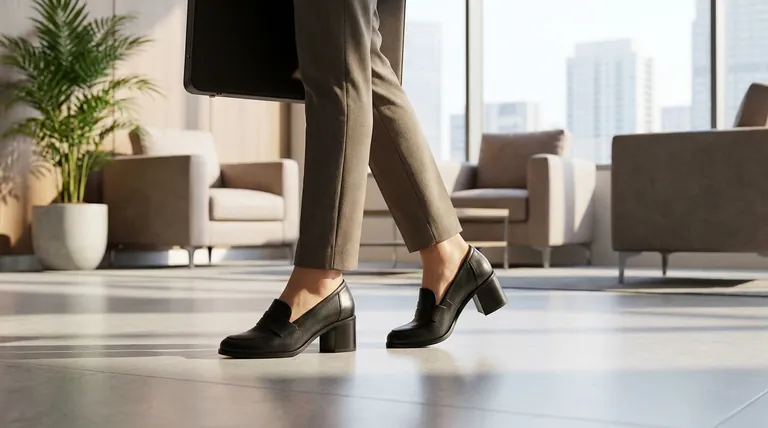
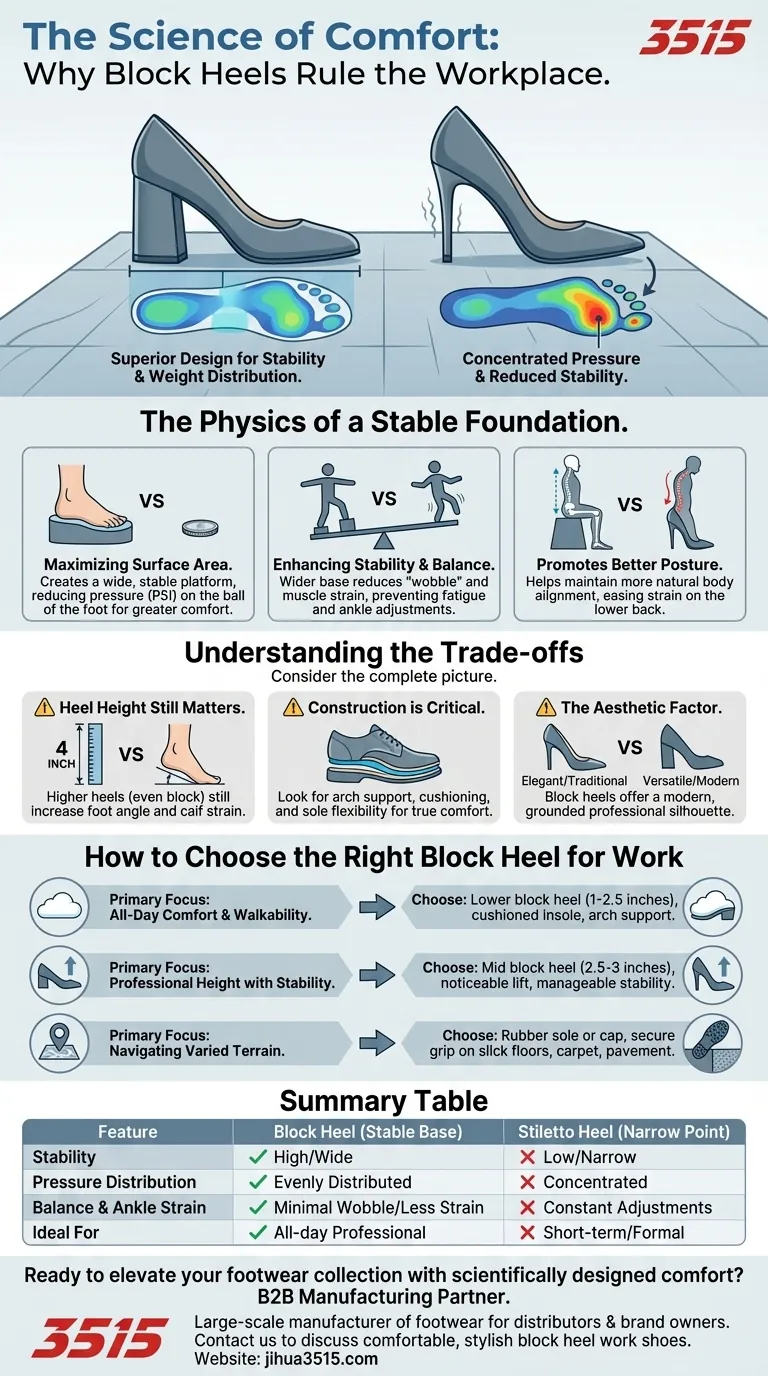
The fundamental reason block heels are recommended for smart work shoes is their superior design for stability and weight distribution. Unlike stilettos that concentrate your entire body weight onto a single, small point, a block heel provides a much larger surface area, which disperses pressure more evenly across your foot and offers a significantly more stable base for all-day wear.
The core advantage of a block heel lies in its physics. By increasing the surface area that contacts the ground, it reduces pressure on the ball of the foot, improves balance, and minimizes the muscle strain required to stay stable, making it the ideal intersection of professional height and practical comfort.
The Physics of a Stable Foundation
To understand why a block heel feels better over a long workday, we need to look at how it interacts with your foot and the ground. The difference between a block heel and a stiletto is a simple matter of engineering.
Maximizing Surface Area
A stiletto forces your body's weight onto a point no bigger than a coin. A block heel, by contrast, creates a wide, stable platform.
This larger surface area dramatically reduces the pounds per square inch (PSI) of pressure on your heel and, by extension, the ball of your foot. This distribution is the primary source of comfort.
Enhancing Stability and Balance
The wider base of a block heel provides inherent stability. Your ankle doesn't have to make constant, tiny adjustments to keep you balanced, as it would on a narrow heel.
This reduction in "wobble" means less strain on the muscles and ligaments in your ankles and feet, preventing fatigue and reducing the risk of a sprain.
Promoting Better Posture
A stable foundation in your footwear translates up through your entire body. When your feet are stable, your ankles, knees, and hips can maintain a more natural alignment.
While any high heel will shift your center of gravity forward, the stability of a block heel prevents the additional postural distortion that comes from instability, easing strain on your lower back.
Understanding the Trade-offs
While block heels are a superior choice for workplace comfort, they are not a magic bullet. To make an informed decision, you must consider the complete picture.
Heel Height Still Matters
A four-inch block heel is still a four-inch heel. It will be more stable than a four-inch stiletto, but it will still place significant pressure on the ball of your foot and shorten your calf muscles.
The stability of the block style doesn't negate the biomechanical challenges of a steep foot angle.
Construction is Critical
The type of heel is only one part of the shoe's overall design. A block heel on a poorly constructed shoe with no arch support or cushioning will still be uncomfortable.
Always assess the entire shoe, including the flexibility of the sole, the quality of the materials, and the support offered by the insole.
The Aesthetic Factor
For certain formal events or specific aesthetic preferences, the slim, sharp line of a stiletto may be considered more elegant or traditional.
The block heel is incredibly versatile and professional, but it offers a different, often more modern or grounded, silhouette.
How to Choose the Right Block Heel for Work
Selecting the right shoe depends on your specific daily needs and priorities. Use these principles as your guide.
- If your primary focus is all-day comfort and walkability: Choose a lower block heel (1 to 2.5 inches) with a cushioned insole and adequate arch support.
- If your primary focus is blending professional height with stability: A heel between 2.5 and 3 inches offers noticeable lift while remaining far more manageable than a stiletto of the same height.
- If your primary focus is navigating varied office terrain: Look for a block heel with a rubber sole or cap to ensure secure grip on slick floors, carpets, and pavement.
Choosing your work footwear based on sound principles of support empowers you to feel confident and comfortable throughout your entire day.
Summary Table:
| Feature | Block Heel | Stiletto Heel |
|---|---|---|
| Stability | High (Wide base) | Low (Narrow point) |
| Pressure Distribution | Evenly distributed | Concentrated on ball of foot |
| Balance & Ankle Strain | Minimal wobble, less strain | Constant adjustments required |
| Ideal For | All-day wear, professional settings | Short-term, formal events |
Ready to elevate your footwear collection with scientifically designed comfort?
As a large-scale manufacturer, 3515 produces a comprehensive range of footwear for distributors, brand owners, and bulk clients. Our production capabilities encompass all types of shoes and boots, including comfortable and stylish block heel work shoes designed for all-day wear.
Let us help you provide your customers with the perfect blend of professional style and enduring comfort. Contact our team today to discuss your manufacturing needs!
Visual Guide
Related Products
- Durable Leather Moc Toe Work Boots for Wholesale & Custom Manufacturing
- Wholesale Customizable Safety Boots Durable & Protective Footwear Manufacturing
- Wholesale Durable Safety Boots Manufacturer Customizable Steel Toe Work Boots
- Comfortable Block Heel Pumps Wholesale & Custom Factory Production
- Wholesale Durable 6-Inch Work Boots | Custom & Private Label Manufacturer
People Also Ask
- What are moc toe work boots designed for? Superior Comfort and Mobility for Tradespeople
- What are the key features to look for when purchasing moc toe boots? A Guide to Durability & Fit
- How did moc toe boots originate? A Legacy of Workwear Durability and Style
- What clothing items complement the Outdoorsman/Heritage Look with moc toe boots? Build a Timeless, Rugged Wardrobe
- What types of outfits can moc toe boots be worn with? Versatile Style Guide