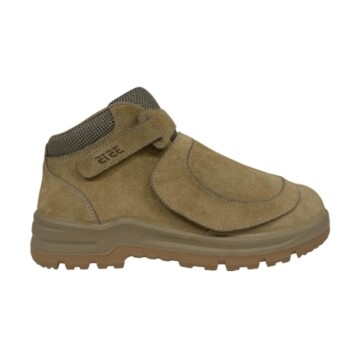
Aluminum alloy molds are the standard choice for Ethylene-vinyl acetate (EVA) injection molding primarily due to their superior thermal conductivity and high mechanical strength. These properties allow the molds to withstand the intense thermal cycles and pressures inherent to the process while ensuring the material cures correctly. By facilitating rapid and even heat transfer, aluminum molds enable the production of high-quality shoe soles with consistent structural integrity.
Core Takeaway: The success of EVA molding hinges on precise heat management. Aluminum alloys are preferred because they deliver the uniform heat distribution necessary for creating a consistent closed-cell foam structure, while possessing the durability to endure at least 10,000 high-pressure production cycles.
The Critical Role of Thermal Conductivity
Ensuring Uniform Heat Distribution
The most vital characteristic of aluminum in this application is its excellent thermal conductivity. This allows the mold to distribute heat evenly across the entire surface of the cavity and the intermediate mold components.
Optimizing Foam Structure
EVA material relies on heat to expand and form its internal structure. Uniform heating is critical to creating a consistent closed-cell foam structure throughout the final product. Without this thermal precision, the shoe sole could suffer from structural inconsistencies or defects.
Mechanical Durability and Longevity
Withstanding Process Stresses
The injection molding process subjects tooling to significant stress. Aluminum alloys possess the high mechanical strength required to withstand the high pressures applied during the injection phase without deforming.
Resisting Thermal Fatigue
In addition to pressure, the mold must endure repeated heating and cooling. The material properties of aluminum allow it to survive these extreme thermal cycles without failing, ensuring the mold defines the geometric shape of the shoe sole accurately over time.
production Lifecycle
Durability translates directly to production efficiency. These aluminum alloy molds are engineered to maintain their integrity and performance for at least 10,000 production cycles, making them a reliable asset for manufacturing runs.
Operational Considerations
Understanding Lifecycle Limits
While aluminum alloys are robust, they are not infinite. The primary reference notes a service life of at least 10,000 cycles. Manufacturers should plan for maintenance or replacement schedules based on this benchmark to prevent quality degradation as the mold approaches this limit.
Making the Right Choice for Your Goal
When selecting tooling for EVA molding, align your material choice with your specific production metrics.
- If your primary focus is product consistency: Leverage the high thermal conductivity of aluminum to ensure a uniform closed-cell foam structure in every unit.
- If your primary focus is manufacturing reliability: rely on the mechanical strength of aluminum alloys to withstand the rigors of pressure and thermal cycling for sustained production runs.
Aluminum alloys offer the definitive balance of thermal performance and mechanical durability required for successful EVA injection molding.
Summary Table:
| Feature | Advantage for EVA Molding | Benefit to Production |
|---|---|---|
| Thermal Conductivity | Rapid & uniform heat distribution | Consistent closed-cell foam structure |
| Mechanical Strength | Resists high injection pressures | Dimensional accuracy & no deformation |
| Thermal Resilience | Withstands repeated heating/cooling | Prevents fatigue and mold cracking |
| Service Life | Rated for 10,000+ production cycles | Long-term reliability for bulk manufacturing |
Partner with 3515 for Professional Footwear Manufacturing
As a large-scale manufacturer serving global distributors and brand owners, 3515 leverages advanced aluminum alloy molding technology to ensure every pair of shoes meets rigorous structural standards. Our flagship Safety Shoes series, along with our extensive portfolio of tactical boots, sneakers, and formal shoes, benefits from our comprehensive production capabilities.
Ready to scale your production with a reliable partner? Contact us today to discuss your bulk requirements and discover how our manufacturing expertise can enhance your brand's value.
References
- Iacopo Bianchi, Alessio Vita. Mechanical characterization and sustainability assessment of recycled EVA for footwears. DOI: 10.1007/s00170-023-11332-1
This article is also based on technical information from 3515 Knowledge Base .
Related Products
People Also Ask
- How does metatarsal protection in safety footwear work? The Essential Guide to Foot Safety
- What is a metatarsal guard in safety boots? Essential Protection for Your Entire Foot
- How do metatarsal guards enhance work shoe safety? Prevent Crushing Foot Injuries on the Job
- What does the 'MT' in ASTM F2413-18 stand for? Essential Metatarsal Protection Explained
- What is metatarsal protection in safety boots? Essential Defense for Top-of-Foot Hazards