While renowned for their durability, Goodyear welted shoes are not the right choice for everyone. Those who prioritize immediate, out-of-the-box comfort, a lightweight and flexible feel, or a slim profile will likely be better served by other construction methods. Similarly, if you are not prepared for a higher upfront financial investment, there are more practical alternatives available.
The very features that make Goodyear welted shoes exceptionally durable and repairable—their multi-layered construction and stiff components—are also the source of their primary drawbacks: a significant break-in period, increased weight, and a bulkier silhouette.
The Core Conflict: Structure vs. Immediate Comfort
The design of a Goodyear welted shoe is a masterclass in longevity, but this engineering comes at the cost of initial ease of wear.
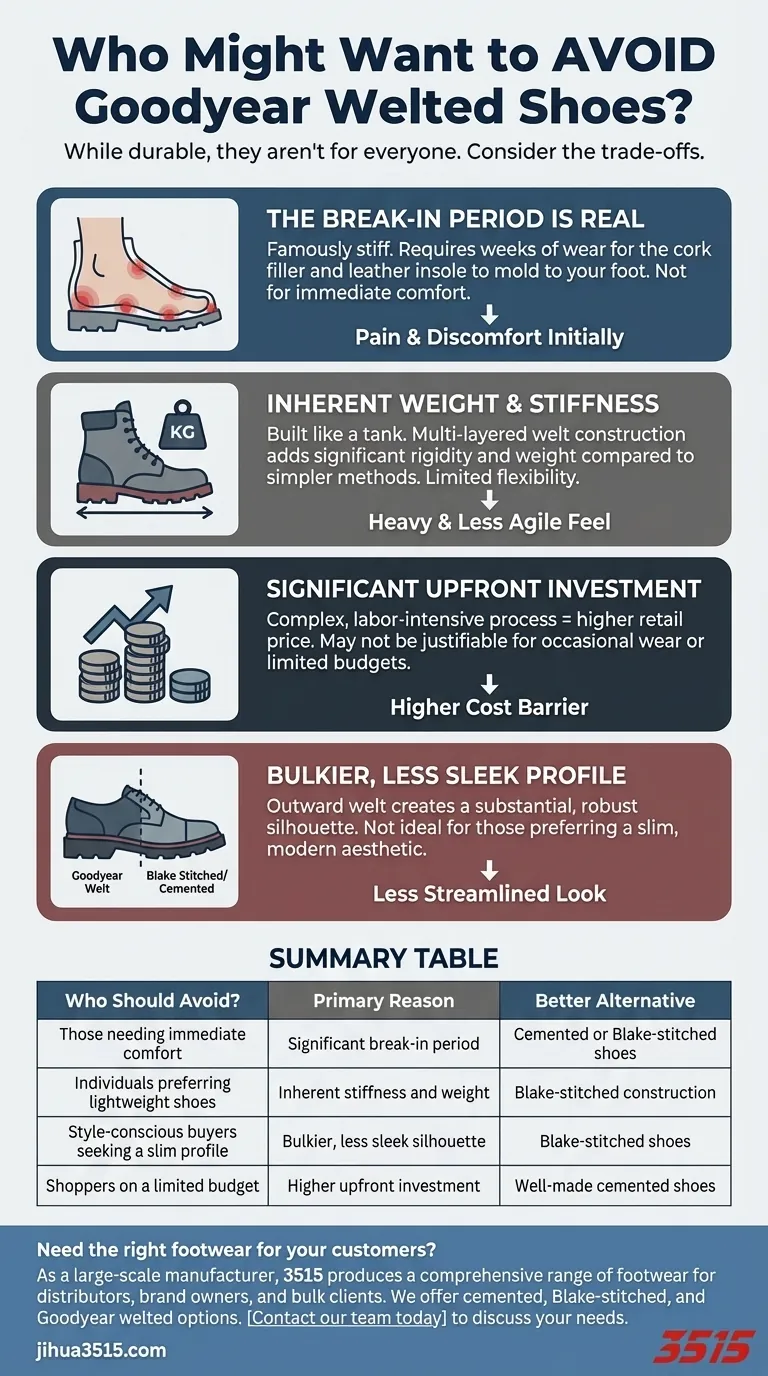
The Break-in Period is Real
A new pair of Goodyear welted shoes is famously stiff. This is due to the rigid leather insole and a layer of cork filler that sits between the insole and outsole.
This combination requires time and wear for the heat and pressure of your foot to compress the cork and mold the insole, creating a personalized footbed. Until this happens, the shoe can feel unyielding.
Inherent Stiffness and Weight
The construction involves a "welt"—a strip of leather stitched to the upper and the insole—to which the outsole is then stitched.
This extra layer adds structural integrity and water resistance but also contributes significant rigidity and weight compared to simpler construction methods. The shoe is built to be a tank, and it often feels like one at first.
Aesthetic and Financial Considerations
Beyond the physical feel, the construction of a Goodyear welted shoe directly impacts its look and its price tag, which may not align with every buyer's priorities.
A Significant Upfront Investment
Goodyear welting is a complex, labor-intensive process that requires skilled craftsmanship and more materials.
This is directly reflected in a higher retail price. While the potential for resoling offers long-term value, the initial cost can be a significant barrier for those on a budget or unsure if they will wear the shoes often enough to justify the expense.
A Bulkier, Less Sleek Profile
The outward-facing welt creates a more substantial silhouette. The sole edge typically extends further out from the upper, resulting in a look that is classic and robust, but not sleek.
Individuals who prefer a very close-cut, streamlined, or low-profile shoe often find Blake-stitched alternatives more aesthetically pleasing, as that method stitches the outsole directly to the upper for a much trimmer look.
Understanding the Key Trade-offs
Choosing a shoe is about matching its characteristics to your needs. Goodyear welting presents a clear set of compromises.
Comfort is Earned, Not Given
The legendary comfort of a Goodyear welted shoe only comes after the break-in period. If you need a comfortable pair of dress shoes for an event next week, this construction method is a poor choice.
Flexibility is Always Limited
Even after a thorough break-in, a Goodyear welted shoe will never possess the "sneaker-like" flexibility of other constructions. The fundamental structure that makes it so durable also limits its ability to bend.
Water Resistance is Not Waterproof
The welt provides excellent water resistance, making it far superior to a Blake stitch for wet conditions. However, the stitch holes can still allow water to penetrate under heavy exposure. It will protect you on a rainy walk, but it is not a waterproof rubber boot.
Making the Right Choice for Your Goal
Ultimately, the decision comes down to your primary motivation for buying the footwear.
- If your primary focus is immediate, out-of-the-box comfort: You should opt for shoes with a cemented or Blake-stitched construction, which are far more flexible from the first wear.
- If your primary focus is a slim, low-profile aesthetic: A Blake-stitched shoe will provide a much sleeker silhouette that pairs better with modern, tailored clothing.
- If your primary focus is a limited budget or infrequent use: The high upfront cost of a Goodyear welt is likely not justifiable, and a well-made cemented shoe is a more practical choice.
Choosing the right footwear is about investing in a tool that truly serves your needs, not just a reputation for quality.
Summary Table:
| Who Should Avoid Goodyear Welts? | Primary Reason | Better Alternative |
|---|---|---|
| Those needing immediate comfort | Significant break-in period | Cemented or Blake-stitched shoes |
| Individuals preferring lightweight shoes | Inherent stiffness and weight | Blake-stitched construction |
| Style-conscious buyers seeking a slim profile | Bulkier, less sleek silhouette | Blake-stitched shoes |
| Shoppers on a limited budget | Higher upfront investment | Well-made cemented shoes |
Need the right footwear for your customers?
As a large-scale manufacturer, 3515 produces a comprehensive range of footwear for distributors, brand owners, and bulk clients. Our production capabilities encompass all types of shoes and boots, including comfortable cemented constructions, sleek Blake-stitched models, and durable Goodyear welted options. We can help you select or manufacture the perfect product line to match your target market's needs.
Contact our team today to discuss your specific requirements and discover how we can add value to your business.
Visual Guide
Related Products
- Durable Goodyear Welt Leather Work Boots for Wholesale & Private Label
- Wholesale Durable Leather Work Boots | 8-Inch Goodyear Welt Manufacturer
- Wholesale Durable & Breathable Training Shoes for Custom Brands
- Wholesale Breathable Training Shoes Custom Athletic Footwear Manufacturer
- Custom OEM Training Shoes Wholesale Manufacturer Durable & Breathable
People Also Ask
- What is the difference between full-grain and top-grain leather? Premium Material Guide for Boot Manufacturers
- What are the advantages of leather as an upper material for work boots? Unmatched Durability & Custom Comfort
- Why is it important to waterproof leather work boots? Protect Your Investment and Performance
- How should new leather work boots be broken in? A Guide to Comfort and Durability
- What are the advantages of leather uppers in work boots? Unmatched Durability & Protection